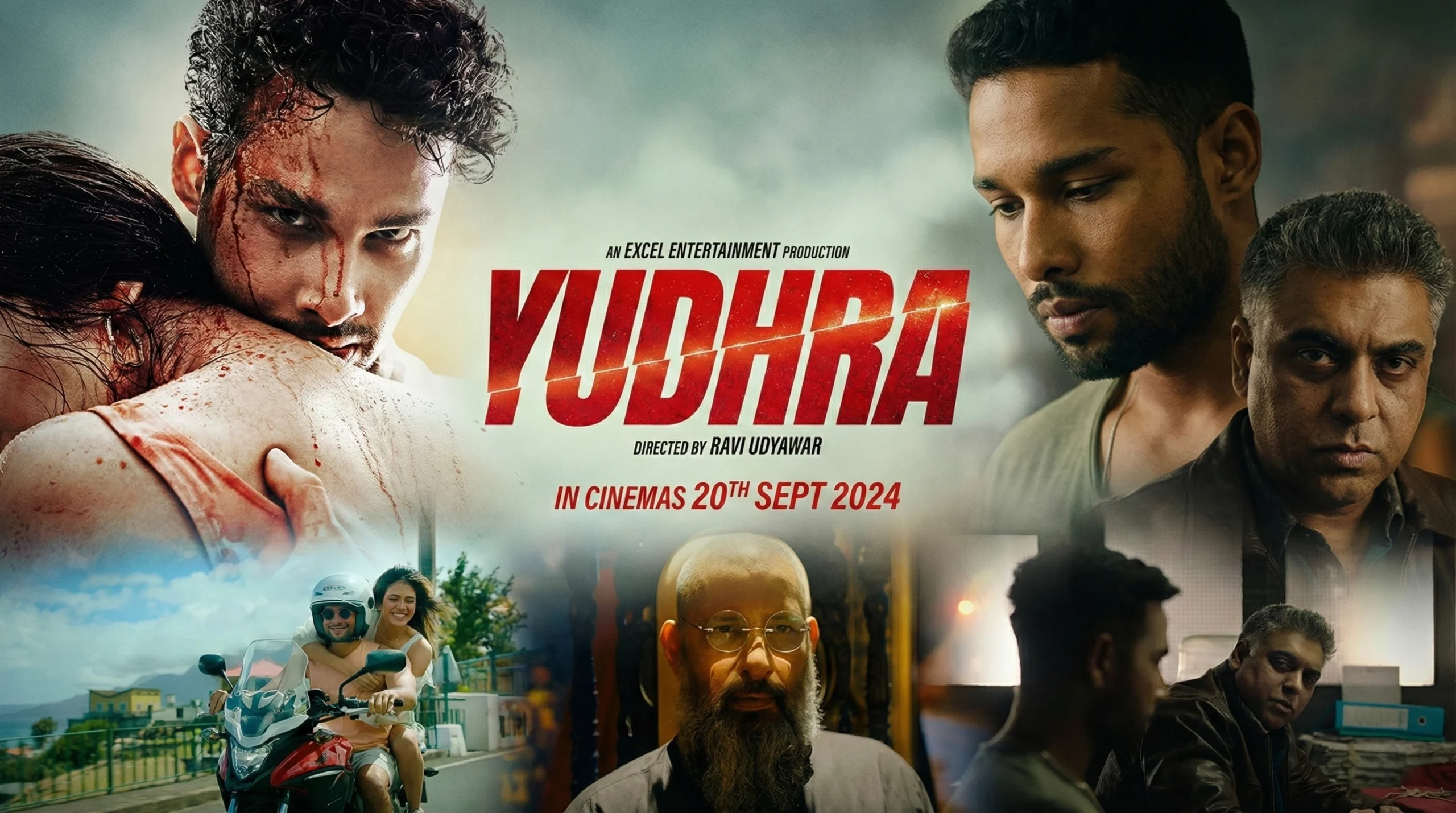
Look, there are some movies that leave you with a very particular question the moment the end credits roll: why was this even made? Not “Why is the hero angry?” or “Why did the villain do this?” No. The big existential kind – why did this entire project exist in the first place, brother why? Siddhant Chaturvedi, whom you must have first noticed in Gully Boy, became fairly popular across India. Then the now-viral moment where he shut down Ananya Panday on nepotism talk shows made him even more famous. So naturally, the industry did what it does best – hand him a lead role with action, rage, punches, raw masculinity, run the camera, and hope the testosterone will carry the movie. That experiment has arrived in theatres as Yudhra – and after watching it, I once again found myself asking the same painful question: what was the need to make this?
If I try to answer that sincerely, the truth isn’t complicated. The makers clearly wanted to explore the story of a man who is mentally unhinged – someone who crosses a threshold once anger takes over. A man who has no brakes. One moment he’s kissing a girl, the very next he pushes her away like she’s a stranger. A character who would make Mr. Sandeep Reddy Vanga extremely proud – a lead so unbalanced that the film expects us to admire his madness. Once this warrior – whose literal name in the film is Yudhra – goes into berserk mode, no matter how many people beat him, no matter how broken his body becomes, he will jump back into the fight and destroy whoever stands in front of him.
The madness reaches such a borderline ridiculous level that when goons approach to beat him, he starts beating himself first. Yes, you read that correctly. Punching his own face, splitting his own lip, bloodying his own nose, cutting himself – narrating to the enemies exactly how they would hurt him if they ever got the chance. Then he pauses mid-destruction, licks the blood, and announces: “Now it’s my turn – I will beat your ass.” When you hear this concept, at least in theory, it does sound intriguing. Almost comic-book inspired: a villain-proof protagonist so warped that pain is his foreplay. But the moment this idea had to be translated from paper to the screen, the execution collapsed in spectacular fashion.
When Ambition Meets The Crash Landing of Execution
This, in fact, is the core issue with Yudhra. There are two major failures here, and they define the entire movie. First, certain ideas must have sounded brilliant during the narration phase – the kind of thing that excites producers and stars. “The big villain, the final showdown, the brutal violence, the cathartic kill – cinematic gold!” But when that exact concept has to make the leap from a script to actual cinematic language, the film becomes rushed, unremarkable, and shockingly lifeless.
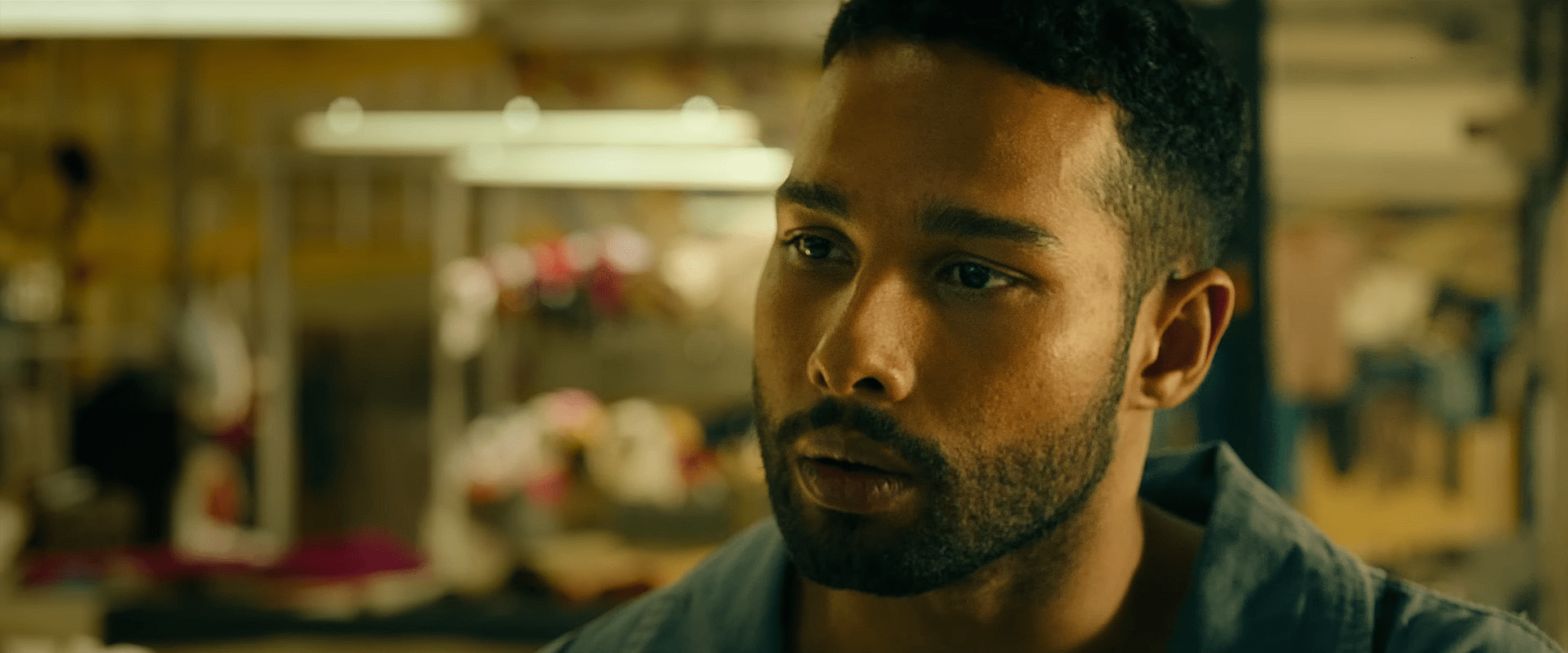
At one point, Yudhra himself walks up to someone and asks, “I want to know why people ask such stupid questions before dying.” This line is spoken with the confidence of a film that truly believes it has found a badass punchline. Instead, it becomes symbolic of the movie’s struggle – it believes it has style, swagger, weight. What we actually get is emptiness wrapped in forced attitude.
The second big issue ties itself even tighter around the film’s neck: beyond a few violent bursts and unpredictable character moments, everything else in Yudhra is something you have already seen dozens of times in other films. Betrayals, fake friendships, drugs, a girlfriend kidnapped by thugs, a Don pulling the strings – just reheated leftovers served as revolutionary cinema. It’s the same old dishes, cooked in one pot until they blur into a flavourless paste.
And they don’t stop there. They take every common trope and crank up the quantity to absurd levels. Instead of using two or three classic genre twists – betrayals, secret deals, double-crossing – they forcibly stuff in so many that the first half alone could have been its own separate film. By the time the intermission hits, you have experienced enough “he betrayed him,” “she lied,” “they flipped sides,” “this person was secretly working for them” moments to fill an entire Netflix mini-series.
Zero Chemistry, Zero Romance – And Negative Spatial Logic
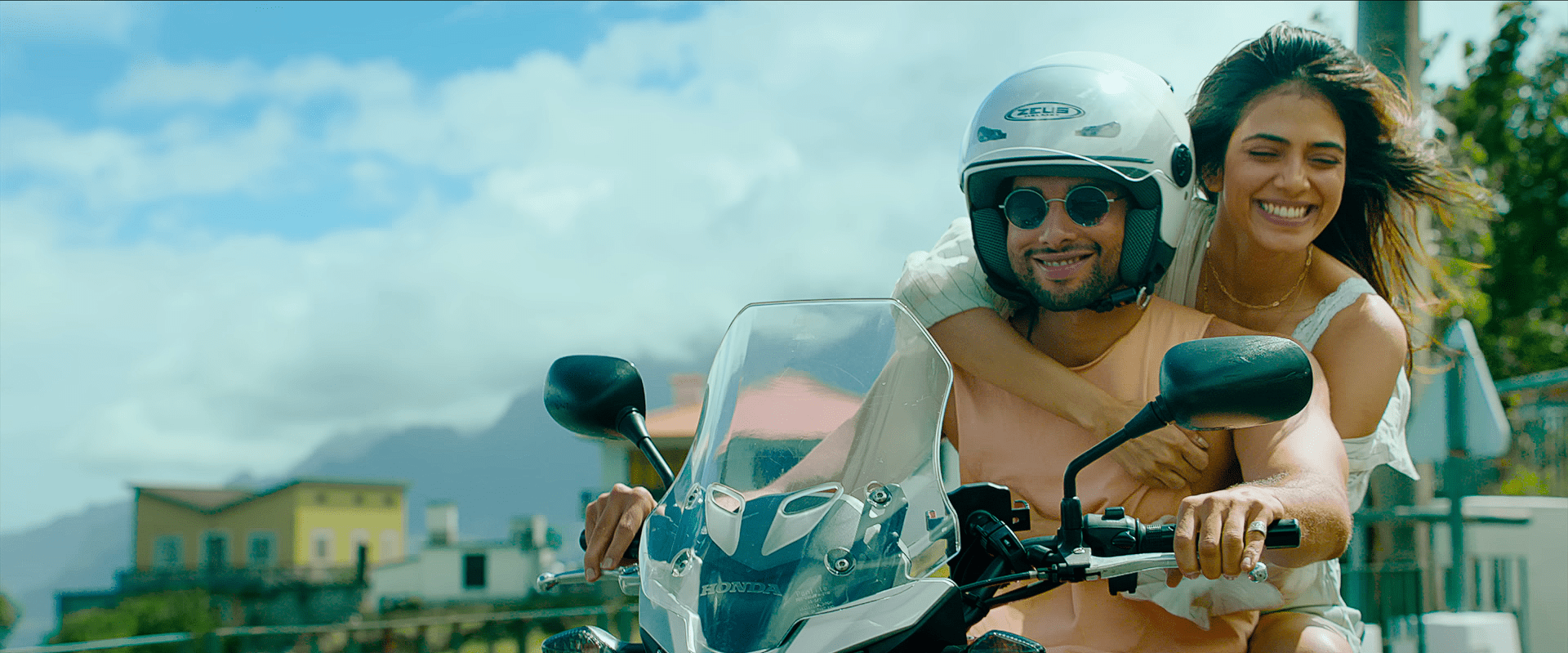
The same reckless overstuffing applies to romance. We’ve all heard critics or fans say: “The chemistry between the leads was electric.” Yudhra takes that idea and does the complete opposite. If you ever wanted to see a movie where the hero and heroine possess nearly zero chemistry, this is your case study. Their dramatic scenes drown in slow motion, overwrought music, and unnecessary cinematic flair, yet the dialogue between them never convinces you that they are lovers. The film doesn’t even attempt nuance; it simply assumes attraction exists because the script declares it.
Then there’s time and space – and Yudhra treats both as inconvenient suggestions rather than real-world concepts. Characters teleport from one location to another with no logic or geography. India’s most powerful Don captures you, has every reason to kill you instantly, and yet… he doesn’t. Instead, he sends his goons: “finish him.” The audience doesn’t even need to wonder what will happen next. The character escapes the Don’s secure den and magically reaches another country. Yes, another country. From a gangster’s fortress to Portugal – without any real explanation of how, why, or by whom. At the very least, the Don’s men should be competent enough to prevent international travel. But no… somehow, our hero leaps continents like he is jumping cut-to-cut inside a music video.
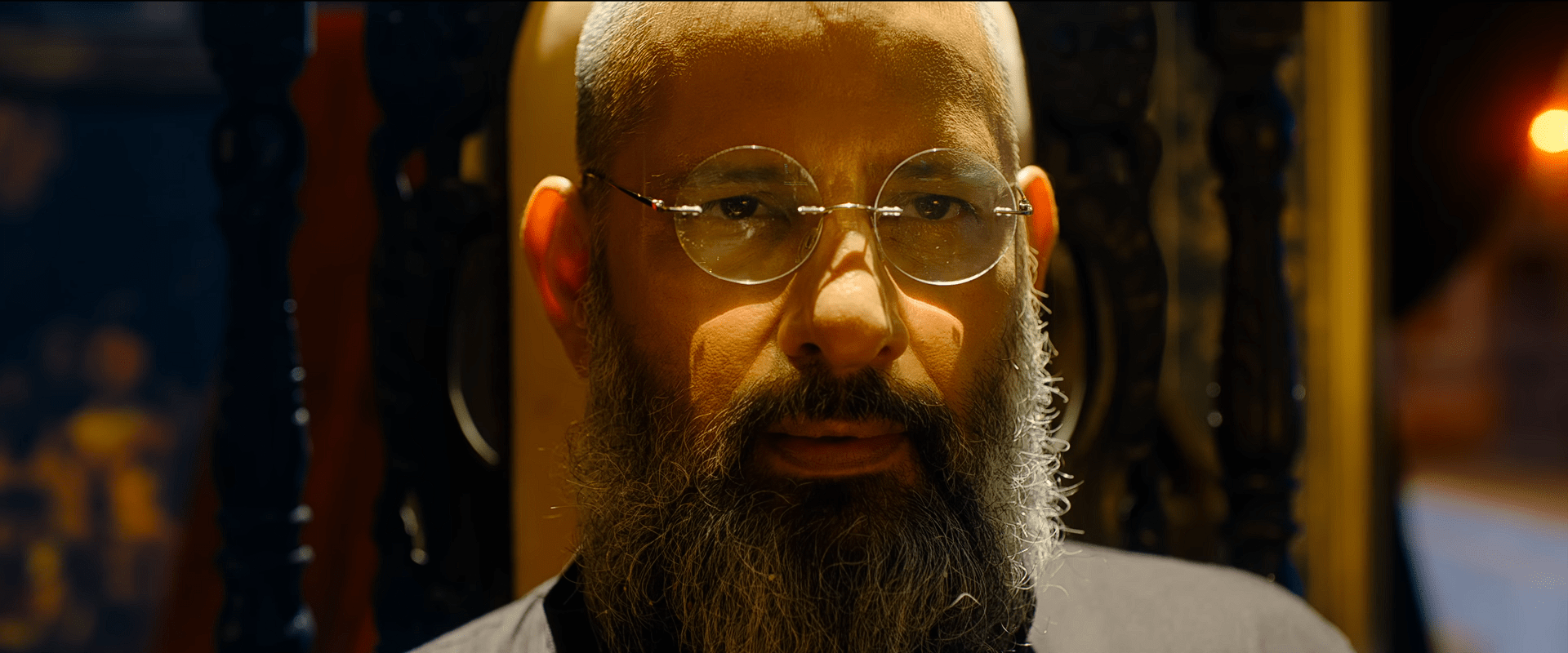
It’s all too much. Everything happens too fast, too cheaply, too casually. And then, in the middle of all this chaos, the film crams in songs. Not one, not two – three of them, as far as I can remember. Each song attempts to improve the film just a bit, and to be fair, there is a progression. The first one is terrible, the second is only slightly tolerable, and the third reaches the “okay-ish” zone. Unfortunately, that third track arrives at the most inappropriate moment imaginable: you’ve just killed the Don’s most trusted man, he is burning with rage, chasing you relentlessly, and suddenly – beach time.
Does Action Redeem the Film? Surprisingly, Yes… But Only While It Lasts
The irony of Yudhra is that the only reason anyone would feel remotely excited about it is the action – because that was exactly what the trailer promised. And to its credit, that promise is delivered. In fact, the action is the brightest, liveliest, and most meaningful part of the film.
First, there’s a lot of it. Not stingy cameo aggression – full sequences, packed with close-quarter combat, heavy punches, swift kicks, improvised weapon usage, and environmental aggression. Not every fight works, but many of them do. The choreography is precise enough that you can follow who is hitting whom, how they hit, and where the body lands. There is rhythm, kinetic momentum, a sense of muscle memory. In an era where Indian cinema is obsessed with endless slow-motion hero poses, this level of grounded physicality is refreshing.
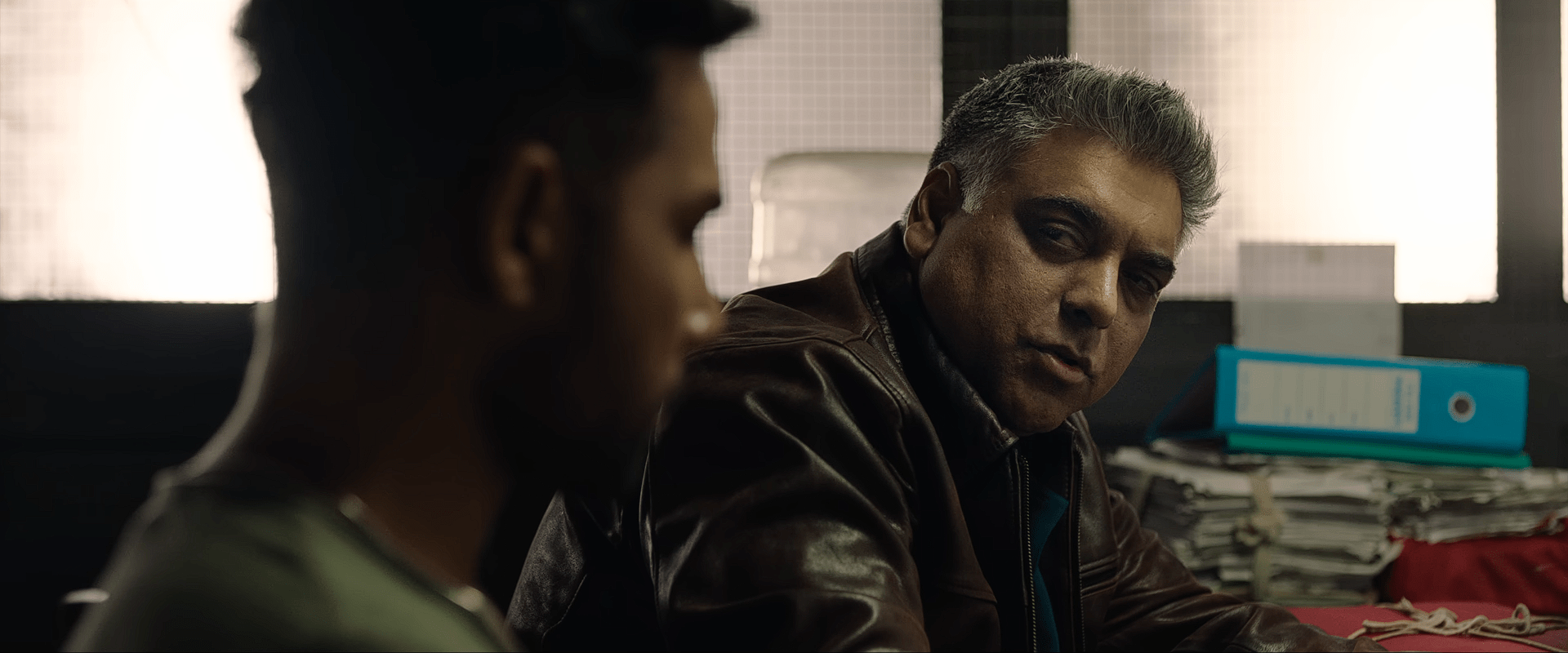
Second, and more importantly, Siddhant Chaturvedi actually sells the movement. Action cinema often suffers from the “hero statue phenomenon” – slow-motion punches while goons drop like dominoes, or an actor who clearly isn’t able to carry the energy his character requires. Siddhant avoids that trap. His body language is aggressive, hungry, believable. He moves like someone who genuinely could break bones. These sequences are where the film comes alive, where I stopped rolling my eyes and actually started paying attention. Full credit to the stunt team – they are the reason Yudhra has moments worth watching.
A Sleek Thriller? Or Everything Everywhere All at Once?
And that’s where the heartbreak lies. Yudhra could have been a slick action thriller. It had every ingredient needed: a dangerous infiltration mission, a drug cartel, brutal hand-to-hand combat, psychological instability. Had the story narrowed its scope and followed his mission with precision, this could have been an impactful genre film.
Instead, the filmmakers turned it into a buffet of clichés: father’s revenge, never-ending goons, betrayal from trusted allies, kidnapped lover, overseas chase sequences, and every predictable twist thrown together like some cinematic halwa – and trust me, it’s better if you don’t eat it.
Final Rating
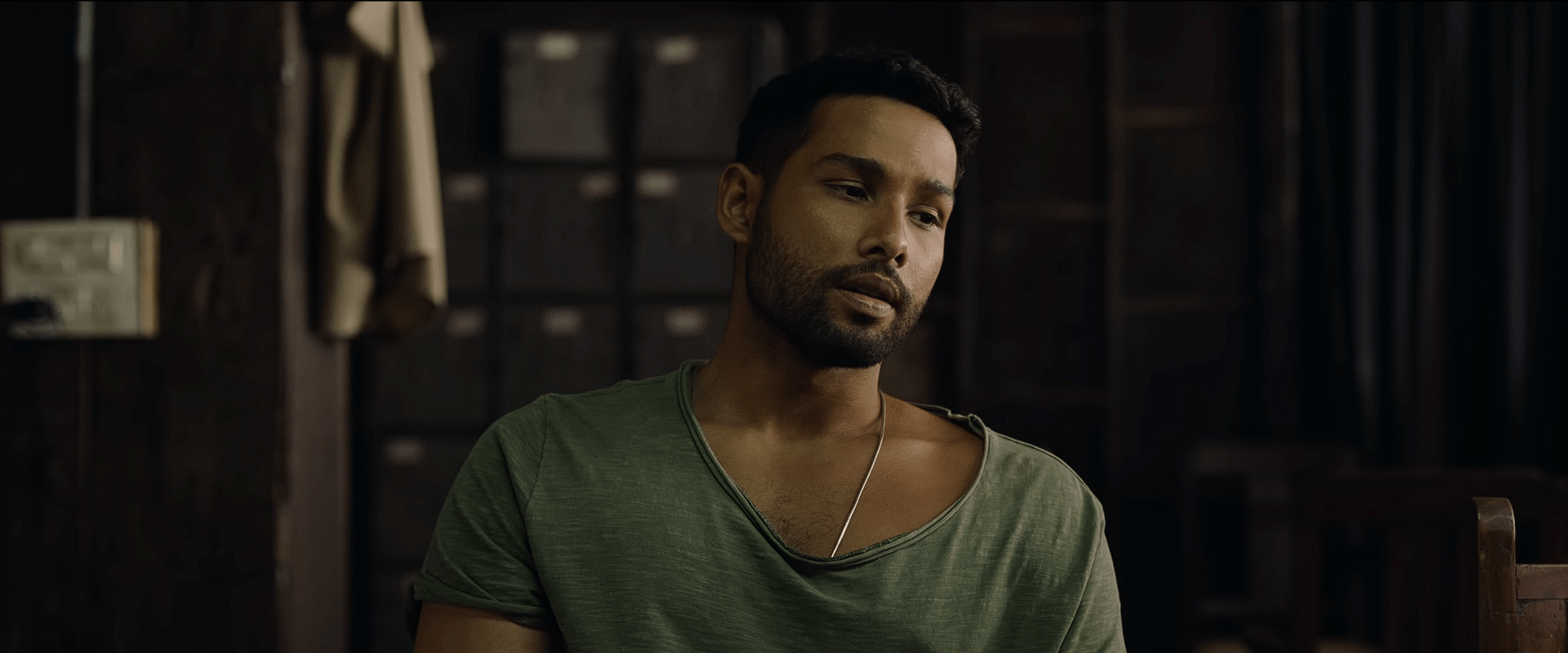
Yudhra is a movie that believes its madness is genius and its chaos is art. It has moments of thrilling, high-energy action, but everything surrounding those moments drowns them in mediocrity, confusion, and exaggerated bravado.
Rating: 2.5/5 – Watch only if you’re hungry for action; avoid if you need story, logic, romance, or coherence.