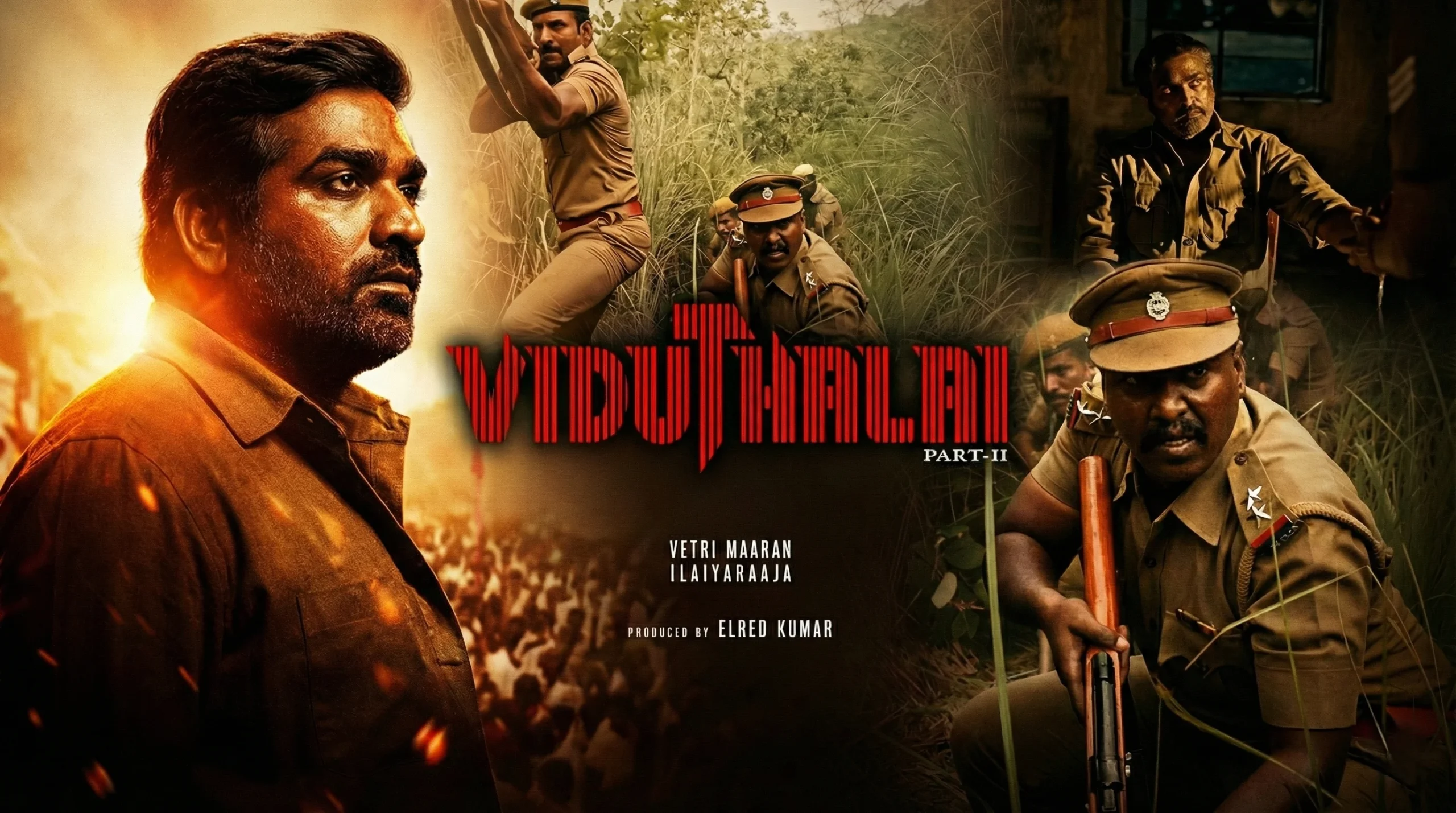
A sequel often carries the weight of expectation, but some films begin with such promise that the pressure becomes even heavier. As I watched Viduthalai Part 2, I found myself constantly evaluating how the film expands its universe, how it handles its returning characters, and whether it justifies the emotional intensity that Part 1 created. The answers to these questions, however, turned out to be far more complex than I anticipated.
A Story of Origins, Resistance, and Exhaustion
The film picks up from the dramatic conclusion of the first part – Perumal Vaathiyaar, the elusive rebel leader, is finally surrounded and arrested. The sequel attempts to peel back the layers of this enigmatic man, tracing how a simple schoolteacher transforms into one of the state’s most feared revolutionaries. On paper, this is a compelling character arc. In execution, though, the narrative sprawls across too many scenes, too many tangents, and too many repetitions.
I found myself waiting for the emotional punch that such a transformation should deliver, but the structure often diffuses its own power. Instead of a sharp, tightly wound journey into radicalisation, the film stretches itself awkwardly, lingering on moments that feel like narrative padding rather than purposeful revelation.
- A Story of Origins, Resistance, and Exhaustion
- Characters Who Once Lit Up the Screen Now Fade Into the Background
- A Screenplay That Moves Without Rhythm
- Logical Gaps That Disrupt Emotional Engagement
- Action That Overwhelms Instead of Elevating
- The Missing Humour, the Missing Pulse
- Final Thoughts – Ambitious, But the Weakest in Vetrimaaran’s Filmography
Characters Who Once Lit Up the Screen Now Fade Into the Background
One of the biggest strengths of Viduthalai Part 1 was how vividly every character was crafted. Each of them carried weight – Soori’s earnest innocence, Vijay Sethupathi’s commanding presence, the memorable roles played by Rajiv Menon, Gautham Menon, and even smaller characters like the mess in-charge. I walked into the sequel expecting the same depth and consistency.
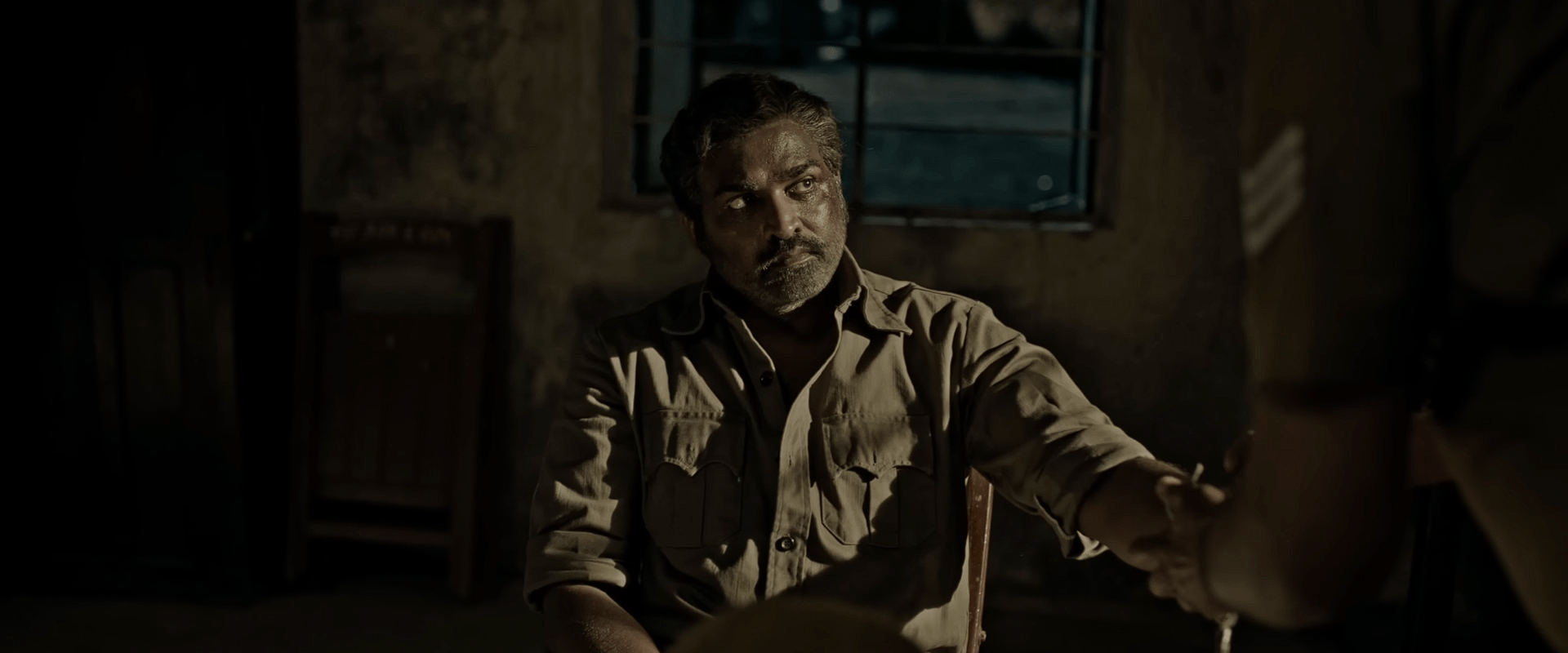
But in Part 2, the energy is different. Characters who were once pivotal barely leave a mark this time. Soori, who practically anchored the first film, appears shockingly late – almost by the 10th or 11th scene – and even then, the script seems unsure about what to do with him.
Vijay Sethupathi’s character dominates the screen, yet ironically feels less impactful. He repeats his ideologies, arguments, and philosophies so often that it begins to feel like overexposure rather than depth… to the point that, as I sat there, I genuinely felt as though my ears were bleeding under the weight of his monologues. Even within the film, a character asks him, “Who asked for your story?” – a moment so meta that I couldn’t ignore its irony.
A Screenplay That Moves Without Rhythm
One of my frustrations was the imbalance in the screenplay. Organically written stories move with rhythm – they drop scenes only when necessary, tighten the pace when the stakes rise, and allow breathing space when emotions need time. But this film often disregards that natural flow.
At least 50 scenes are dedicated to showcasing how Perumal becomes a rebel. I understand the intent, but it made me question why Part 1 managed to make us believe in his rebellion without even one explicit scene. Here, the film overcompensates through relentless action sequences and ideological lectures.
Worse, numerous scenes feel entirely removeable without affecting the core story. In a strong screenplay, the absence of an important scene creates a noticeable jump. But here, I realised that I could mentally lift out many portions and the film would still move the same way.
The romance track is one of the clearest examples of narrative slack. The hero-heroine moments, their songs, and their repeated sweetness function more like nostalgic throwbacks to older commercial cinema than meaningful contributions to the plot. The heroine herself is written with outdated notes – the kind of cheerful, predictable landlord’s daughter we saw in vintage melodramas. In a gritty political drama, the contrast felt forced and tonally misplaced.
Logical Gaps That Disrupt Emotional Engagement
As someone who appreciates Vetrimaaran’s commitment to realism, I was surprised to see the number of logical gaps in this instalment.
For instance, the rebels claim, “we were the ones who placed the bomb on the railway track, but we didn’t intend to explode it; we kept it only to threaten the government; the explosion happened for another reason.”
Yet I found myself thinking: if the intention is to threaten the government, why use a bomb capable of uprooting an entire track? A dummy bomb would serve the same purpose without causing massive destruction. It is a rare moment where the franchise’s trademark logic falters.
Another striking inconsistency lies in the scene where Ilavarasu storms into the Chief Secretary’s house shouting, “In my area, women and children have been shot; won’t you tell me anything?”
But later, the film establishes that the entire village witnessed the shooting at the time of Perumal’s arrest. How would a minister not know this? The disconnect is distracting.
Action That Overwhelms Instead of Elevating
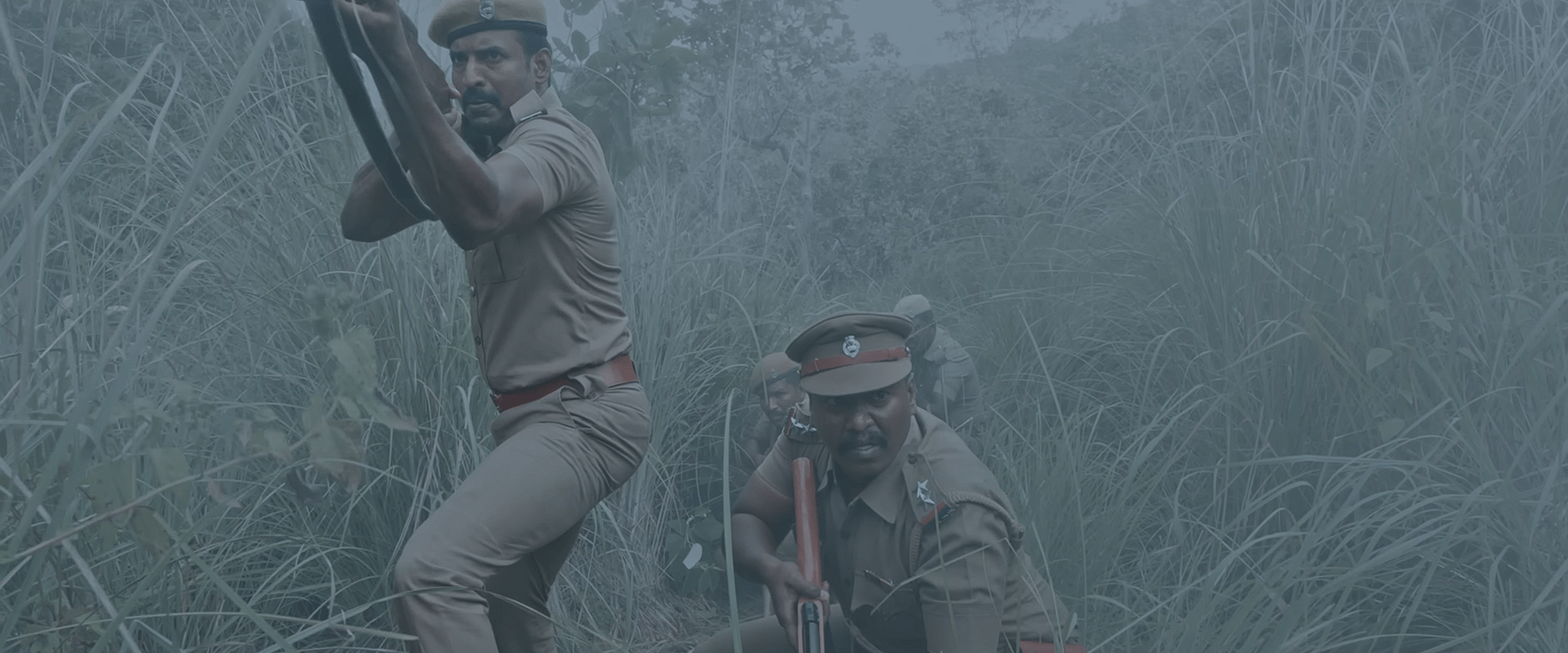
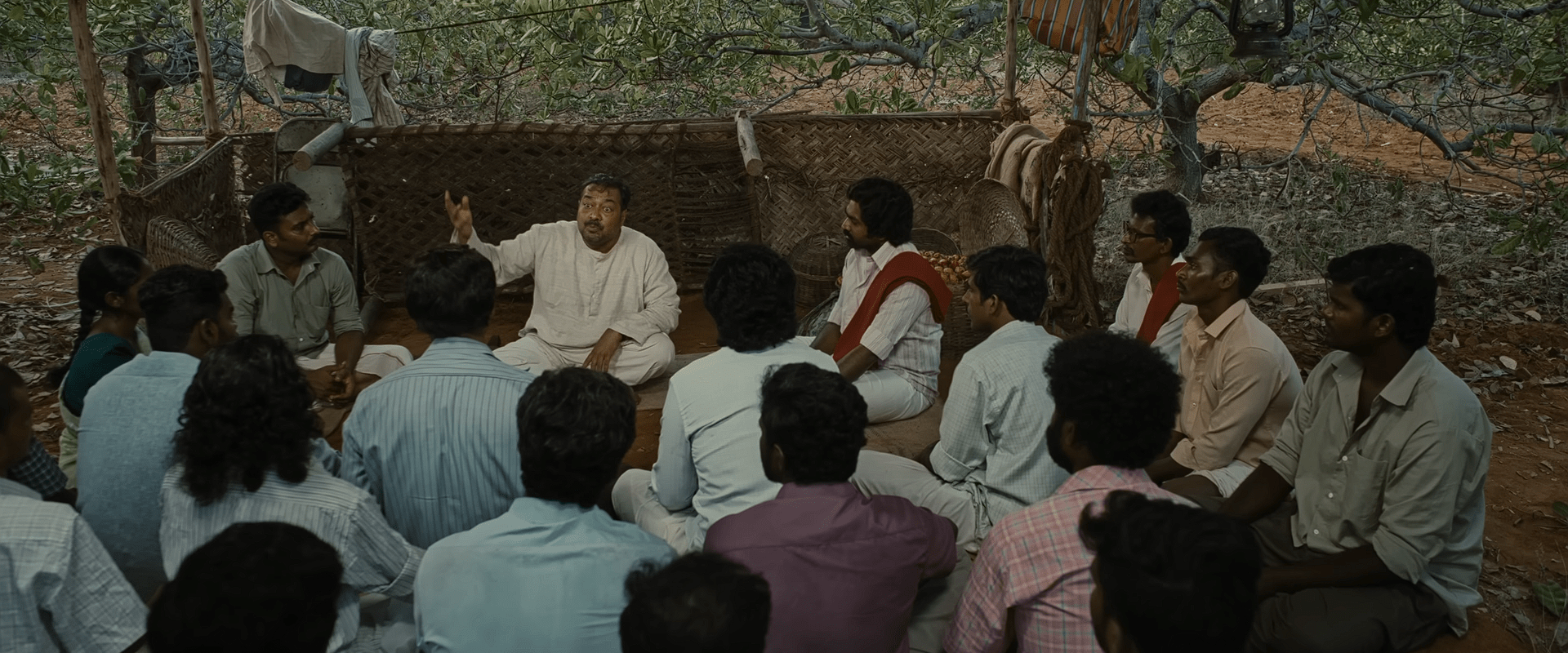
The first half features a solid fight sequence involving Karunas’s son – one of the rare moments where the screen crackles with raw intensity reminiscent of Viduthalai Part 1. But soon after, the film sinks into an endless loop of action set-pieces. Fight after fight unfolds until the spectacle becomes numbing rather than energising.
By the final hour, I felt the fatigue creeping in. The characters’ struggle seemed less exhausting than my own attempt to stay emotionally invested.
The Missing Humour, the Missing Pulse
The original film balanced its grim tone with surprisingly effective humour – who can forget the chow-chow comedy bits that broke tension without breaking immersion? Part 2 abandons this balance entirely. The dryness is constant, the heaviness unrelenting, and the tonal monotony begins to weigh down the narrative.
Final Thoughts – Ambitious, But the Weakest in Vetrimaaran’s Filmography
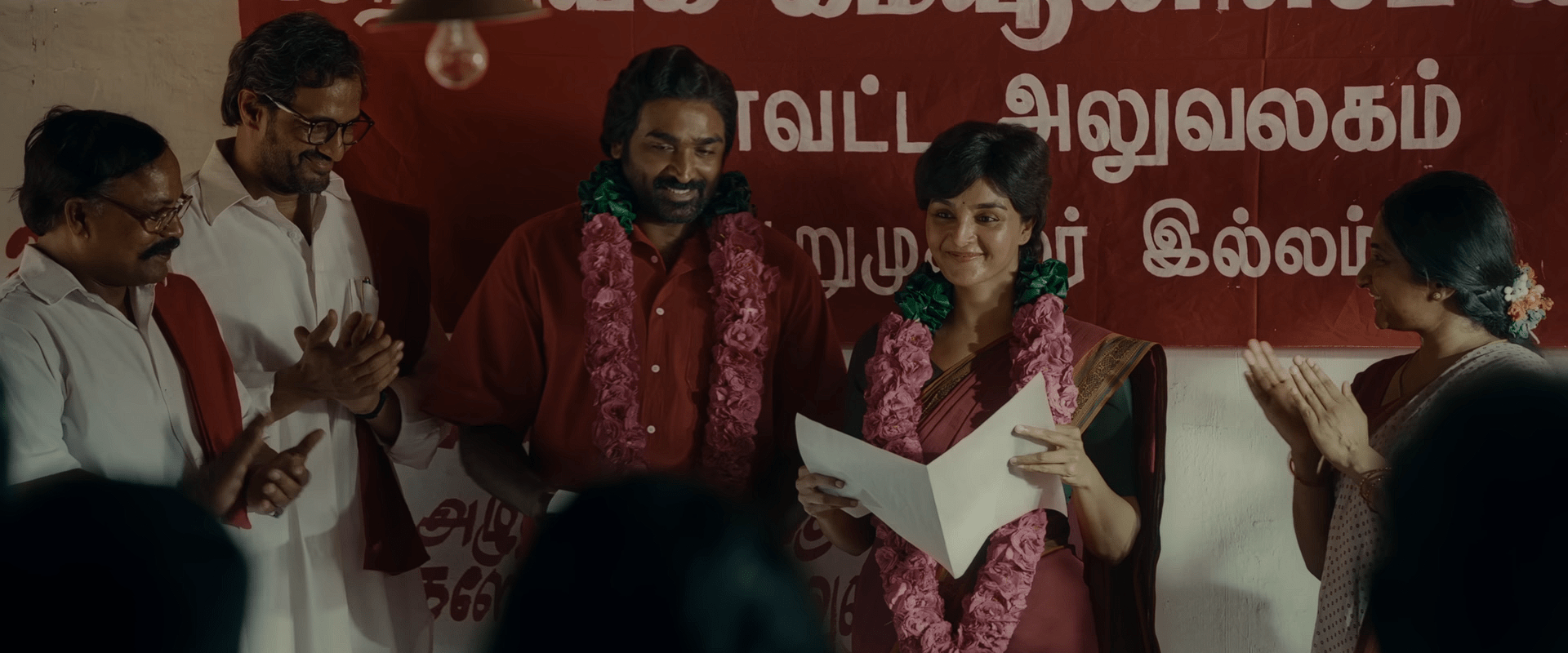
I have immense admiration for Vetrimaaran’s body of work. His films usually blend emotional complexity, political sharpness, and cinematic craft in exceptional ways. But Viduthalai Part 2, despite its ambition and scale, did not rise to the standard I associate with his name.
The film has powerful fragments, but the overall experience feels stretched, uneven, and less emotionally resonant than its predecessor. As a viewer, I walked away thinking this may well be the most average creation in an otherwise extraordinary filmography.
Rating: 2/5