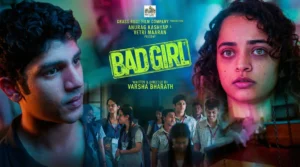
Throughout the entire year, only a handful of movies emerge that truly force you to think – really think – about what just happened on screen. Not the usual “oh, that twist was cool” or “wow, what a great ending” type of thought. I mean a film that provokes a mental itch, that makes you revisit every interaction, every frame, every sound, and question what you consumed. Upendra’s UI falls squarely into that rare category. And strangely, it does so by refusing to behave like a normal film. It is stubborn, self-aware, aggressively confrontational, and occasionally so unhinged that you feel the filmmaker is daring you to walk out mid-screening. This cinematic experiment from the Kannada film industry isn’t just a film – it’s practically a psychological Rorschach test.
I watched it only after a 7-hour train journey to Pune, because it wasn’t released in my city. And trust me, even when I entered the theatre with open expectations, I had absolutely no idea what bird’s nest I was about to thrust my hand into. UI is the rare movie where the experience begins before the actual story does: the moment you step into a theatre, you enter Upendra’s playground. The teaser alone had told me almost nothing – just an actor shooting someone on their butt, which instinctively put it in the category of Kabzaa, Martin, or the “South mass” stereotype.

The Experience Begins With a Warning: The Film That Breaks the 16th Wall
Let me get this out of the way: UI is one of the strangest movies you will see all year. You know the concept of “breaking the fourth wall” – when a character acknowledges the audience, when the illusion of cinematic separation dissolves. Upendra doesn’t just break it. He detonates it. He breaks four, eight, and finally the sixteenth wall, almost as if he’s trying to expose the entire concept of cinema itself.
The film starts with an immediate jolt of attitude. Within minutes, text appears on the screen:
“If you are intelligent, if you use your brain, then get up and leave.”
I audibly laughed. The theatre chuckled with me. Then a line emerges:
“Saw the reel in real life, saw real life in real – but do you have the courage to see real life in real?”
This is where the film reveals its essence. It isn’t just telling a story; it’s interrogating us. The premise: Upendra has made a film, and within this film, there is another film. Audiences inside the movie go to watch that inner film – and that film shows something so profound, so transformative, that anyone who understands it walks out in enlightenment. In theory, a pretty interesting narrative device. In practice… a maze.
A character emerges from the theatre and immediately begins unloading his worldly possessions: jewellery, phone, gold, money. He calls his younger brother and says, “You like my wife, right? Keep her.” His friends stare in horror: “What happened to you?” He replies with a calm, enlightened smugness: “Go back inside, watch the picture. When you understand it, you’ll understand.”
It escalates. A couple walks out saying, “We understood.” The woman complains to her partner that he doesn’t last long in bed. The man agrees without emotion and suggests that she clearly has experience, so they should get a divorce and go their separate ways. They walk off, satisfied, emancipated.

A group of four – two girls, two boys – walks out. Both women suddenly claim to “understand,” and immediately begin kissing each other outside the theatre.
I sat there thinking: What exactly am I watching here? And the film, with an almost comically smug tone, answered: “This is the truth. Only those who understand will understand. If you have the courage, watch and try to understand.” It openly challenges the audience: decipher the real value of life, or drown in meaninglessness.
This part of UI is easily the most fascinating. The intentional confusion is not sloppy – it is calculated. The movie wants you to form theories. It wants you to lean toward your friend in the dark and whisper, “Oh, this means that.” It gently spoon-feeds you meaning at times, and violently hurls symbolism at your face at others. It is both pretentious and insecure, both bold and desperate, both brilliant and juvenile.
- The Experience Begins With a Warning: The Film That Breaks the 16th Wall
- A Movie About Every Social Problem Imaginable – But Served Raw and Bloody
- Visual Madness: AI Art, Adam & Eve, and the Anatomy of Shock Value
- Philosophy vs. Filmmaking: When the Message Eats the Movie Alive
- The Music – The Absolute Downfall
- Technical Aspects: A Cinema That Defies Its Own Competence
- The Man Behind the Madness – Respecting Upendra’s Bravery
- But the Final Verdict: Not a Good Film
- Should You Watch It?
A Movie About Every Social Problem Imaginable – But Served Raw and Bloody
You may now be wondering, “So what is the actual message?” And I will be honest: even I haven’t understood 100% of it. Because the film is a dense web of social commentary. It touches almost every problem in society. It moves from the grand to the personal, from the civic to the intimate, from philosophy to raw cringe. Think of a Shankar film’s obsession with corruption and morality… multiply that by ten… then force-feed it steroids and hallucinogens.
That is UI.
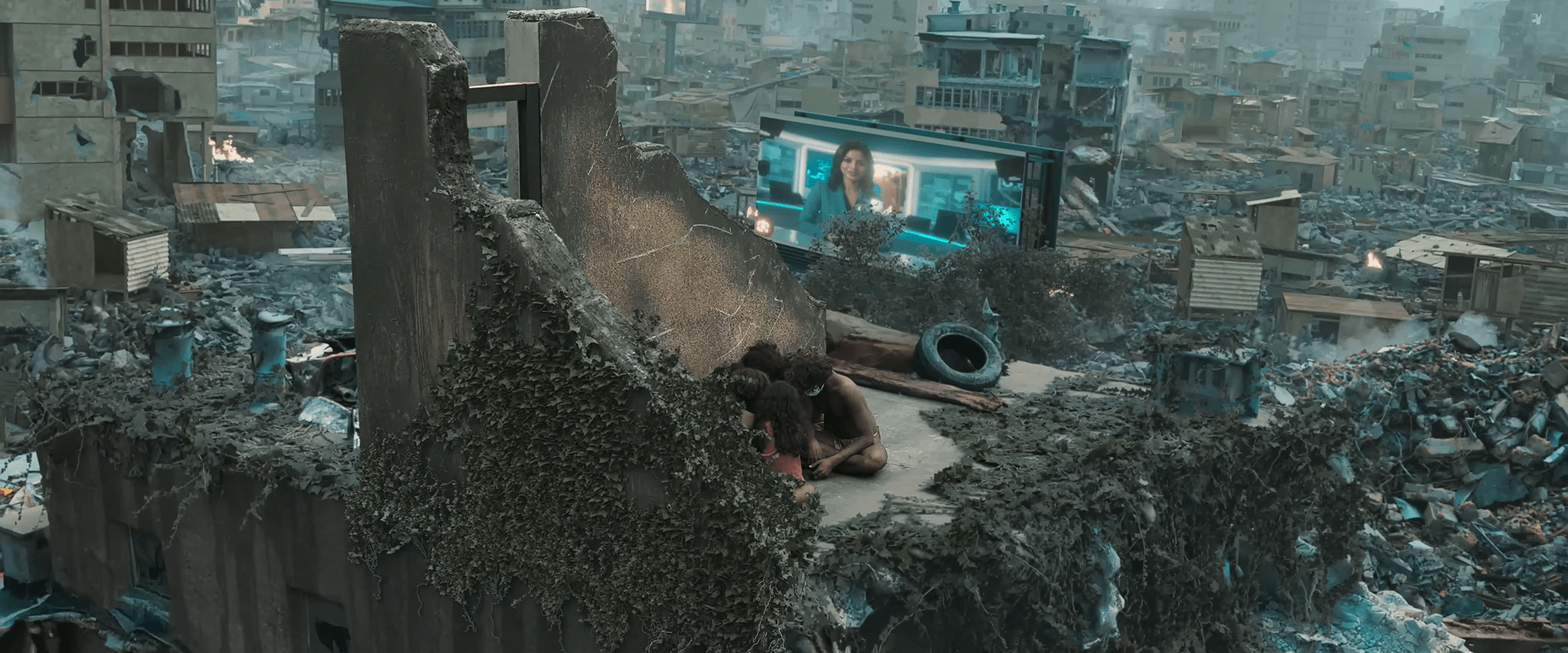
Upendra doesn’t limit himself. He unloads everything – casteism, acid attacks, religious manipulation, internet addiction, obsession with wealth, desire, lust, power, ego, “Kalyug” – and he does it through aggressive metaphor. A man becomes obsessed with a woman. A woman becomes addicted to a man. Phones and reels devour attention while society collapses around people. He even builds an abstract “Inner World” inside the human brain where bad humans are captured and tossed like garbage. It’s absurd, but never boring.
The movie constantly asks: humans are slaves to desire. Humans are stuck. Humans ruin everything. How do we escape?
It’s an interesting philosophical question, but Upendra’s attempt to answer it is too wild for its own good. The style of presentation – over-stylised, bombastic, and gleefully lacking restraint – is the exact stereotype of “South cinema cringe” that trolls throw around. Like the worst of Kabzaa, Martin, Heropanti 2, Baaghi 3. Except here, there is intention. There is purpose. There is… sense. And that makes the bad parts even more maddening: when a film knows it is smart, but performs stupidity with pride, it creates a unique frustration.
Visual Madness: AI Art, Adam & Eve, and the Anatomy of Shock Value
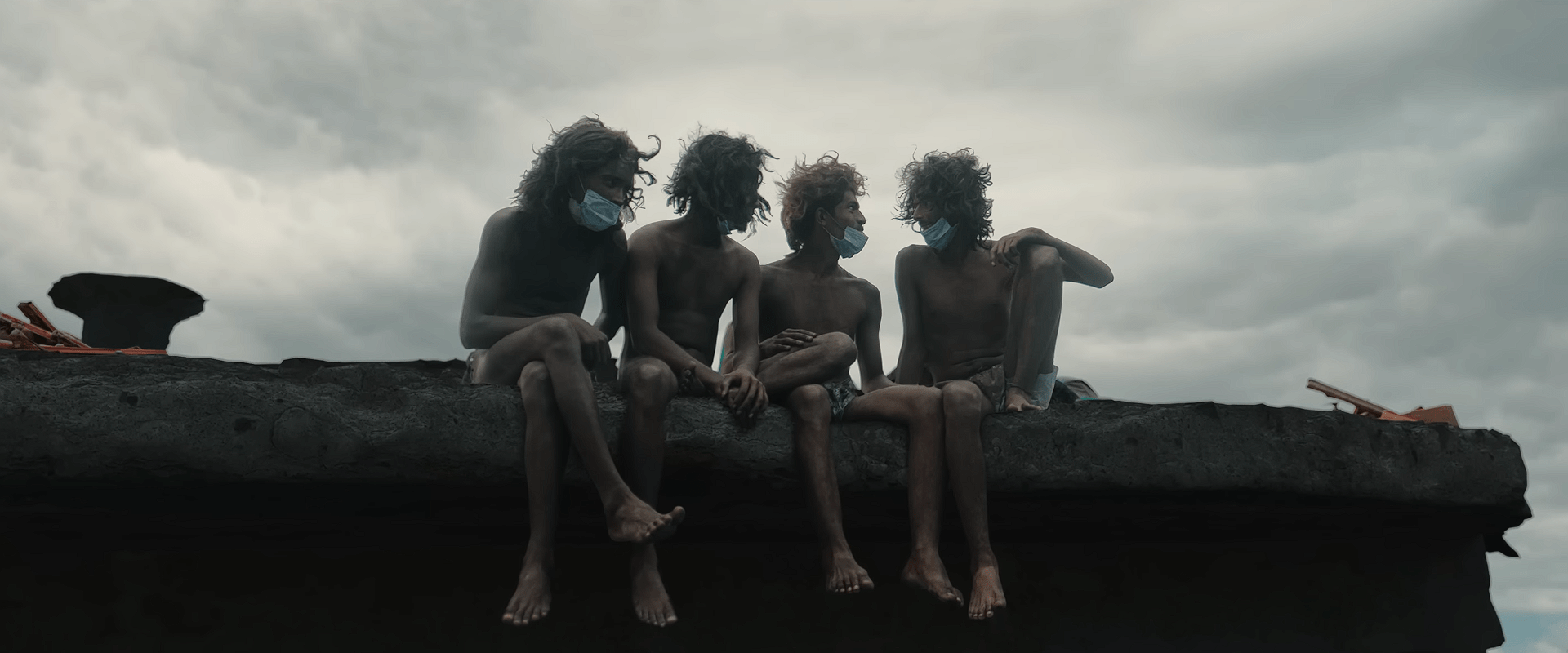
Let’s talk visuals. Right at the start, the movie unleashes a barrage of AI-generated images. Not the fancy high-end stuff of 2024 or the cinematic generative tech we’re now seeing. No – UI uses the mid-2022 style: distorted hands, mismatched shadows, textures that scream “algorithm,” and bizarre compositions. A guitar filled with intestines. Brains spilling from places they shouldn’t be. Flesh popping out from random corners. Everything extreme, everything loud.
Then comes the Adam and Eve sequence: humanity’s original sin, represented with leaves so small that you almost think costume design was intentionally trolling us. If larger leaves were available, Upendra clearly refused them. Because subtlety is dead in UI. Shock value is its language.
Medical mafia scenes are no less deranged. A character checks something medically – first with one gesture, then with a lick. Yes, an actual lick. The theatre reacted with uncomfortable laughter, groans, and “oh god why” muttering.
The meta-commentary continues. Within the movie-inside-the-movie, Upendra mocks reviewers. One reviewer becomes so overwhelmed by the film that he sits naked while giving his opinion. They even name-drop a reviewer similar to Karan Adarsh (India’s “top film critic”), who claims he needs a week to form a verdict after multiple viewings.
This self-awareness is fascinating. Every moment screams: “We know you don’t understand. We know you’re confused. But we also know you will talk about us.”
Philosophy vs. Filmmaking: When the Message Eats the Movie Alive
Here’s the contradiction at the heart of UI. The core concept is so interesting, so unusual, that it could have easily been something special. A meta-film where audiences lose their minds after discovering the meaning of life? Where society’s ills are dissected through satire and symbolism? Where enlightenment becomes cinematic infection?
It sounds brilliant.
But Upendra pushes everything to extremes, just to prove a point. And in that madness, craft collapses. The filmmaking feels at times lazy, rushed, or simply overwhelmed by its own ideas. Imagine Inception – but directed in the most cliché “South action” style. Insert some painfully bad songs. Now dump heavy social preaching on top. That’s UI.
The film knows the audience has consumed endless “society must change” sermons. It knows you’ve seen movies where corruption is bad, where humans are selfish, where technology distracts us. It mocks that tradition by showing how audiences feel emotional for three hours then go home and do nothing. So Upendra invents a character who steps outside the script and tells you directly what you should do. The film believes that direct instruction may finally force action.
But the human truth remains: people don’t care. They will watch it, laugh, cringe, or feel startled – and then they will go home.
The Music – The Absolute Downfall
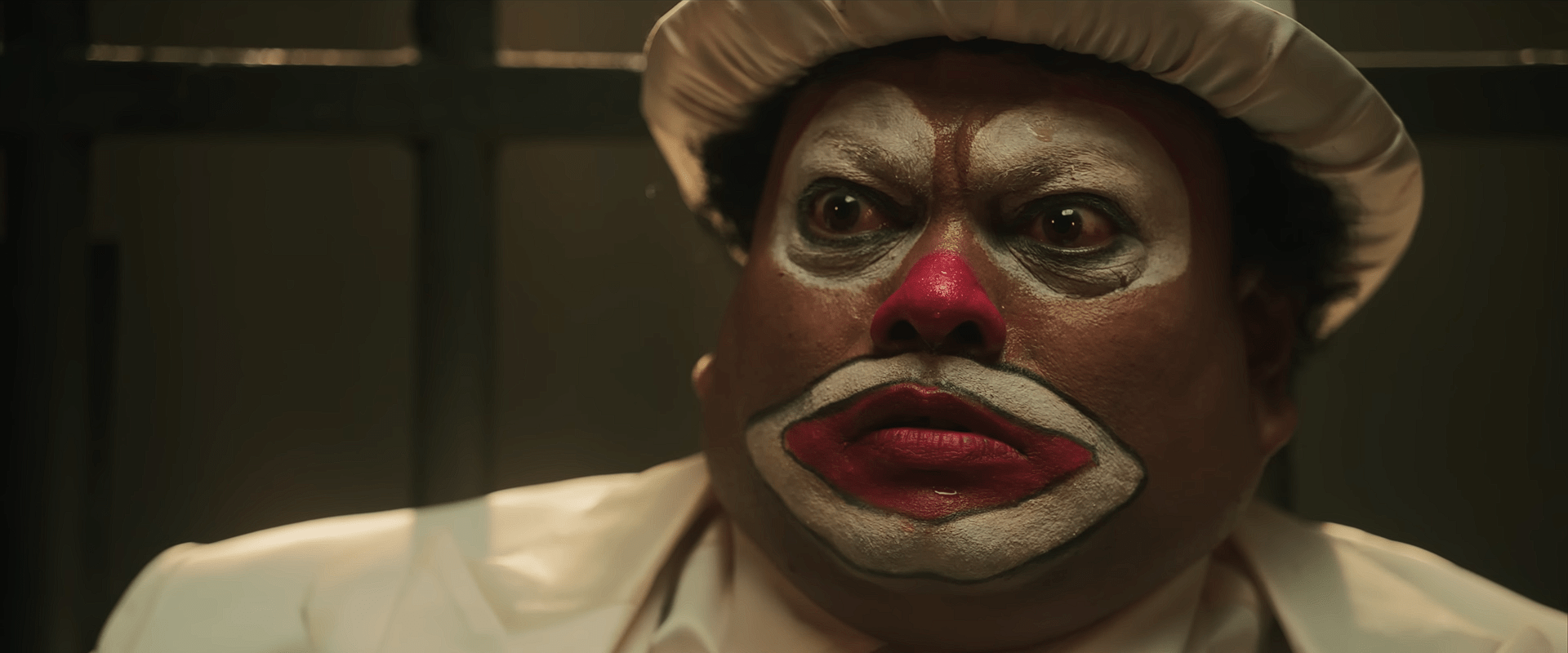
If you think everything above is already too much, let’s talk about the songs. Oh. My. God. I watched the Hindi dub, and I assure you these are the official lyrics:
“Mumbai ka khan-dom,
Thalaivar ka stardom,
Chiranjeevi ka fandom,
Satya ka wisdom.”
The film within the film literally places Upendra alongside legends from other industries. By Upendra. Inside Upendra’s movie. It is ego, satire, or both – but either way, it hurts.
Then there’s the social commentary on internet reels. Immediately after the lecture, a song begins:
“Moe moe saada kutta kutta,
Toda kutta Tommy,
I am a liver looking like a wow.”
Yes. These lyrics are real.
But nothing beats the moment I almost fell from my seat:
“Mera zyada hai bada
Tera to isse kaafi chhota hai
Kitna chhota hai tera
Uska isse zyada hai bada.”
And this is accompanied by a dance step where performers place lungi cloths between their legs and move them back and forth. I wish I were exaggerating. I am not.
Technical Aspects: A Cinema That Defies Its Own Competence
Normally, this is the section where I would talk about VFX, cinematography, visual design. And I want to avoid doing it here. Not because the visuals are altogether bad, but because criticism feels meaningless. Unlike Kabzaa, Martin, or Heropanti 2 – which were mindless action films attempting seriousness – UI actually uses sense. It is aware of its choices. So tearing it down for technical flaws feels like missing the point.
The film constantly whispers: “You’re analyzing the wrong thing.”
The Man Behind the Madness – Respecting Upendra’s Bravery
No matter what you think of UI, one thing is unavoidable: Upendra deserves absolute respect for creating it. To write it, direct it, act in it, and then present it to audiences with full confidence – that takes guts. Titanium ones. Not the kind you flex, but the kind that risk humiliation in the pursuit of something new. He has not played safe. He has not merely experimented. He has weaponized cinema against its own conventions.
You need courage to make such a film. Not just to imagine it, but to execute it. And on that level, UI is an achievement.
But the Final Verdict: Not a Good Film
Let me be brutally honest. I am reviewing a film, not a philosophy debate. And at the end of the day, UI simply isn’t a good movie. It is a fascinating spectacle, a provocative concept, an intellectual puzzle – but not good cinema. It overwhelms itself. It drowns in its own ambition. It mistakes shock for enlightenment, and spectacle for clarity.
Everything I derived about its messages came from my own active theorizing, because the movie throws you a challenge: “Can you catch it?”
So I was constantly decoding: “This means this. That means that…” But the majority of viewers, the people who walk into a theatre on a weekend – will not care. They will walk out confused, annoyed, or exhausted.
Should You Watch It?
If you feel adventurous… yes. Try it. Treat it like a mental ride, a psychological maze, or a dare from a madman who insists art must hurt you to mean anything. Don’t expect satisfaction. Expect chaos. Expect the absurd. Expect something you will talk about for days – maybe not for good reasons, but certainly not forgettable ones.
Rating: 2.5/5
A bold, polarising cinematic experiment that challenges the audience more than it entertains them. Admirably fearless – but fatally undisciplined.