Experiencing The Devil in theatres felt like stepping into a world fuelled as much by cinema as by the unwavering loyalty of Darshan’s fandom. Long before the film began, the atmosphere outside the theatre resembled a celebration – giant cutouts, flowers, drums, and groups dancing with unrestrained joy. That kind of adoration is rare, especially for an actor who isn’t actively promoting the film. Watching fans turn the release into a festival made me reflect on how powerful the bond between a star and an audience can be. A part of me hopes Darshan himself eventually takes a step back, sees this overwhelming love, and chooses a path that strengthens his connect with those who celebrate him so passionately.
A Title That Fits Like a Shadow
The name The Devil doesn’t function as a metaphor alone; it is the literal identity of the protagonist. Darshan plays a man known as “Devil,” and the film cleverly builds its thematic spine around that persona. Initially, the narrative places him abroad, away from his homeland, but circumstances guide him back into a politically combustible space.
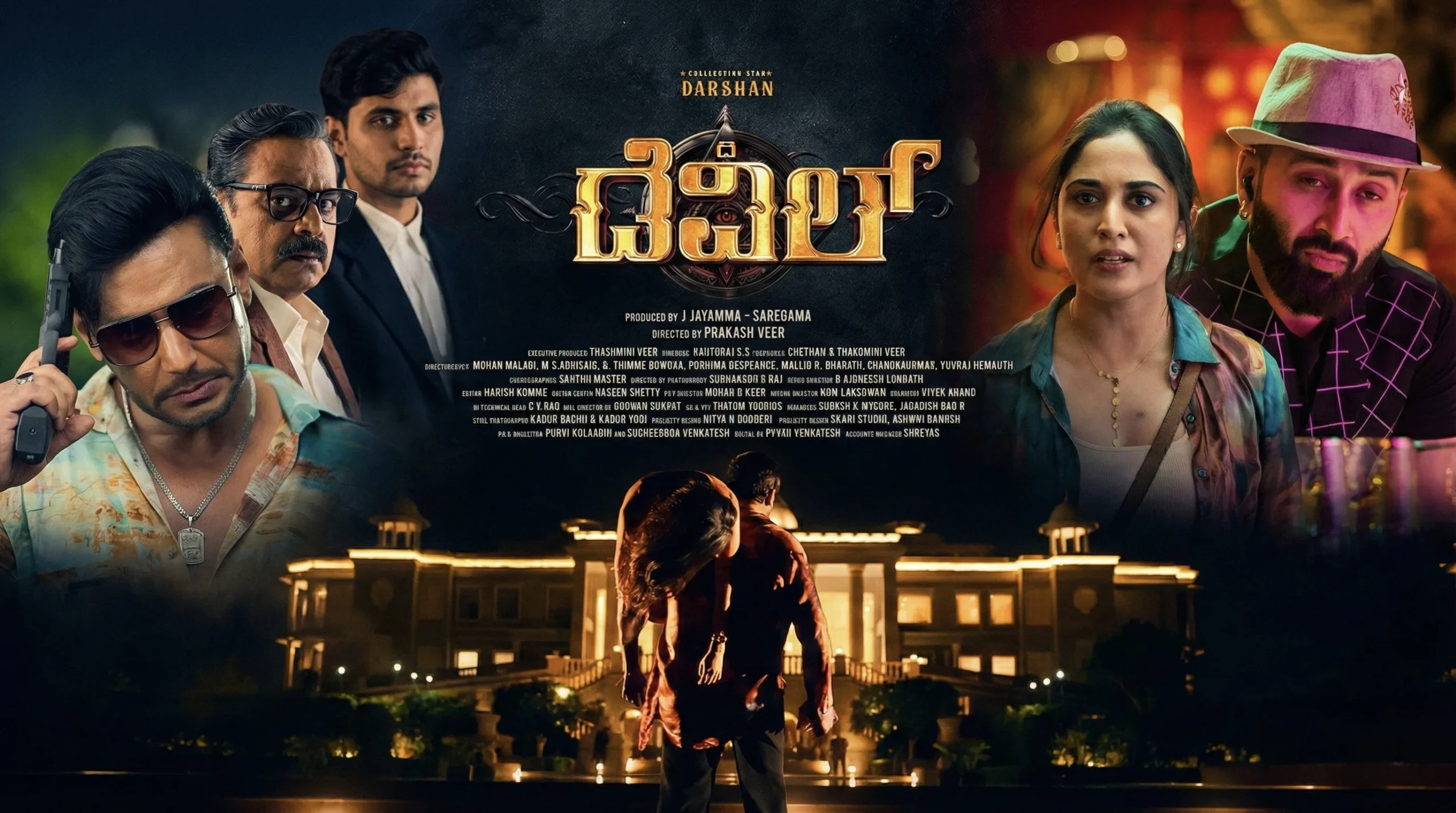
At its heart, the story is a political one – a look at how power is built, how it collapses, and how people become pawns in games crafted by those who want to stay in control. The premise itself is extremely uncomplicated:
A successful politician rises, forms a powerful party, falls due to corruption, lands in jail, and the chain of events after this downfall forms the essence of the film.
This is essentially a two-line plot expanded into a full-fledged commercial entertainer. What elevates it, though, is the political chessboard the film constructs – alliances, betrayals, and an unpredictable entrant in the form of Devil, who steps into the chaos with both mystery and swagger.
- A Title That Fits Like a Shadow
- A First Half Driven by Introductions, Energy, and Confident Rhythm
- Technical Work – Strong Foundations with Notable Cracks
- Music, Background Score & the Emotional Undercurrent
- Screenplay, Dialogues & Writing – Effective but Inconsistent
- A Second Half with Emotion, Friction, and Unresolved Arcs
- Climax, Ending & the Tease of a Sequel
- Beyond the Film – Noise, Narratives & Real-Life Parallels
- My Final Perspective
A First Half Driven by Introductions, Energy, and Confident Rhythm
Within minutes, the film introduces all major characters with brisk storytelling. Darshan’s entry lands with the impact expected from a mass hero, boosted by the lively track “Idre Nemdiyaag Irbek.” The first half even sprinkles in two songs – a soothing melody and an emotional, mother-centric track reminiscent of Darshan’s earlier work.
This half focuses on laying out the key players. Some characters appear immediately, some take their time, but the narrative ensures Darshan’s presence dominates without overshadowing the ensemble completely. What intrigued me the most was the fluid dynamic between hero and villain. The film deliberately blurs the lines, creating moments where I found myself evaluating motivations more closely than usual. The fights don’t merely function as whistles-for-the-hero moments; instead, they add another layer to the ambiguous moral landscape.
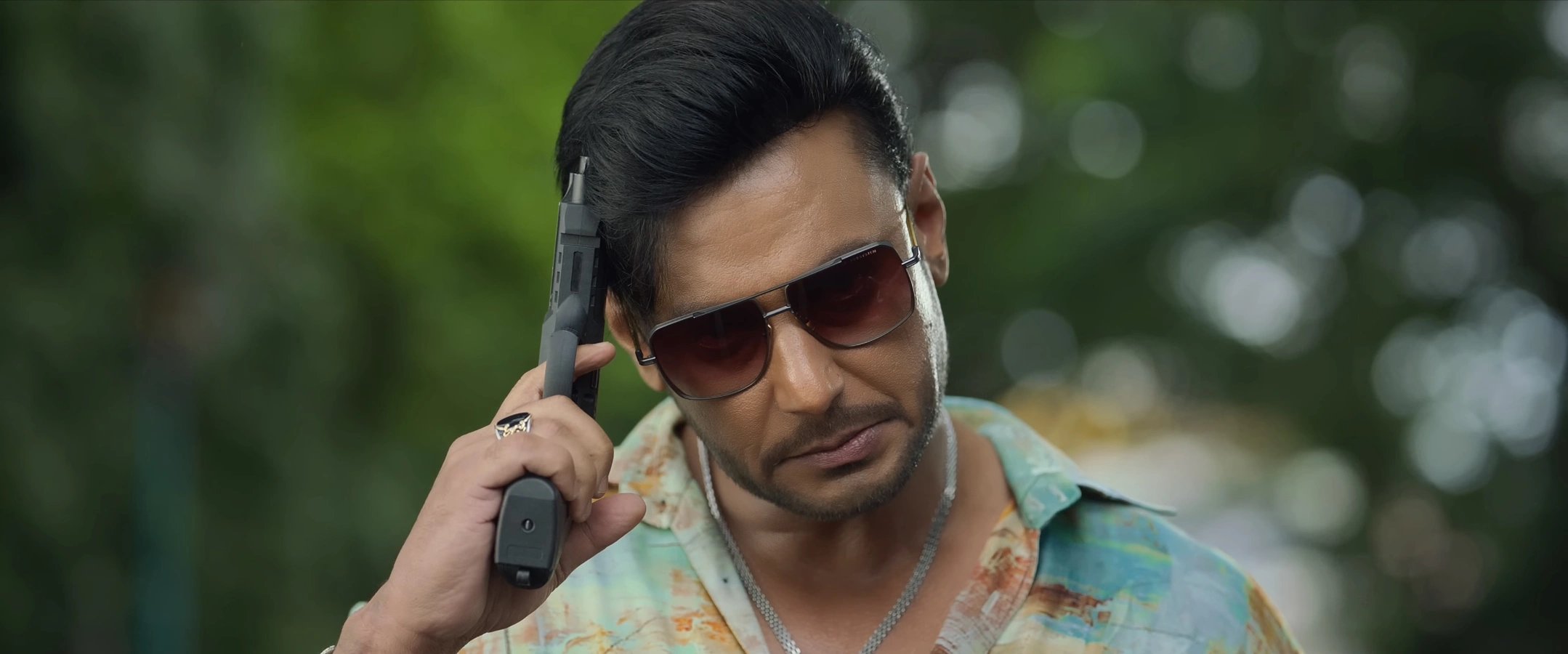
Rachana Rai emerges as an unexpected delight. I hadn’t seen her earlier films in theatres, but here she performs with both restraint and confidence. Gilli and Huli Karthik deserve special appreciation – they become scene-stealers, particularly Gilli, who receives the loudest cheers after Darshan. Even in the relatively quieter multiplex where I watched the film, his scenes prompted surprising whistles. I can only imagine the frenzy in mass centres.
The chemistry between Darshan and Huli Karthik is warm, humorous, and emotionally grounded. Their friendship acts as a pleasant counterbalance to the political heaviness and gives the film some of its most heartfelt interactions.
Technical Work – Strong Foundations with Notable Cracks
The cinematography is genuinely impressive. Many frames carry a striking polish, and the camera movements reflect thoughtful planning. The editing feels far more refined than I expected, especially considering the rumours suggesting the film was rushed. Thankfully, the finished product shows clear effort.
But the VFX feels inconsistent. One moment that pulled me out of the film was a pond with eerily still water. Another was a woman’s hair moving in an unnatural, animated manner. When the industry now routinely uses top-grade cameras – Arri, RED, and advanced 4K/8K rigs – such visual hiccups stand out more sharply than they should.
Dubbing works well overall, and Darshan’s dual-toned delivery becomes meaningful only after the story unfolds deeper.

Music, Background Score & the Emotional Undercurrent
Ajaneesh Loknath’s background score hits its peak during Devil’s introduction, creating a sense of authority and impact. But beyond that moment, I felt the BGM could have carried more weight. A politically charged entertainer thrives on sonic intensity, and some scenes deserved a stronger musical push.
Still, certain quiet emotional moments land beautifully. One simple yet memorable scene involves Darshan cooking sambhar for school children. It is tender, human, and instantly endearing – easily one of my favourite scenes.
Screenplay, Dialogues & Writing – Effective but Inconsistent
Because the story itself is minimalistic, the screenplay shoulders most of the responsibility. It succeeds in parts – some emotional beats rise beautifully – yet I often wished the writing had more punch.
One early dialogue captured my attention immediately:
“A man holding hay cannot call a cow, but the one holding fodder can call even an elephant.”
Lines like these are powerful, but they appear too rarely. Surprisingly, the popular trailer dialogue –
“The sun never remains in an eclipse for long. I will come, dear.”
– does not appear in the film, even though the climax felt like the perfect place for it.
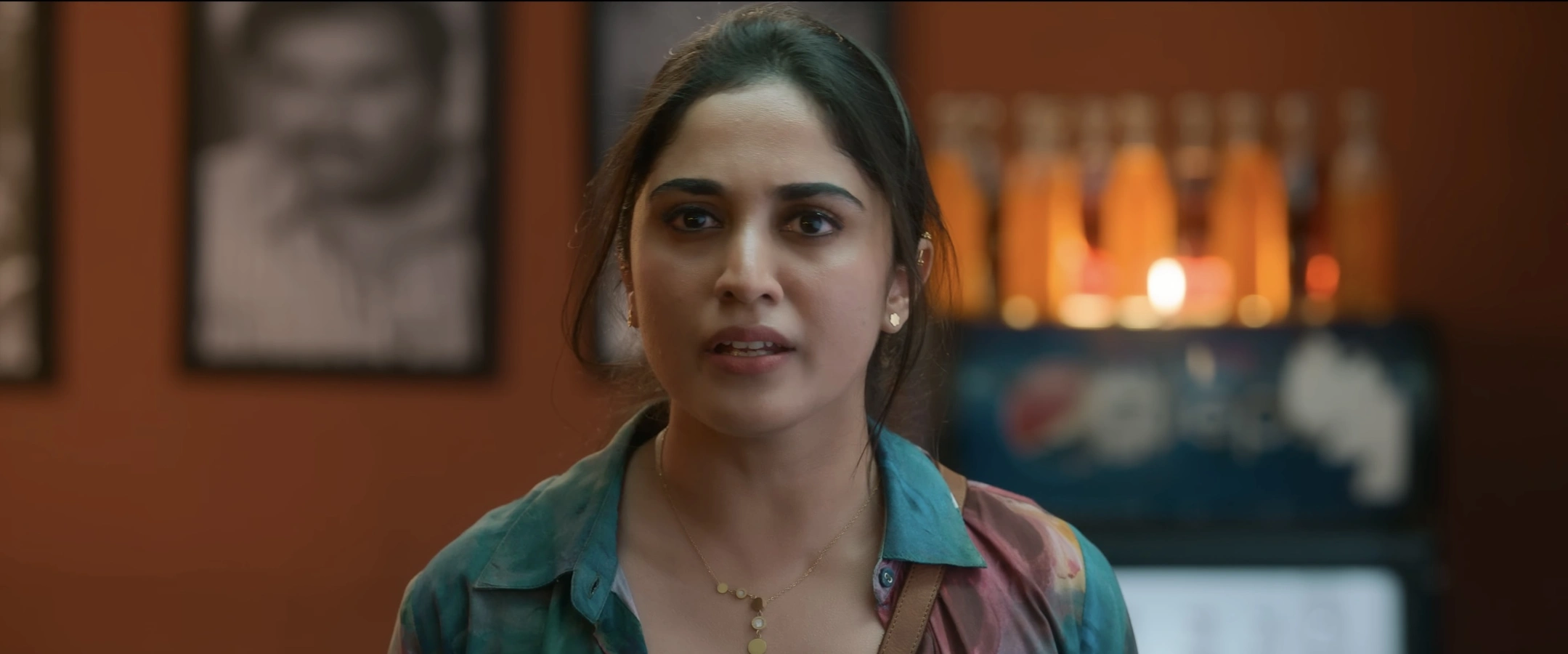
The first half carries more twists, humour, and energy. The second half, though emotionally richer, slows down and occasionally scatters its narrative threads. Characters like Sharmila Mandre’s appear abruptly and vanish without meaningful impact.
A Second Half with Emotion, Friction, and Unresolved Arcs
As the second half progresses, Huli Karthik’s character becomes the emotional anchor. His arc left me repeatedly thinking, “brother, brother,” especially as circumstances tightened around him. Yet this half also exposes the screenplay’s looseness. Some plotlines feel stretched, others unfulfilled, and a few characters float without resolution.
The film includes two notable twists – one early and one near the climax. Both work well, though I wished the narrative had more layers leading up to them. The three to four action sequences offer a mix of freshness and formula, keeping the momentum alive.
Climax, Ending & the Tease of a Sequel
The climax carries emotion, sacrifice, and a couple of well-placed surprises. Although it delivers a strong final stretch, the film ends abruptly, almost as if deliberately teasing Devil 2. While such an ending creates curiosity, it also leaves a few threads dangling, making the conclusion feel more like a pause than a definitive resolution.
Beyond the Film – Noise, Narratives & Real-Life Parallels
The period leading to the release witnessed media noise, rumours, and even a court directive disabling BookMyShow ratings temporarily. The film subtly references a few real-life situations linked to Darshan but never dwells on them. Despite attempts by certain sections to influence audience perception negatively, the turnout remained strong.
The ticket chaos at theatres are also high. My personal hope is simple: fans must celebrate responsibly. Cinema should never lead to injury or inconvenience. Interestingly, even Devil’s character displays a certain discipline that real-life fans could take inspiration from.
My Final Perspective
Even though the storyline is fundamentally straightforward, the film shows honest effort. Darshan looks stylish – perhaps the most polished he has looked in recent years – and his innocence in several scenes adds emotional depth. Gilli continues to shine with undeniable charisma. The political landscape, the emotional beats, and the character interactions work more often than they falter.
Yes, the film could have benefited from:
- stronger dialogue writing,
- more refined VFX,
- a tighter second half,
- and better-developed side characters.
Yet The Devil still stands as a satisfying experience. For the general audience, it works as a solid one-time watch. For Darshan fans, it will undoubtedly be a repeat-viewing celebration.
I entered with no expectations, and despite the flaws, I walked out recognising the sincere work put into expanding a two-line plot into a full-scale mass entertainer.
Rating: 3/5