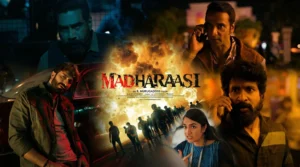
I just returned from watching Tere Ishk Mein, the much-talked-about collaboration of Dhanush and Kriti Sanon, and my mind is still buzzing with the intense emotional storms the film constantly brews. Before I even get into the film’s core, let me clarify something for those who may not be fully familiar with its lineage. This film isn’t titled Raanjhanaa 2, but in every meaningful way, it stands as the spiritual successor to that iconic 2013 film.
The entire creative core of Raanjhanaa – director Aanand L. Rai, writer Himanshu Sharma, composer A.R. Rahman, and Dhanush himself – has returned. And honestly, after watching the film, I’d even argue they could’ve named it Raanjhanaa 2 directly. Perhaps because of a producer change or a conscious decision to distance it from direct continuation, they chose a new title. But the thematic and emotional DNA is unmistakably shared.

What is interesting is how the director attempts to recreate the Raanjhanaa energy for a new generation. Not by remaking or copying the same story, but by borrowing its emotional risks – the madness, the recklessness, the flawed lovers, and the imbalance of affection that spirals into chaos.
And that’s the foundation on which Tere Ishk Mein stands tall: a film about the terrifying, beautiful, and scorching intensity of one-sided passion.
A Cross-Cultural Film That Feels Indian, Not Strictly Bollywood
One of the first curious things I noticed was the language blend. I booked tickets for a Hindi film. Yet very early into the screening, I found English subtitles appearing for dialogues that shifted into Tamil. Dhanush speaks Tamil in several scenes, especially in pivotal exchanges with Prakash Raj. In one bar scene, where Dhanush delivers the sharply written line – “Tum pehle se acche hoge Abeer, lekin main naya-naya accha bana hu” – Kriti’s character Mukti and Abeer converse in what sounded like French or possibly another European language.
So is this technically a Hindi movie? Or a multilingual Indian film? It doesn’t matter much, but the blend is surprisingly organic. The mixture of Hindi, Tamil, and occasional foreign-language snippets gives the world of the film an interesting cultural richness. It feels like a story that moves across states, cultures, and emotional landscapes – never confined to linguistic boundaries.
- A Cross-Cultural Film That Feels Indian, Not Strictly Bollywood
- A Story Kept Hidden, A Trailer That Revealed Nothing – and Why That Works
- A Brilliant Structural Choice: The Air Force Opening
- On Writing and Screenplay: A Strong, Confident Narrative Voice
- My Theatre Rant: The Pain of Watching a Serious Film with Non-Serious People
- Direction and Handling of the Air Force Angle: Thankfully Not Another Zero
- Dhanush: A Phenomenal Performance Anchored in Rage and Vulnerability
- Kriti Sanon: A Performance That Grounds the Film
- Supporting Cast: Strong Performances that Deepen the Drama
- Visuals, VFX, and Immersion: Good Intentions, Imperfect Execution
- A.R. Rahman’s Music: Beautiful, Stirring, but Sometimes Misplaced
- This Is Not a Love Story – It Is a Story of Anger
- Second Half, Climax, and Landing: Imperfect But Satisfying
- Final Verdict: A Fiery, Flawed, But Deeply Engaging Successor to Raanjhanaa
A Story Kept Hidden, A Trailer That Revealed Nothing – and Why That Works
The trailer for Tere Ishk Mein was unusually reserved. It barely gave away anything substantial. And I respect that, so I won’t reveal the entirety of the plot here either. What I can say is that the film smartly uses the little shown in the trailer as the foundation of something broader, more volatile, and emotionally layered.
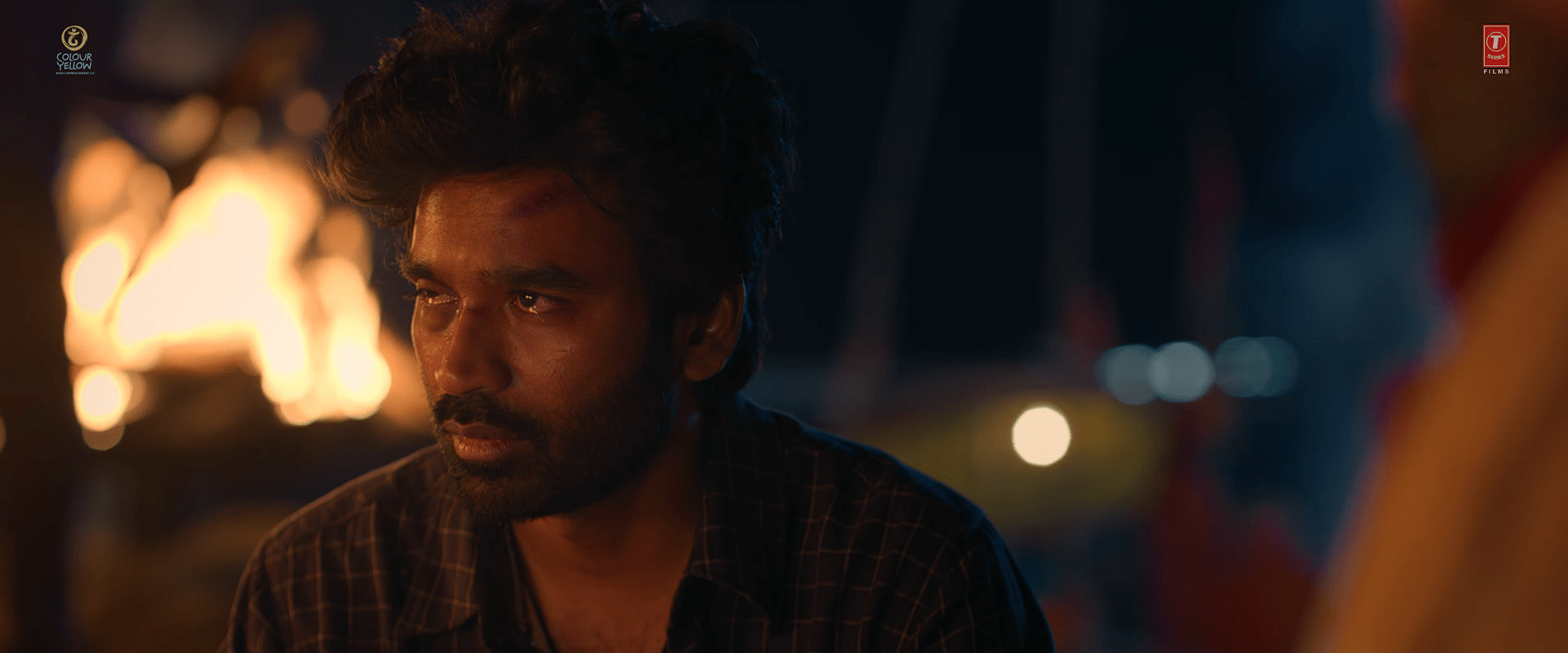
What I must state clearly though is this: Every calamity in this film begins when Kriti Sanon’s Mukti looks at Dhanush’s troubled, volatile, dangerously emotional character Shankar and silently thinks: “Oh, toxic boy. I can fix him.”
That one instinct sets off a chain reaction so powerful that the entire narrative becomes a study of imbalance – the kind that happens when one person feels too much and the other doesn’t even realize what fire they are standing next to.
Shankar is not your usual wounded, soft-hearted lover. He is angry, impulsive, wounded, destructive. Someone who has lived hurting others, bullying others, finding rage as a comfort zone. And Mukti, unknowingly, steps into his storm thinking she can soothe it.
The film plays with this dangerous dynamic beautifully. It asks uncomfortable questions about love:
What happens when feelings don’t match? How do you deal with a lover whose emotions burn at the intensity of a forest fire? What happens to a girl who thinks she’s dealing with sadness, but is actually dealing with a volcano?
Tere Ishk Mein is not a romance.
It is a rage story.
A story of what anger, obsession, and madness in love can mold a person into.
A Brilliant Structural Choice: The Air Force Opening
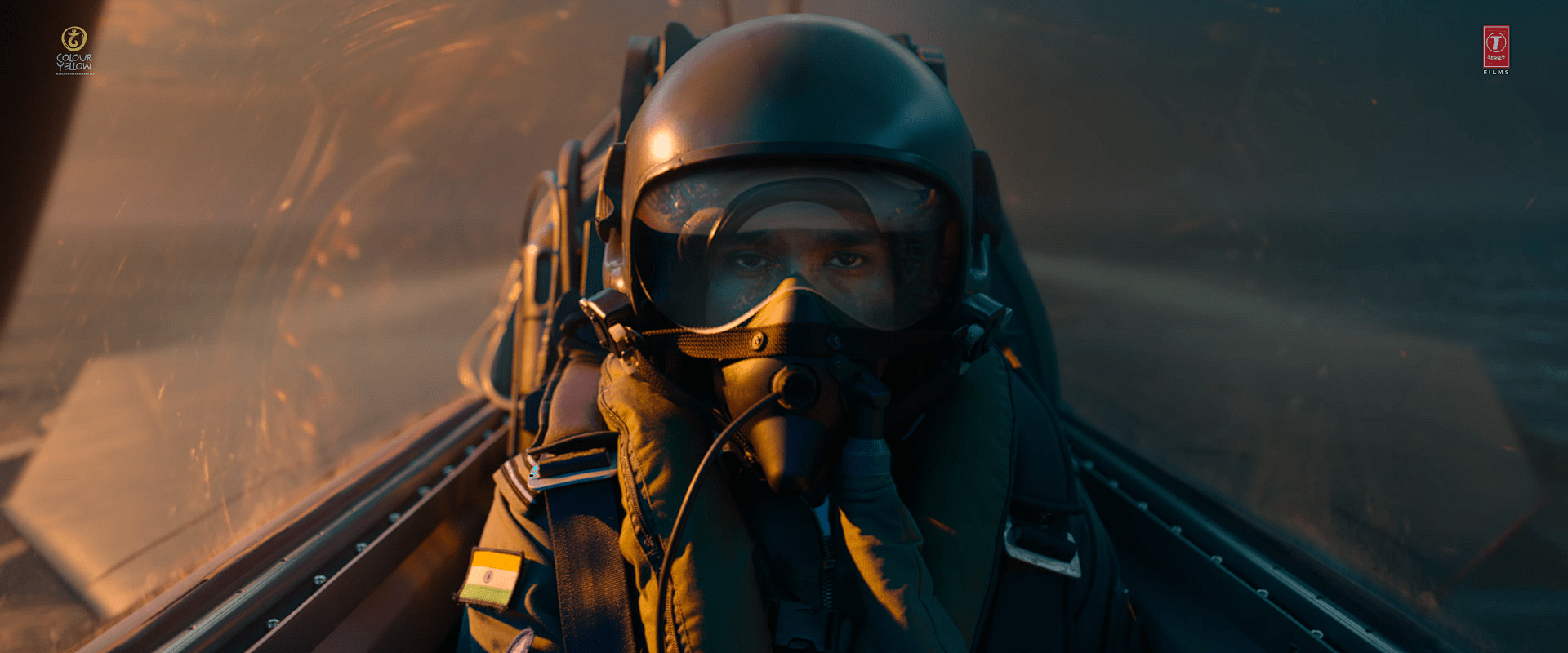
One of the strongest decisions in the writing is the film’s structure. Instead of beginning with a boy-meets-girl setup, the film opens in the present timeline – inside the Air Force world. The first major action sequence shows Flight Lieutenant Shankar stopping a Chinese aircraft from dropping something dangerous into Indian territory. The scene doesn’t just inject adrenaline; it also creates immediate intrigue about who this man is beneath the uniform.
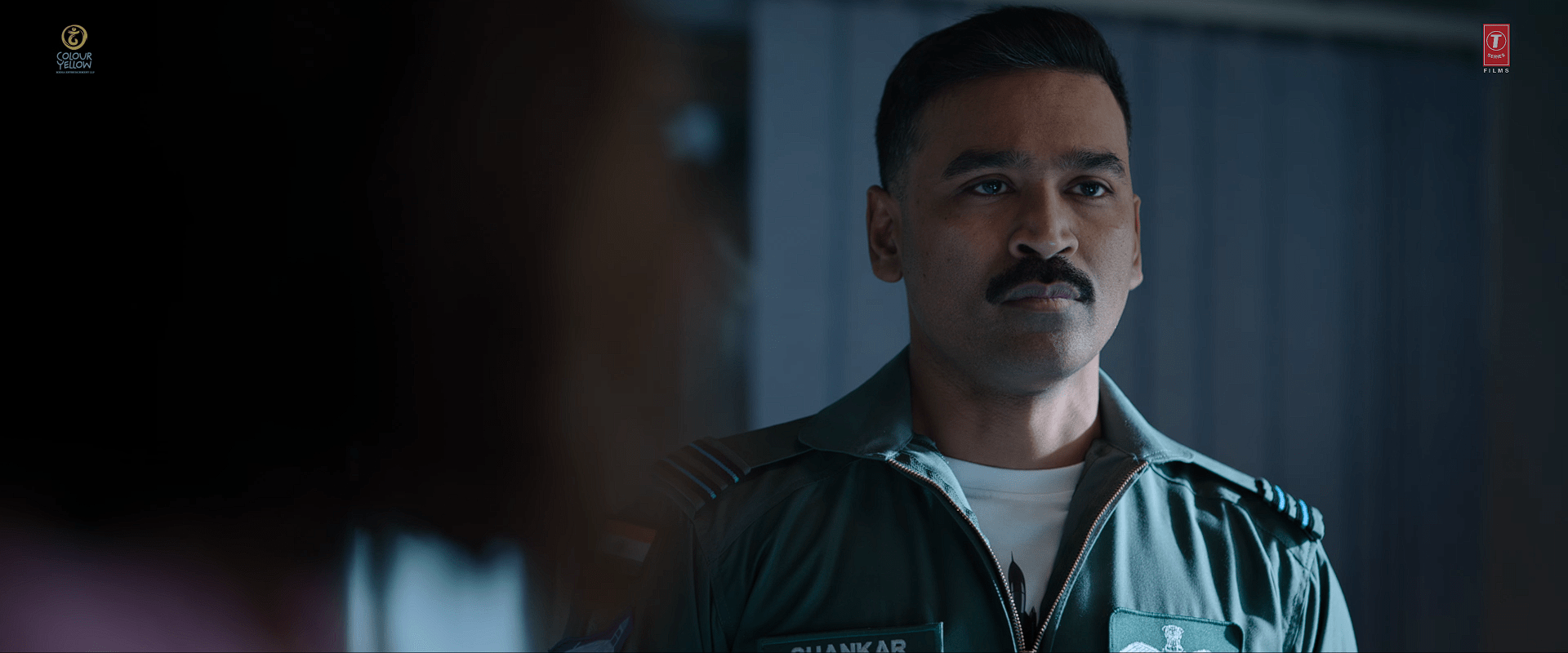
Soon after, circumstances (which I won’t spoil) lead Shankar and Mukti to cross paths at the Air Force base. And then the story begins peeling back layers, shifting between the present and past, revealing the one-sided love story piece by piece. The transitions feel seamless, cinematic, and deliberately designed to intensify engagement.
On Writing and Screenplay: A Strong, Confident Narrative Voice
From a writing perspective, the screenplay is remarkably confident. The character introductions are sharp, the interactions organic, and the pacing initially tight. Compared to many melodramatic love stories that rely on overdone tropes, Tere Ishk Mein builds its world with believable emotional logs that eventually ignite into flames.
And though I joked earlier that comparing this to something like Ek Deewane Ki Deewaniyat makes this film a masterpiece – there is truth in that hyperbole. The film speaks to common emotional experiences:
women searching for logic and security, men responding emotionally with fire and impulsiveness,
and the unavoidable imbalance that arises when one heart rises too high.
This idea – the madman’s madness in love – is what the film wants to echo.
My Theatre Rant: The Pain of Watching a Serious Film with Non-Serious People
Let me take a personal detour. I watched the film with what I can only describe as one of the worst theatre audiences. Three boys walked in 15 minutes late, sat next to me, and kept asking, “how much time has passed?” Half the time their phone lights were blinding me; the other half they were giving live commentary. When you miss the setup, how do you expect to understand a film this layered?
So, if you’re planning to watch Tere Ishk Mein, please do yourself and others a favour –
reach on time and switch off your phone.
Direction and Handling of the Air Force Angle: Thankfully Not Another Zero
I had a genuine fear before watching the film: Aanand L. Rai also made Zero – a film that began beautifully and then abruptly took a NASA-astronaut detour into chaos.
But here, the Air Force angle is handled with far better balance. The personal story and the patriotic subplot are interwoven from the beginning, ensuring the second half doesn’t feel like it belongs to a different film.
Dhanush: A Phenomenal Performance Anchored in Rage and Vulnerability
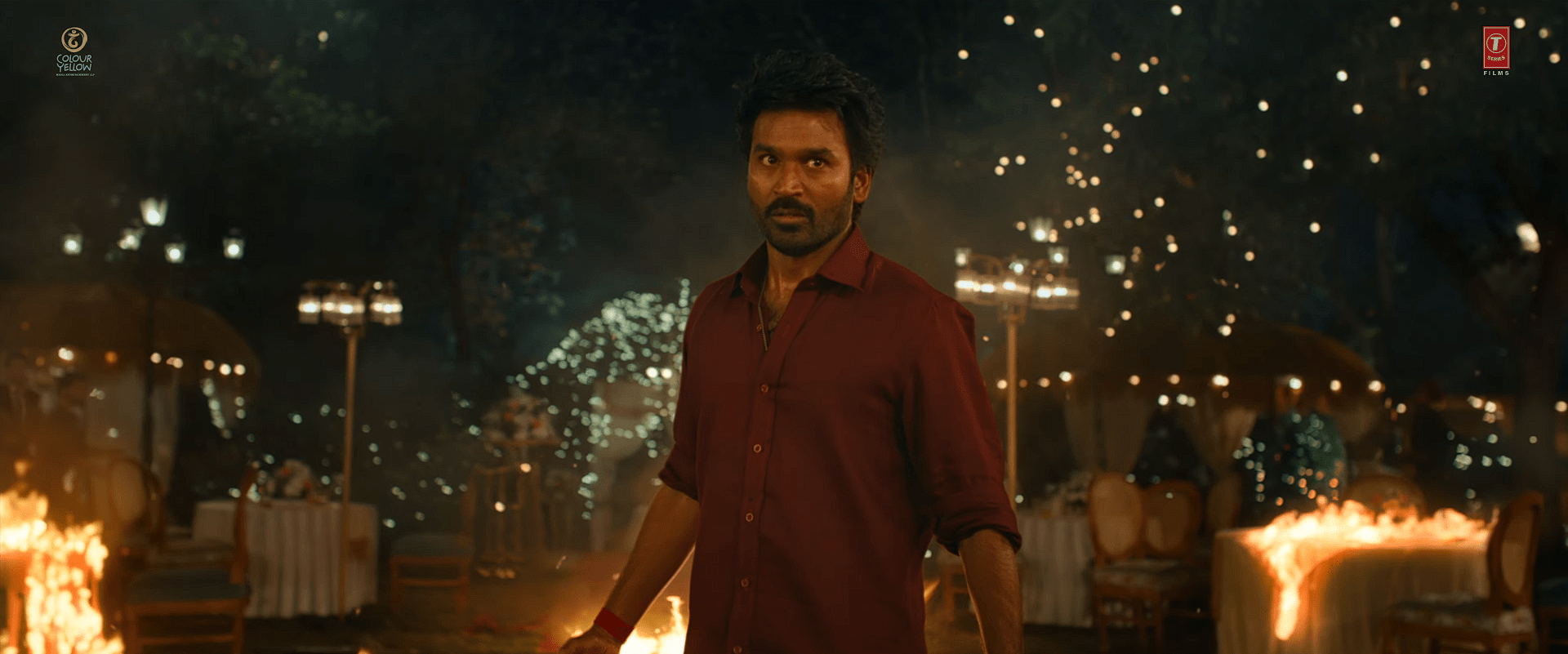
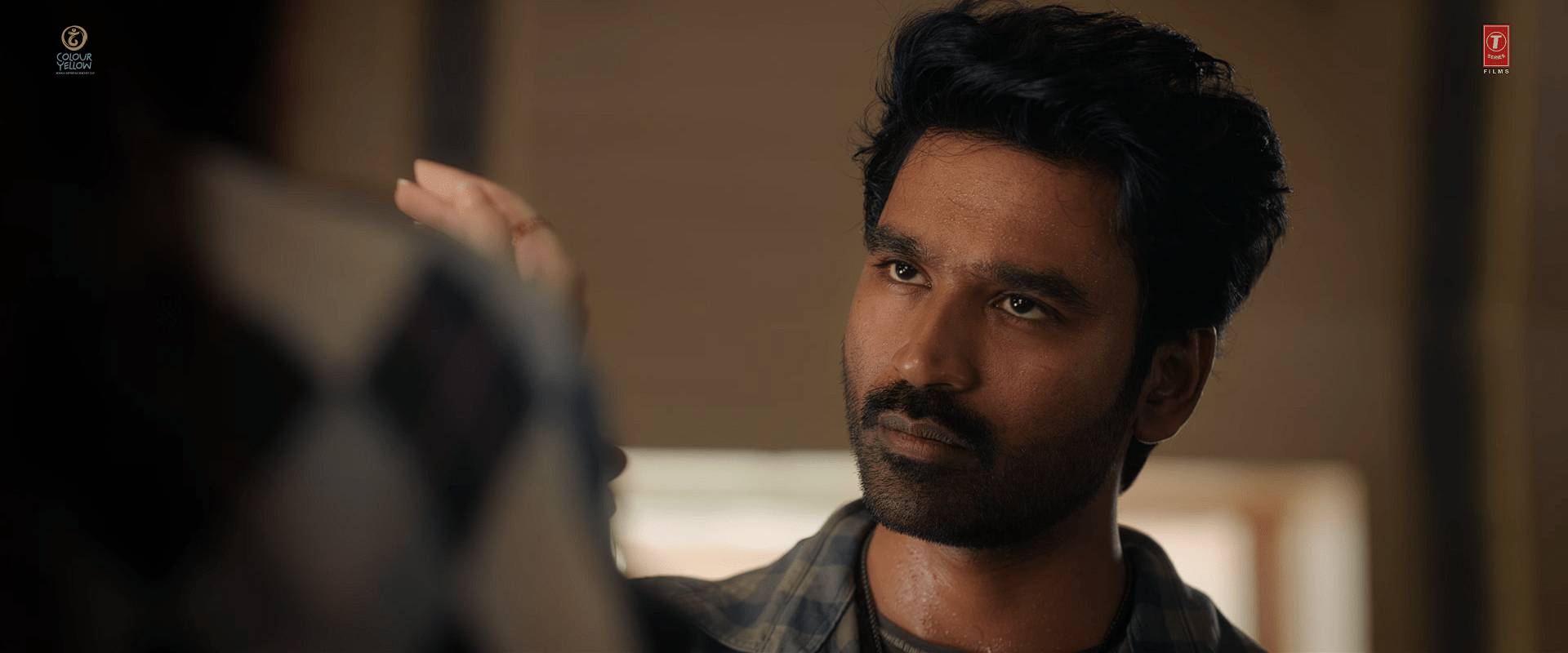
Dhanush delivers one of his strongest Hindi performances yet. His body language, micro-expressions, anger, and restrained pain come alive with startling force. Whether he swings the rope in slow motion, smirks with wounded pride, or narrows his eyes with a chilling intensity – you believe he is a man who could burn Delhi down if provoked.
Yes, occasionally his Hindi accent feels slightly off. But it blends naturally with the character’s identity, almost becoming a part of Shankar’s rough edges.
Kriti Sanon: A Performance That Grounds the Film
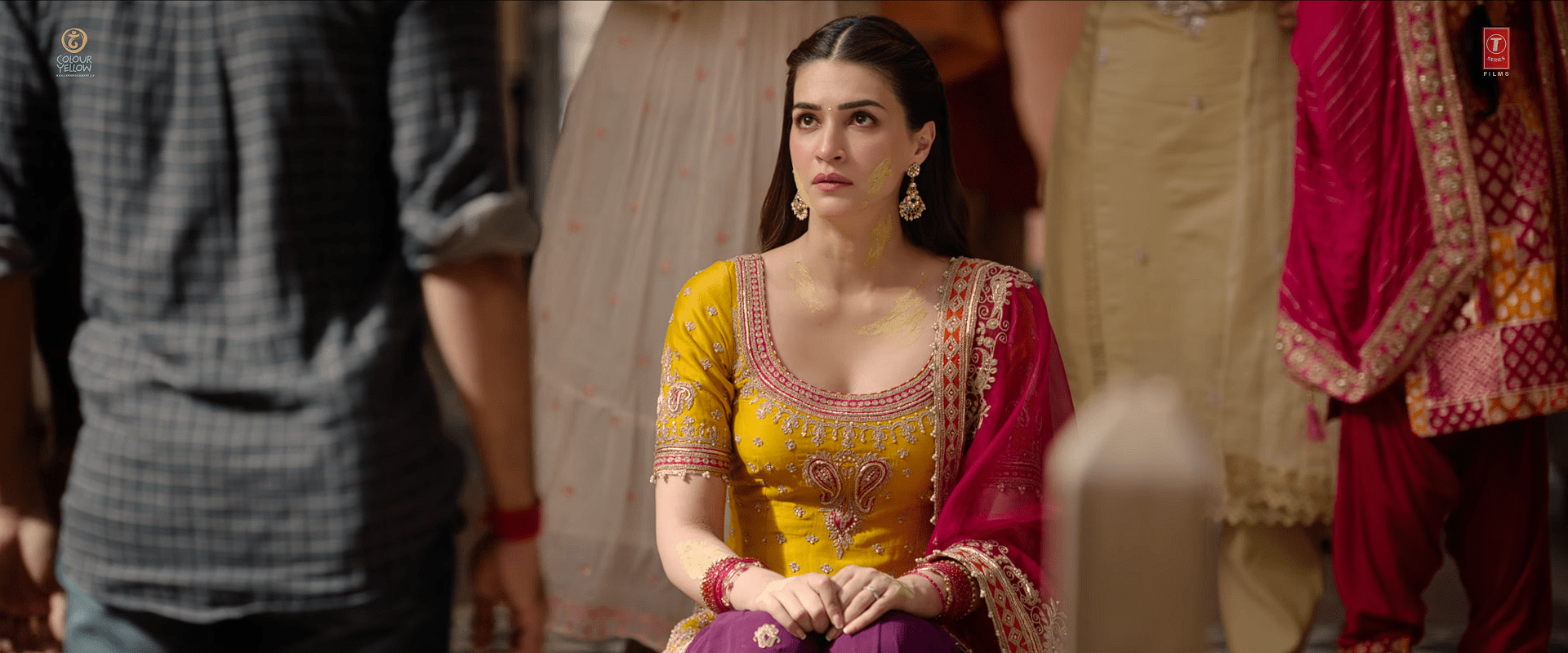
Casting Kriti was a surprisingly effective choice. Her role is more complex than it initially appears. Mukti isn’t malicious, nor is she manipulative. She is simply unaware of the kind of emotional hurricane she has wandered into. Compared to Raanjhanaa, her performance feels more grounded, more consistent, and more emotionally believable.
Supporting Cast: Strong Performances that Deepen the Drama
Prakash Raj, playing Shankar’s father, is exceptional. His scenes carry emotional weight – even the heartbreaking one where he is forced to apologize by touching the feet of nearly a dozen people because of Shankar’s actions. That scene broke me, and even more, it broke my friend who has recently gone through a breakup. He was quietly wiping tears beside me.
Bengali actor Tota Roy Chowdhury appears as Mukti’s father. His role is small but impactful – stern, harsh, authoritative. He plays the character exactly as the narrative demands.
Visuals, VFX, and Immersion: Good Intentions, Imperfect Execution
The film’s visual tone is excellent, but the VFX occasionally stumbles. Some fighter jet shots look artificial. A bit of camera shake or texture work could have added realism. Still, the imperfections don’t completely break immersion.
A.R. Rahman’s Music: Beautiful, Stirring, but Sometimes Misplaced
Rahman’s music has always been a lifeline for emotional storytelling. Tere Ishk Mein features two or three songs that hit deeply and elevate their respective moments. However, there are two scenes where the emotional silence was so beautiful that when the background score suddenly kicked in, the transition felt abrupt. The music itself was good, but the placement slightly weakened the emotional flow.
This Is Not a Love Story – It Is a Story of Anger
This distinction is crucial. Many viewers will walk in expecting a tender romance. But Tere Ishk Mein deals with obsession, rage, and the uncontrollable madness that can accompany love. The imbalance of emotions becomes the central conflict, not the romance.
Second Half, Climax, and Landing: Imperfect But Satisfying
The first half impressed me thoroughly. The build-up, the performances, the tension – all worked beautifully. But I kept fearing a Zero-style breakdown in the second half.
The landing isn’t perfect – but it is stable. The climax wobbles, it feels precarious, but eventually, it lands safely. A few predictable elements creep in, and some choices feel questionable, but the emotional payoff works.
The Vanaras sequence, where Shankar takes his father’s body for last rites, is particularly powerful. The pandit who delivers the prophecy – “You will not get Mukti here, and not there (next life) either.” – creates an eerie emotional echo that lingers long after the moment ends.
Final Verdict: A Fiery, Flawed, But Deeply Engaging Successor to Raanjhanaa
Tere Ishk Mein is not perfect, but neither was Raanjhanaa. What it offers is something rare today – an emotionally charged drama rooted in flawed characters, imbalanced love, and unpredictable rage. If you loved Raanjhanaa – not just for its songs or memes, but for its emotional depth – then Tere Ishk Mein is absolutely worth watching.
Rating: 4/5
A bold, emotional, and absorbing drama that captures the violent beauty of unbalanced love, carried by a stellar performance from Dhanush and confident storytelling from Aanand L. Rai.