Shakthi Thirumagan, directed by Arun Prabhu, arrives with the promise of a socially-charged political thriller – one rooted in the dark intersections between power, corruption, and buried truths. As I sat through the film, I sensed a genuine intention to explore a world that Tamil cinema rarely enters with conviction: the murky ecosystem of corporate lobbyists, power brokers, and their shadowy dealings. Yet, while the film’s themes are compelling on paper, the execution frequently falters, leaving me appreciating the ambition more than the narrative impact.

A Haunting Opening Loaded With Potential
Right from the beginning, the film attempts to set a deeply emotional tone. We see a hill-tribe village, and within this serene but vulnerable setting, an unsettling incident unfolds – a young tribal woman arrives carrying an infant, and moments later, she takes her own life. What the villagers reveal afterward is disturbing: they believe powerful and wealthy men sexually assaulted and murdered her and later staged it as a suicide. But the case, unsurprisingly, gets buried as “suicide,” and the infant is abandoned in the forest.
It’s an opening that carries the weight of powerful storytelling. I felt the potential for a grand socio-political drama right there. But as the film moves forward, this origin, though central, begins to blur into the background rather than evolve into a fully realised emotional backbone. The foundation is strong, but the narrative built over it needed more cohesion and clarity.
The Present-Day Web of Power and Influence
The film then shifts into the present timeline, where we meet the antagonist – a man who resembles the archetype of modern political puppeteers. A corporate lobbyist of immense influence, he seems capable of making governments bend to his whims. The inspiration from real-world political power brokers is quite evident, and the film attempts to cast him as an omnipresent threat.

Our hero, interestingly, has trained under this lobbyist. Once a protégé, he now plays the same lobbying game but at a modest scale – handling transfers, postings, real estate approvals, and other bureaucratic manoeuvres. This premise is fascinating because Tamil cinema rarely dives into this grey-collar profession. Lobbying operates in the shadows of government machinery, and the film deserves credit for even attempting to showcase this world.
Things escalate when the hero takes up a major assignment that unintentionally triggers a clash with his former mentor. The villain wonders why his ex-protégé would take up a job that directly crosses his interests. This confrontation sets the stage for the core conflict of the film.
On paper, this has all the ingredients of a gripping master-versus-disciple thriller. However, the impact isn’t as sharp or dramatic as it needs to be.
A Hero and Villain Who Are Told, Not Shown
One of my biggest challenges with “Shakthi Thirumagan” lies in how the film builds its characters – especially the hero. Throughout the first half, we are repeatedly told that he is a powerful, decisive figure capable of manoeuvring with 360-degree intelligence. The problem is that the film rarely shows this. His actions lack the detailed layering or cleverness required to convince me of his supposed brilliance.
I found myself comparing this to films like “Sathuranga Vettai,” where the hero’s manipulative genius is demonstrated through meticulously crafted scenes. Here, the hero’s operations are vague and difficult to decipher, making it hard to appreciate or emotionally invest in his arc.
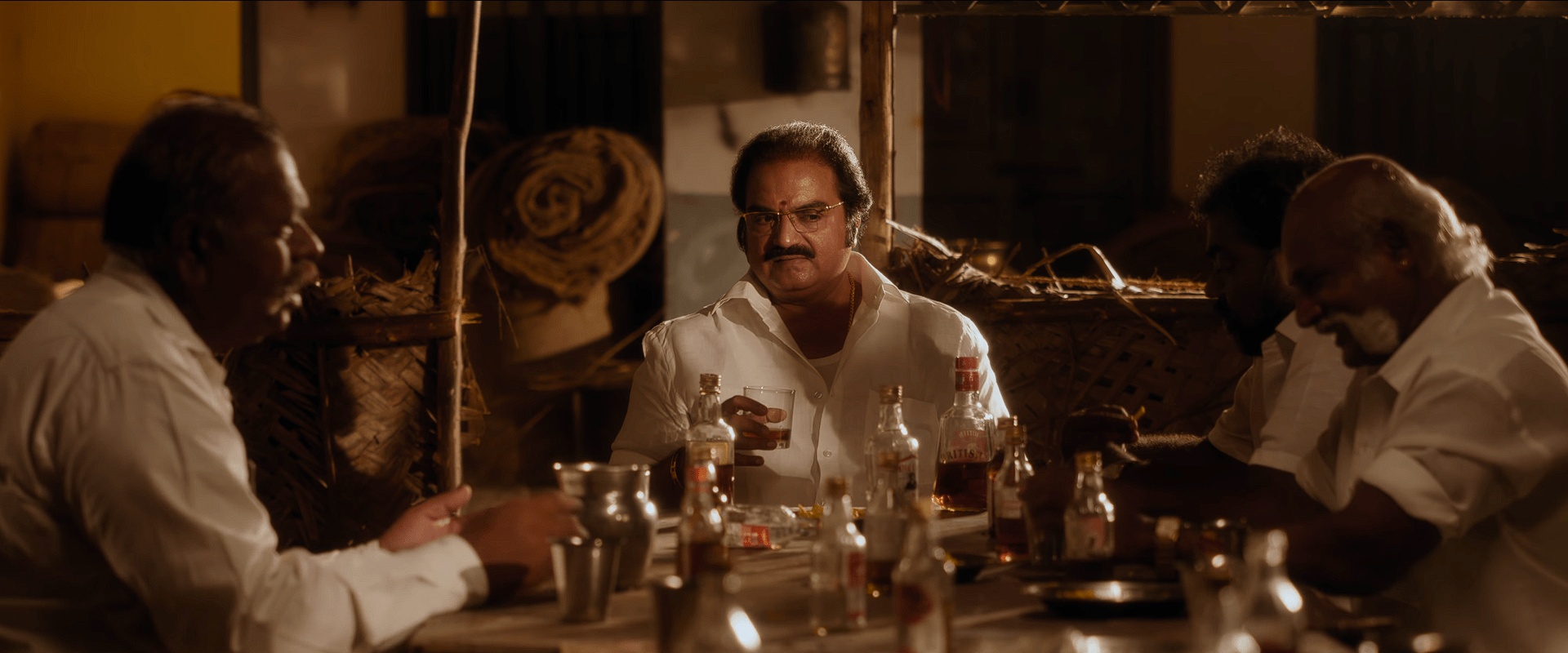
The villain, too, suffers from a similar issue. Although positioned as a formidable mastermind, his presence doesn’t translate into fear, tension, or unpredictability. Instead of influencing events directly, he delegates everything to an officer from a central investigation agency, who handles most of the aggression and physical intimidation. The villain’s role becomes more talk than threat, weakening the dramatic conflict significantly.
The Second Half Loses Grip
As the film enters the second half, I expected the tension to rise, the strategies to sharpen, and the hero-villain dynamics to explode. Instead, the narrative becomes increasingly superficial. Counterattacks between the two sides lack depth, innovation, or cleverness. There are no gripping mind games, no unexpected twists, no standout sequences that elevate the stakes.
What baffled me even more was the strange staging choice for the villain – he spends several scenes standing mid-staircase, delivering lines in the exact same position even after multiple cuts. This odd continuity break makes the scenes unintentionally distracting.

A Misleading Heroine Arc and Emotional Pockets That Work
The film introduces a heroine whom the screenplay initially treats with intrigue – as though she is hiding a larger identity or purpose. This creates expectations that she might be a covert officer or someone crucial to the unfolding investigation. But eventually, she contributes very little to the narrative. Her role feels misplaced, as if written for another version of the film that never materialised.
On the brighter side, the hero’s childhood sequences are beautifully portrayed. Vagai Chandrasekhar’s performance, especially in scenes referencing Periyar’s philosophy, has emotional and ideological depth. These moments feel genuine, heartfelt, and grounded – arguably among the most effective parts of the film. Kannan, who plays the villain, also performs well, even though the writing limits his impact.

A Film Inspired by Shankar’s Style, But Missing His Clarity
It’s clear that the filmmakers were inspired by S. Shankar’s brand of socially-charged cinema – where corruption meets drama, and individual revolt collides with systemic rot. While “Shakthi Thirumagan” tries to follow this template, the storytelling doesn’t unfold with similar clarity or emotional force. The backdrop of corporate lobbying is genuinely fresh, but the writing fails to simplify or communicate this world in an accessible way.
Had the screenplay embraced clarity and coherence, the film might have resonated far more strongly. Instead, what we get is a film that is ambitious yet uneven, bold in theme but inconsistent in storytelling.
Final Verdict

Shakthi Thirumagan is an okay-ish time-pass political thriller – one that delivers a few meaningful moments but doesn’t fully achieve the impact it strives for. It has a compelling premise, an underexplored political backdrop, and strong performances in parts. But the inconsistent writing, underdeveloped conflicts, and lack of gripping execution prevent it from rising higher.
Rating: 2/5