“Pushpa Pushpa Pushparaj” – those iconic words echoed through my mind the moment I walked into the theatre. I had imagined countless things about what this sequel would be, what it would dare to show, how it would escalate the mayhem of Part 1. But life is unpredictable, I didn’t expect to hear such a high amount of Japanese in my own head while waiting for the curtains to open. Still, here we are. Pushpa 2: The Rule has finally released in theatres. It’s the direct sequel to Pushpa: The Rise, which released three years ago and quickly became a cultural phenomenon. From the memes to the mannerisms, from the swagger to the mass dialogues – Pushpa became larger-than-life. And with the avalanche of hype built around this continuation, the biggest question was unavoidable: did Part 2 live up to it or not? Because as we all know, Pushpa is a flower… and also fire.
Plot & Thematic Depth: Beyond Just the Action Masala
Let me be very clear from the start: to watch this movie, you absolutely need to watch Pushpa Part 1. It isn’t optional. You can skip weeks of gym, you can skip your cousin’s wedding, but don’t skip the first film. If you don’t have the time, at least ask some friend of yours – they’ll tell you the main beats, the rise of Pushparaj, the rivalry, the syndicate – but you’ll still miss emotional context. After that, this new movie does handle itself decently because it’s not overly complicated, but its backbone comes directly from what the first film built.
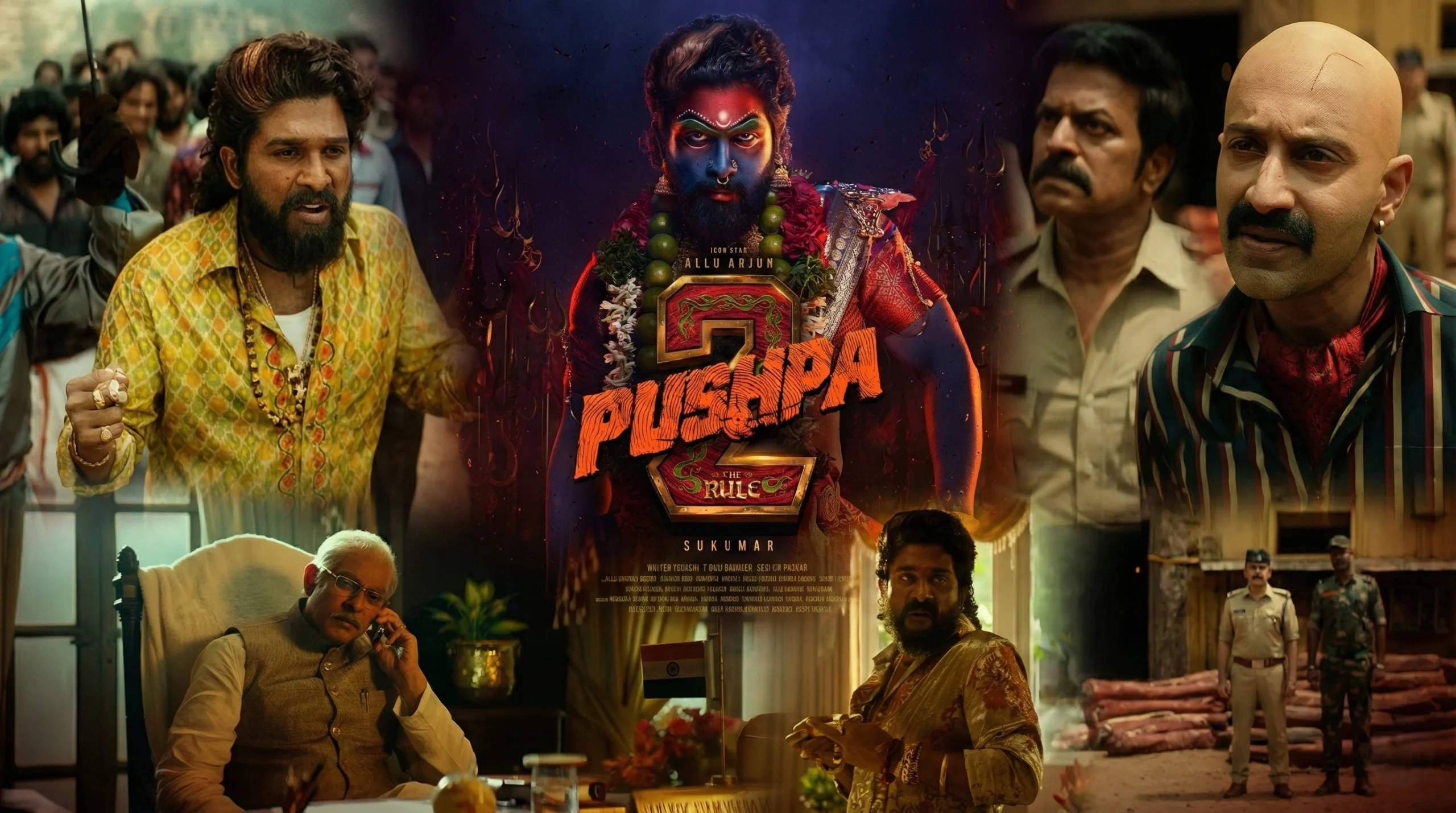
Thinking about the overall story, I found substance – more than what you typically expect from an action-masala entertainer – and honestly, even more than Part 1. I would consider this film better in narrative ambition and emotional reach. Though I don’t remember every bit of Part 1, whatever my thoughts and opinions were about that movie, I think this sequel surpasses them – not that the bar was very high to cross, but still, they did it with confidence.
The movie runs almost three and a half hours, which immediately raises a question: what do they show us for so long? The main character Pushparaj, who illegally smuggles red sandalwood, is now fully established as the head of his syndicate, earning big money and controlling the flow of operations. The day-to-day problems come – if the police catch his men, he must get them released, protect his network, and keep the wheels turning. Alongside all of this is the personal side: he loves his wife Srivalli dearly. He behaves like the local godfather, solving issues, providing for his people, and building the empire brick by brick. All of this runs regularly like a living, breathing ecosystem.
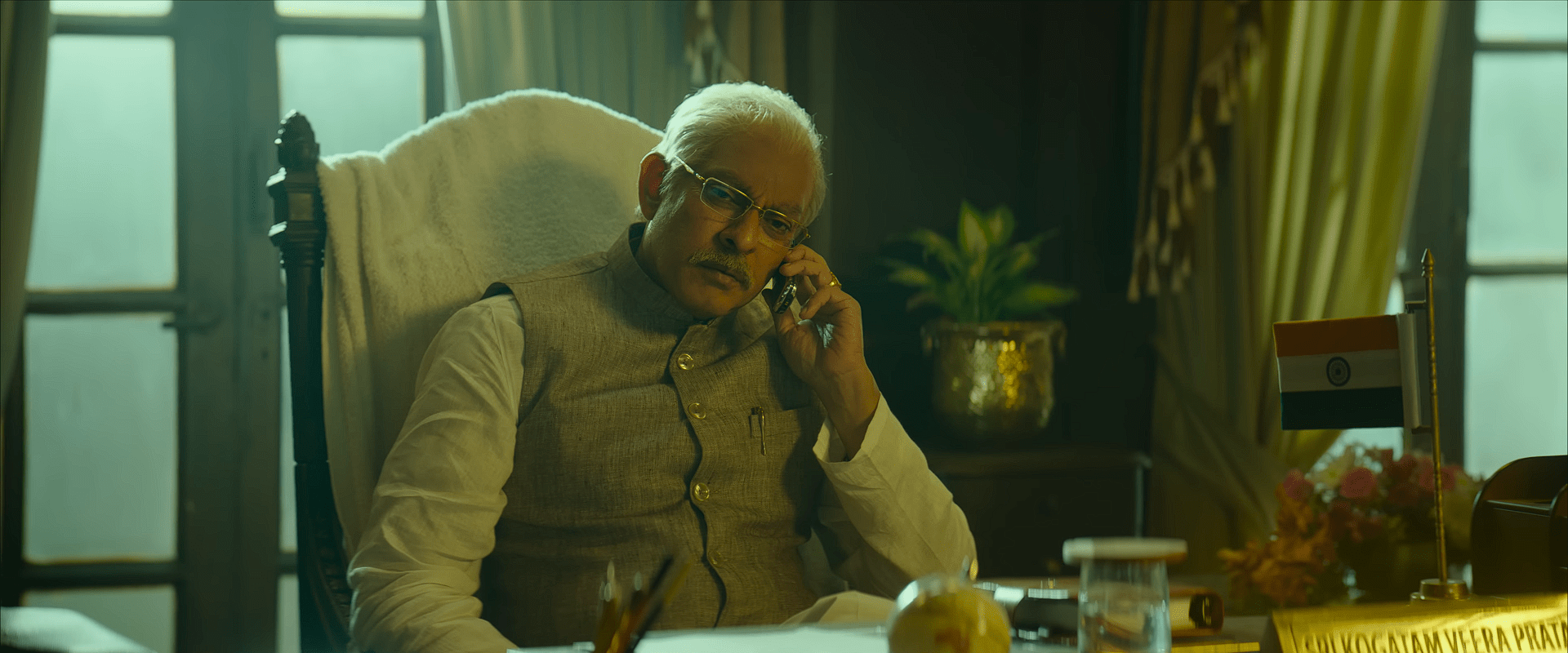
Then, one day, an issue arises – an issue that most men would brush off, but Pushparaj is not most men. He refuses to take a photograph with the state Chief Minister. From that moment a purpose is carved into his life, and the story also adopts that purpose. This is the key turning point of the film, and to solve the conflict born from it, the movie spends nearly two to two and a half hours exploring its consequences.
Alongside this is an additional thematic thread: Pushpa’s illegitimacy. He is a man without a family name. You can give him wealth, syndicates, power – but not lineage. His wife Srivalli requests something that seems simple, almost innocent, but that request becomes a burden and a flame. The movie explores his arc – how far he is willing to go, what weight he is willing to carry to fulfill a promise to his wife, and how that one gesture reshapes his identity.
Problems are thrown at him, he finds solutions, twists appear, the matter of character and self-respect surfaces – and honestly, it was really fun to watch, far more than I expected.
- Plot & Thematic Depth: Beyond Just the Action Masala
- Distribution & Language: The Irritating Repeat of Mistakes
- The Tone: Absurd, Bombastic, and Enjoyably Self-Aware
- Pushpa & Srivalli: Romance and Human Tenderness
- The Songs: A Problem You Can Smell from Miles Away
- Allu Arjun: A Performance of Uncompromising Conviction
- Fahadh Faasil: The Legendary Promise That Feels Underused
- First Half vs Second Half: The Unexpected vs the Predictable
- Music Controversy & Spectacle
- Final Thoughts: Fire > Flower
Distribution & Language: The Irritating Repeat of Mistakes
But I must address something that deeply disappointed me – just like Kalki, the makers repeated the mistake. You’re making a pan-India movie. The director, the producers, the actors – everyone knows the Hindi version is crucial. If it works, the big numbers come. But in Hindi-speaking regions, the first day-first show was the Telugu version, not the Hindi one.
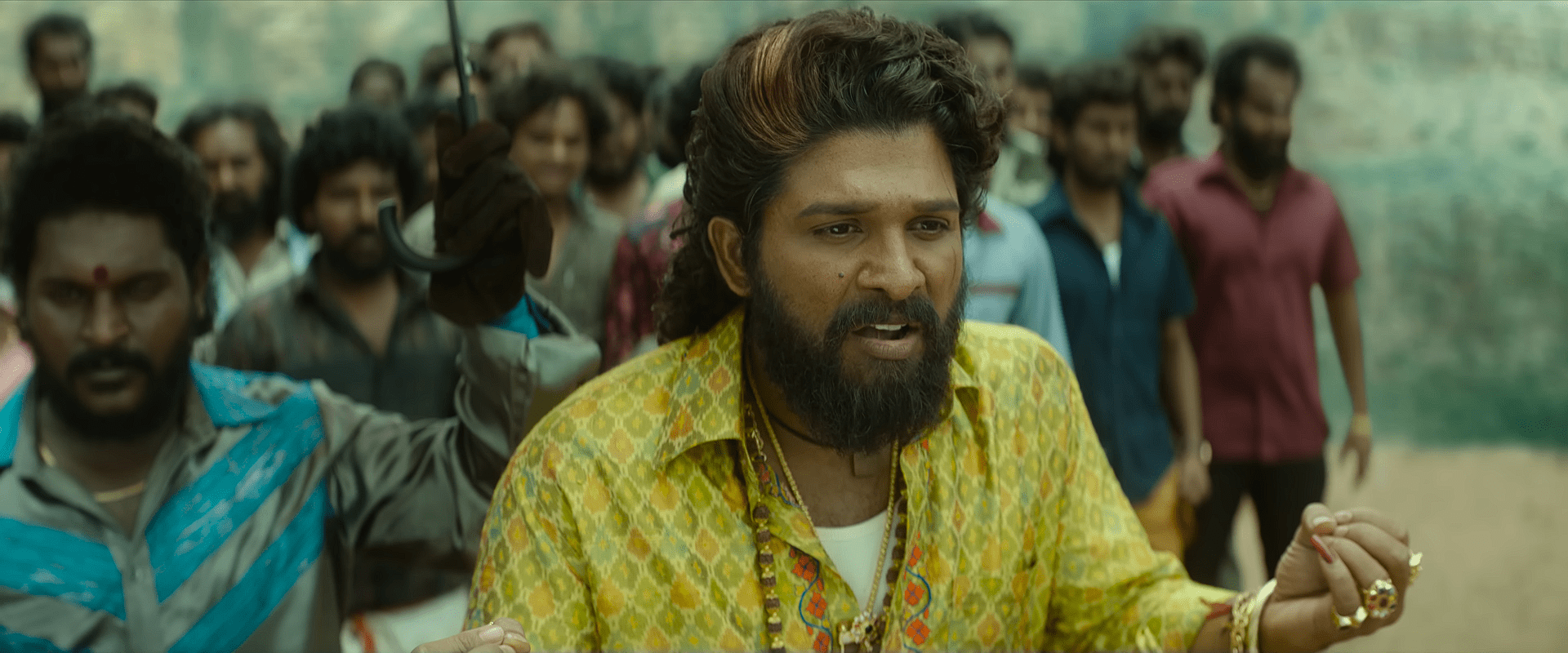
And what happened with Kalki happened again: I took a leap of faith and watched the first show. There were no subtitles. You’re putting 6 a.m. shows in cities like Mumbai and Delhi without subtitles. I don’t understand Telugu – so I left and went an hour later to watch the Hindi version directly. If any of you attended the early screenings, please tell me – did Pushpa Part 2 have subtitles or not? These are not minor logistical slip-ups; they communicate disrespect to audiences outside the core linguistic region. I hope the industry learns – because one of these days, audiences will simply stop giving second chances.
The Tone: Absurd, Bombastic, and Enjoyably Self-Aware
One thing I repeatedly experienced during the movie – I was laughing, giggling, smiling at how absurd the circumstances get. The lines characters speak, the visual exaggeration of action, the ridiculous situations – everything dances between borderline unbelievable and hypnotically entertaining. Even the action is borderline ridiculous, but convincing enough to enjoy. Because if you walk into a movie like this expecting a grounded, serious film – then you are the donkey. You must know what you are getting into before getting into this movie. The film openly advertises that Pushpa has now become larger than life, so big that the people, the entire system, bows down to him.
When the police catch his men, what will he do? The answer arrives with the swagger of divine punishment. Half the theatre will clap at scenes like that – because that is exactly the purpose.
That said, some hype moments didn’t land for me. For example, the scene where he negotiates with a foreign businessman – on paper it sounds epic, but the cinematic execution lacked impact. The beats were predictable, the tension felt forced, and while the first film’s set pieces often felt spontaneously electric, this one occasionally feels manufactured.
Pushpa & Srivalli: Romance and Human Tenderness
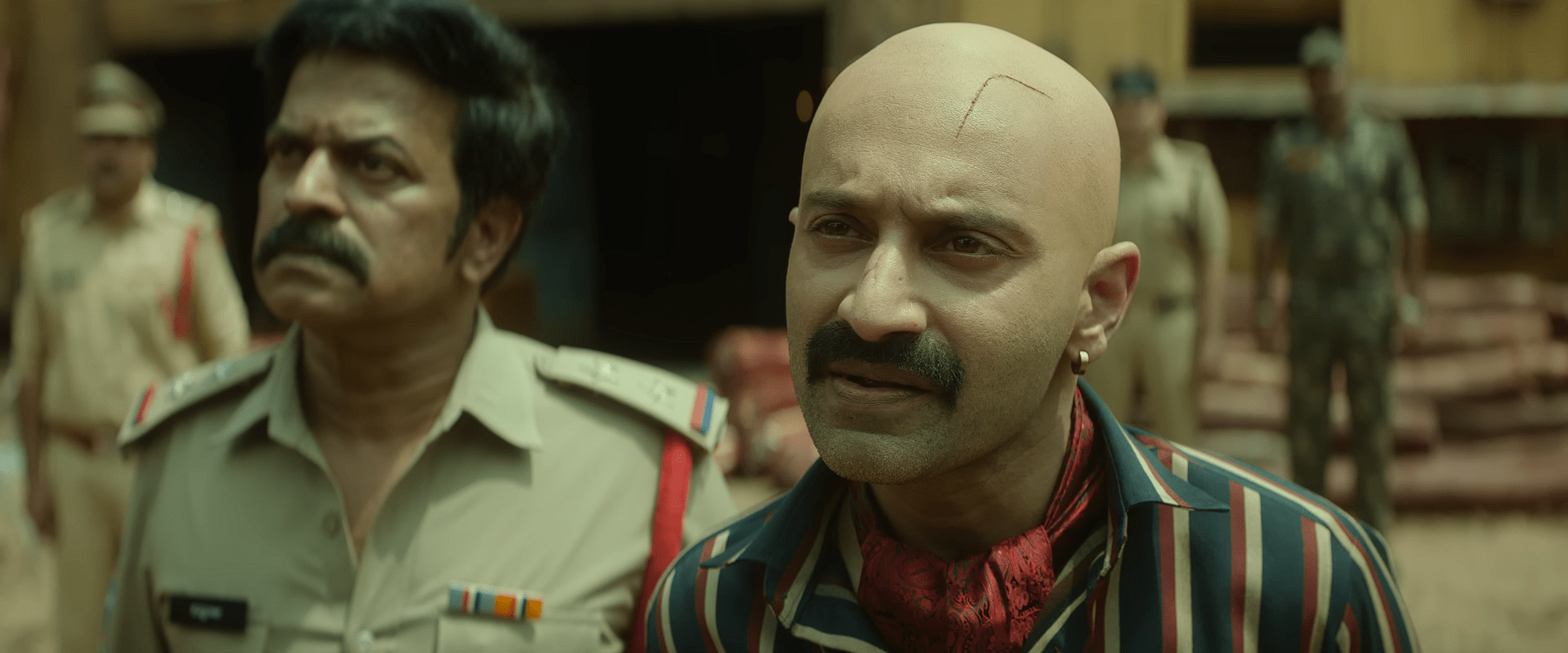
Balancing that, the scenes between Pushpa and Srivalli – marriage, husband-wife dynamics – were genuinely enjoyable. I noticed the director resisted the urge to use too many cuts. When a scene is set, it keeps going. The actors are given room to breathe, to act, to inhabit their characters without frantic editing. Both Allu Arjun and Rashmika Mandanna deliver mature, layered performances. And it’s so refreshing to watch scenes where writing, staging, blocking, and acting harmonize to deliver an experience, not just a trademark mass moment. For that – well done.
And you know what? It may sound silly, but from this movie, you could actually learn something – how to treat your wife. If you listen to your wife, the whole world will bow down. Pushpa doesn’t worship institutions or politicians – he worships the woman who stands by him.
The Songs: A Problem You Can Smell from Miles Away
But then comes the elephant in the room – the songs. I hate them – like H-A-T-E hate. They are so bad – both lyrically and sonically – and even worse in how they appear on screen. I can give you the logical explanation: Pushpa comes from a village, the songs reflect raw cultural rhythms, and they’re “unconventional.” But reality is reality – your seat will shift uncomfortably as two back-to-back songs, three to four minutes each, assault your senses. Actually, that’s not even enough – so here, take two eight-minute songs instead.
And guess what? Those two are the best among the five or six songs shown. But their placement is questionable – one finishes, and the next begins immediately, killing any narrative momentum the film had been carefully forming.
Allu Arjun: A Performance of Uncompromising Conviction
But if you are going to watch this movie, the biggest reason will be Pushpa’s character or Allu Arjun himself. And he is so freaking good. Pick any aspect: emotional scenes, hype moments, action, romance – he has surrendered himself completely to the character, and it shows. Even in the dance segments – which I complained about – he makes it at least watchable because he performs them with conviction. He takes the worst parts of the movie and at least makes them tolerable.
The only issue? He remains stuck in the village setting. For a character who has supposedly grown to mythic proportions, the world around him hasn’t expanded enough to match the legend.
Fahadh Faasil: The Legendary Promise That Feels Underused
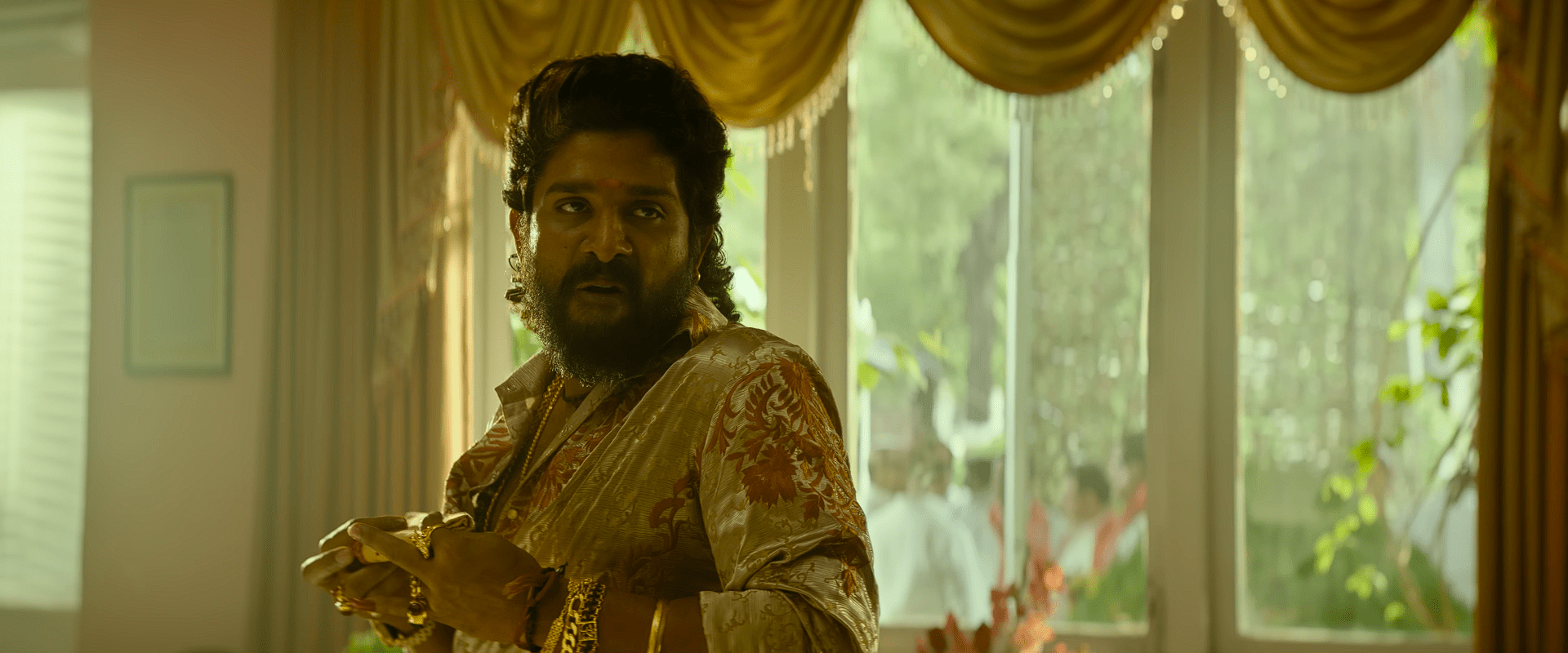
When Part 1 ended, the final 15–20 minutes introduced Fahadh Faasil as Bhanwar Singh, and it was promised that Part 2 would escalate their rivalry to something legendary. And yes, it is indeed good – very good – but for the amount shown, it does not completely work in a 3.5-hour movie.
Faasil’s character comes for a bit, creates problems, disappears, returns, goes away again. And after the film ended, I realized this sequel follows a similar pattern to Part 1: challenges appear in front of Pushpa, he grows bigger, dominates the obstacles, and the movie structurally loops around that ethos. Then, near the end, we get a detour, and the film closes the loop with a familiar cadence.
First Half vs Second Half: The Unexpected vs the Predictable
I absolutely loved the first half. And right before the interval, when most mass entertainers will serve a big action set-piece, this film decides to take a bold approach. Instead of explosions and acrobatics, it challenges the core values of the main character. It hits so hard. There is no fight, no slow-motion bloodbath, no mythical stunts – just ideological velocity. The tension that builds from this moment was something I genuinely did not expect. It’s easily one of the best creative decisions in the entire franchise.
Because of this, I was really looking forward to the second half. And while it’s still good, it does feel a bit long. Some emotional beats are stretched past their ideal rhythm. When a scene could end in three minutes, it lingers for ten. The pacing loses elasticity.
Music Controversy & Spectacle
Regarding the music controversy – yes, they added additional background score credits. But that didn’t noticeably affect the film. In fact, in the second half, there is one scene which people will absolutely record and put on their WhatsApp statuses. That’s the level of pandemonium it generates.
Instead of a traditional beginning-middle-end with a single satisfying resolution, this movie gives you two endings. And even that is not the real end. You’ll understand when you see it. Pushpa isn’t a character who arrives and leaves; he arrives, colonizes, and dares you to look away.
Final Thoughts: Fire > Flower
If you liked Part 1, you may like Part 2 even more. In my opinion, it is undeniably better. They could’ve cut the songs, shortened the runtime, refined the structure – but despite these flaws, I recommend it. Just prepare your mind for the kind of movie you’re stepping into – where the hero is almost godlike, defies gravity while beating people to pulp, and welcomes absurdity like an old friend. Switch off logic a bit, because emotionally the movie delivers with thunderous force.
And if you absolutely did not like Part 1, then staying away would be the better option. Because Pushpa remains what he is – untamed fire – and that fire will never adjust itself for your taste.
Rating: 4/5
A roaring sequel that embraces chaos, sweats swagger, and never apologizes for being unapologetically mass.