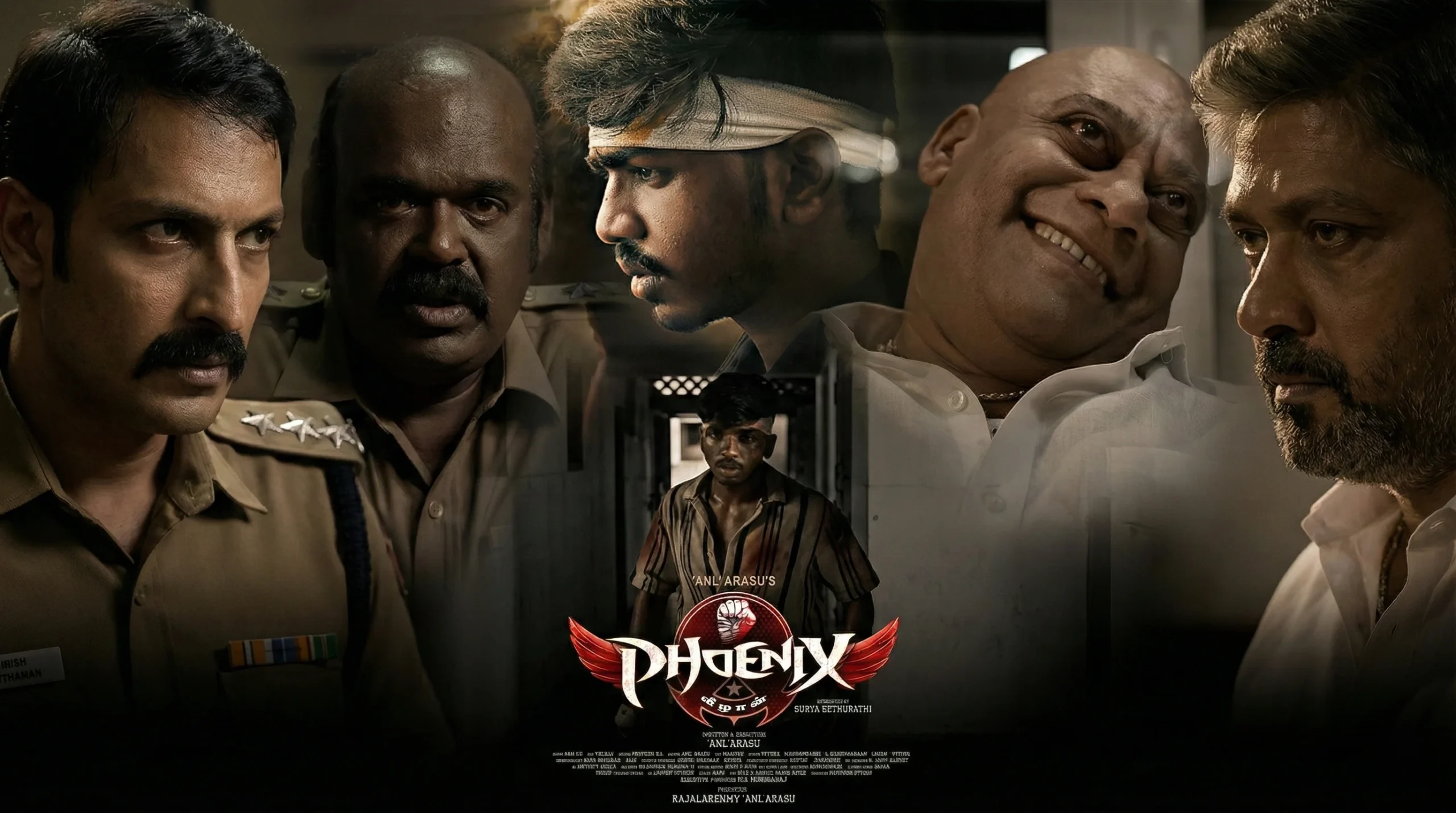
There are films that promise intensity, and then there are films that mistake loudness for depth. Phoenix, directed by renowned stunt choreographer Anal Arasu in his first outing as a filmmaker, belongs to the latter category. As I settled into the experience, I was prepared for an unfiltered action drama – something raw, explosive, and emotionally charged. Instead, I found myself navigating a world where ambition is abundant, but purpose dissolves under the weight of exaggerated set-pieces and disconnected storytelling.
A Story Built Entirely on Rage, Yet Missing a Heart
The film opens with a provocative premise: a teenager who has committed a gruesome murder and now faces the consequences in court. Because he is under 18, he is sent to a juvenile reformatory – a place expected to function as both punishment and rehabilitation. But Phoenix treats this setting as a video game arena where an endless supply of fighters is deployed merely to be knocked down.
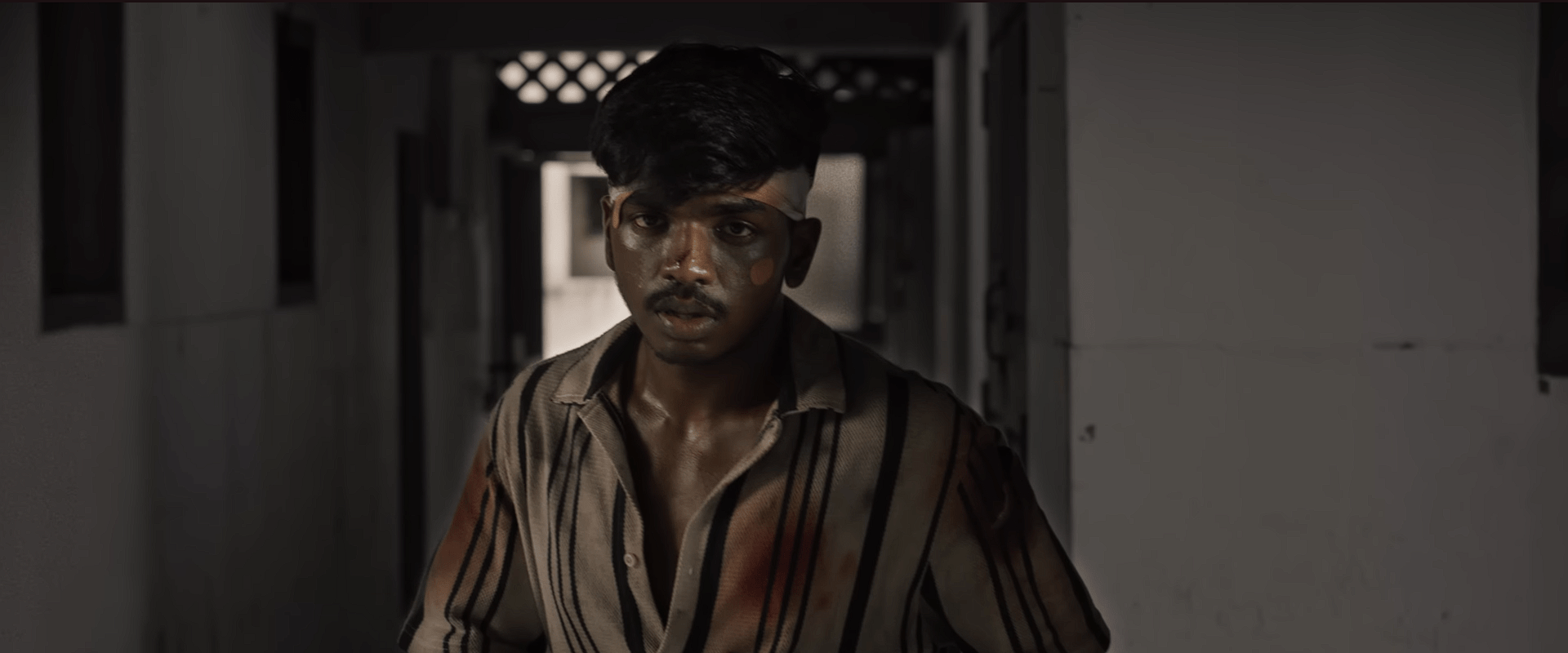
First it’s four thugs. Then forty. Then an absurd escalation to four thousand. As I watched this progression, it became clear that the film has little interest in grounding its action in any form of reality. The hero becomes an unstoppable force of physical destruction long before the film explains who he is or why he is capable of such superhuman domination. The question – “Who is this boy, and why has he turned into such a menace?” – should have been the anchor. But the narrative keeps pushing the answer further away, as if hoping the spectacle alone will suffice.
- A Story Built Entirely on Rage, Yet Missing a Heart
- Anal Arasu’s Directorial Debut: Ambition Without Architecture
- A Police Investigation That Wanders Without Direction
- A Flashback That Needed Purpose but Offers Only Noise
- Repetitive Action Without Stakes
- Performance Arrogance That Spills Into the Frame
- A Film That Needed Structure, Not Only Strength
- Verdict
Anal Arasu’s Directorial Debut: Ambition Without Architecture
Anal Arasu’s reputation as a stunt master created certain expectations – precision, creativity, and fluid action choreography. He does attempt to craft a pure action film, and that intention is visible. But action cannot exist in isolation. A full-fledged action movie demands an equally strong antagonist, someone who can match or challenge the protagonist’s strength and ideology.
That is where Phoenix falters most severely.

There is technically a villain – someone whose actions originally send the hero to jail – but this character never comes alive in any meaningful sense. Those who appear later as revenge-seekers are even less impactful; they feel like placeholders meant only to be punched, flipped, and thrown across the screen. They lack menace, personality, or even basic narrative function.
The result is a lopsided world where the hero faces no real threat. And without a threat, there is no tension.
A Police Investigation That Wanders Without Direction
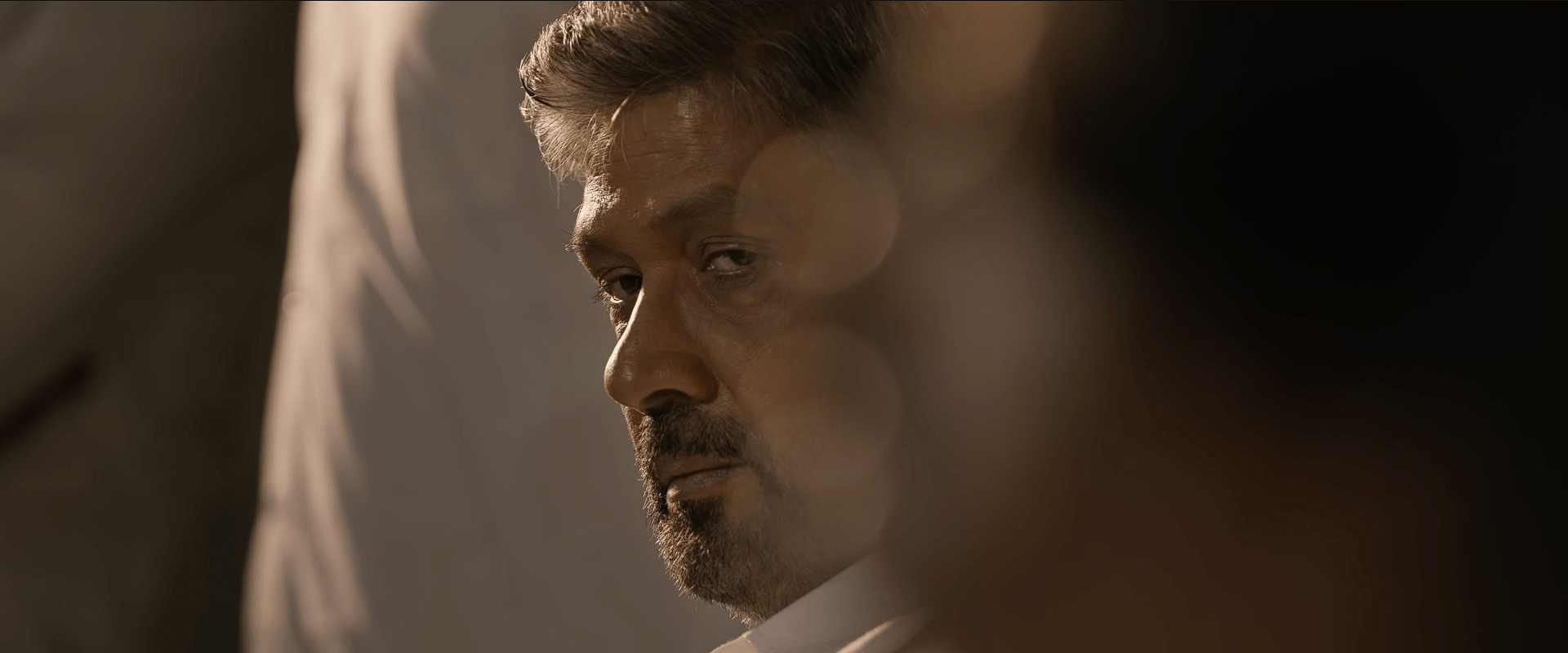
The film introduces a special officer appointed to investigate the hero’s violent past and the trail of bodies left in his wake. In a more thoughtfully constructed story, this character could have served as an emotional counterweight or a window into the hero’s growing legend. Instead, he becomes an oddly misplaced figure – someone who investigates everything except the one person he was assigned to question.

Watching him roam around town speaking to random characters reminded me of a detective who has accidentally walked into the wrong film but continues out of politeness. His incompetence isn’t portrayed comedically; it’s simply written into the script as if logic were optional.
This detour-heavy character arc dilutes the urgency of the narrative and adds another layer of disconnect.
A Flashback That Needed Purpose but Offers Only Noise
When the film finally decides to reveal why the hero turned into an unstoppable “appadaakar,” the flashback arrives with the subtlety of a sledgehammer. We are taken into a mixed martial arts arena – huge lights, elaborate staging, unclear rules, and an atmosphere that suggests an international tournament despite no clarification of its scale.
Instead of authentic sports presentation, the sequence resembles a stylized exhibition match for an over-the-top video game. The fighters look mismatched, the fashion choices feel strangely curated, and the choreography lacks the finesse expected from a film directed by a stunt master. The inclusion of an MLA’s son as one of the contenders pushes the scene into unintentional comedy. It is difficult to imagine a politician willingly letting his child participate in a chaotic brawl where dignity, discipline, and logic are entirely absent.
The flashback, ideally meant to deepen our understanding of the protagonist, ultimately weakens him further. It adds spectacle without insight.
Repetitive Action Without Stakes
From start to finish, the hero’s fighting style appears rooted in one objective: drag, smash, repeat. There is strength, certainly, but there is no evolution. When I think of legends like Jackie Chan or Kamal Haasan, their action arcs always grow from preparation, training, and emotional payoff. Here, the protagonist begins invincible and ends invincible, offering no sense of progression. Without new challenges or layers, even well-executed stunts lose impact over time.
And that, unfortunately, is the rhythm that defines Phoenix.
Performance Arrogance That Spills Into the Frame
Before the film’s release, the hero had already sparked debate through his public behavior – his tone, his interviews, his perceived arrogance. I carried none of that into the theatre, because performances deserve a clean slate. But Phoenix makes it difficult to separate persona from character. Throughout the film, the hero radiates an aggressive disinterest in acting, almost as though he’s daring the audience to question him.
It becomes glaring when scenes feel designed less to portray emotion and more to project attitude. The subtext seems to be: “I don’t need to act. Take it or leave it.” For viewers stepping in with curiosity – especially those eager to see Vijay Sethupathi’s son take on a lead role – this approach borders on disrespect. Confidence can elevate a performance; contempt cannot.

A Film That Needed Structure, Not Only Strength
Every meaningful story follows a character with a goal, an internal conflict, and obstacles that allow growth. Phoenix skips this foundation entirely. It substitutes narrative depth with an unending stream of beatdowns. The result is a film that begins loudly, continues loudly, and ends loudly – but never truly says anything.
The intention to create an action saga is evident. But intention without structure cannot carry a film.
Verdict
Phoenix could have risen from the fire with sharper writing, a grounded antagonist, disciplined performances, and more coherent action. Instead, it burns brightly only in fragments and collapses under its own excess.
Rating: 2/5