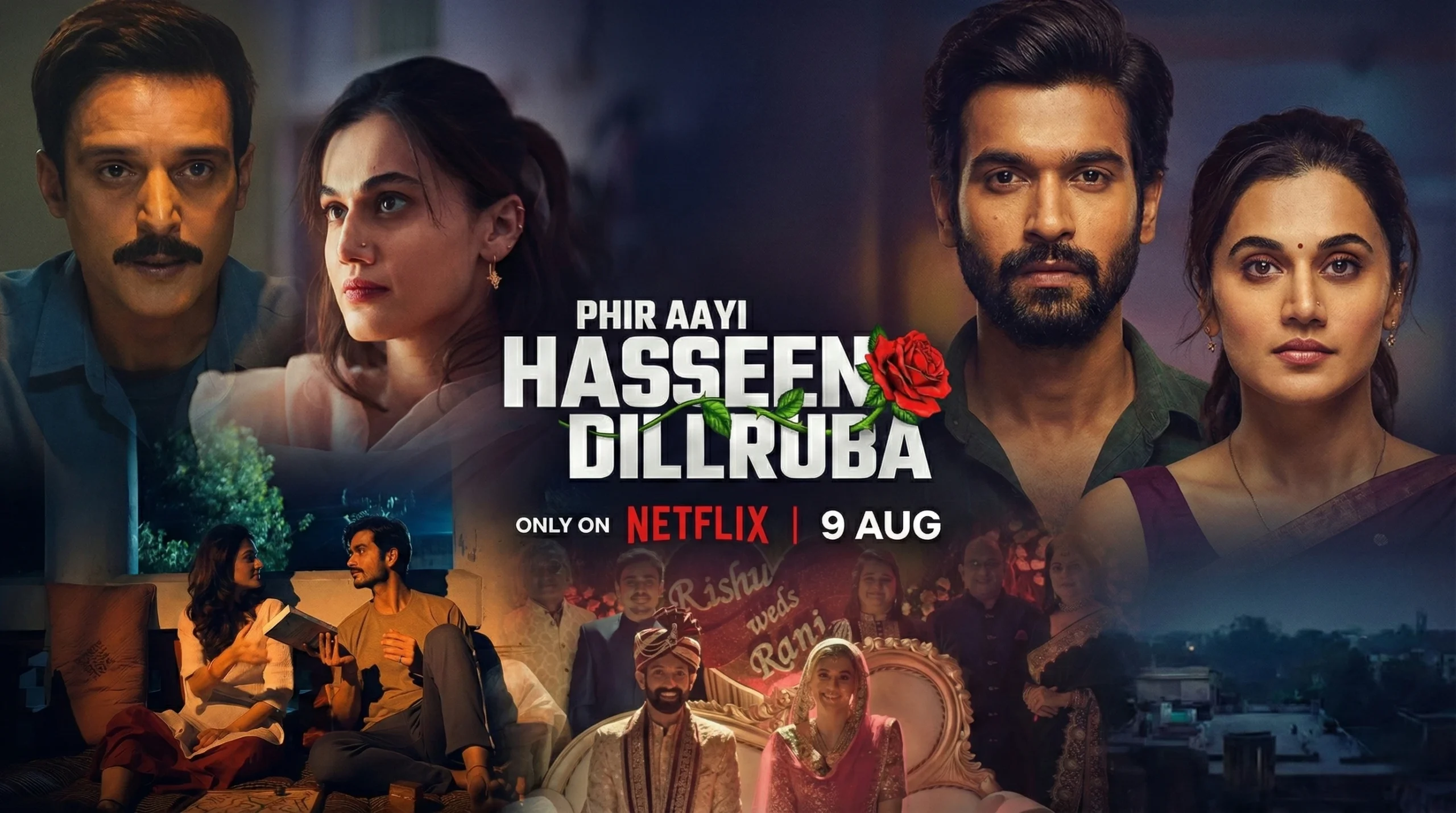
There are no boundaries in love. That’s the pulse of Phir Aayi Hasseen Dillruba, and the film does not hesitate to remind us of that again and again. True love, the movie insists, does not follow rules, does not bend to morality, and certainly does not care what “some third person” watching from the outside may think. If you are doing true love, you can do anything, and you will do anything. For the world, you might look like the biggest fool alive, but if that love is limitless, the film claims, then it is there – real, scorching, unforgiving. Cutting someone’s hand, torturing someone, even taking someone’s life – everything is fair in love, and on this basis the sequel’s core continues the saga that once shocked audiences.
The previous installment left us at a point where passion had turned violent, decisions had turned irreversible, and Rani and Rishabh – our magnetically chaotic couple – had almost become one. Almost. Because no matter how poetically dangerous two people in love may be, the danger of getting caught still looms over them like a slow-burning noose. And in such a situation, if the character who died in the previous movie suddenly re-enters the narrative through his uncle, now a main police officer, and begins dismantling every plan you have ever made – then what will you do? Whatever you will do, that is what the picture reveals in its own twisted fashion.
Characters Reborn, Roles Reversed
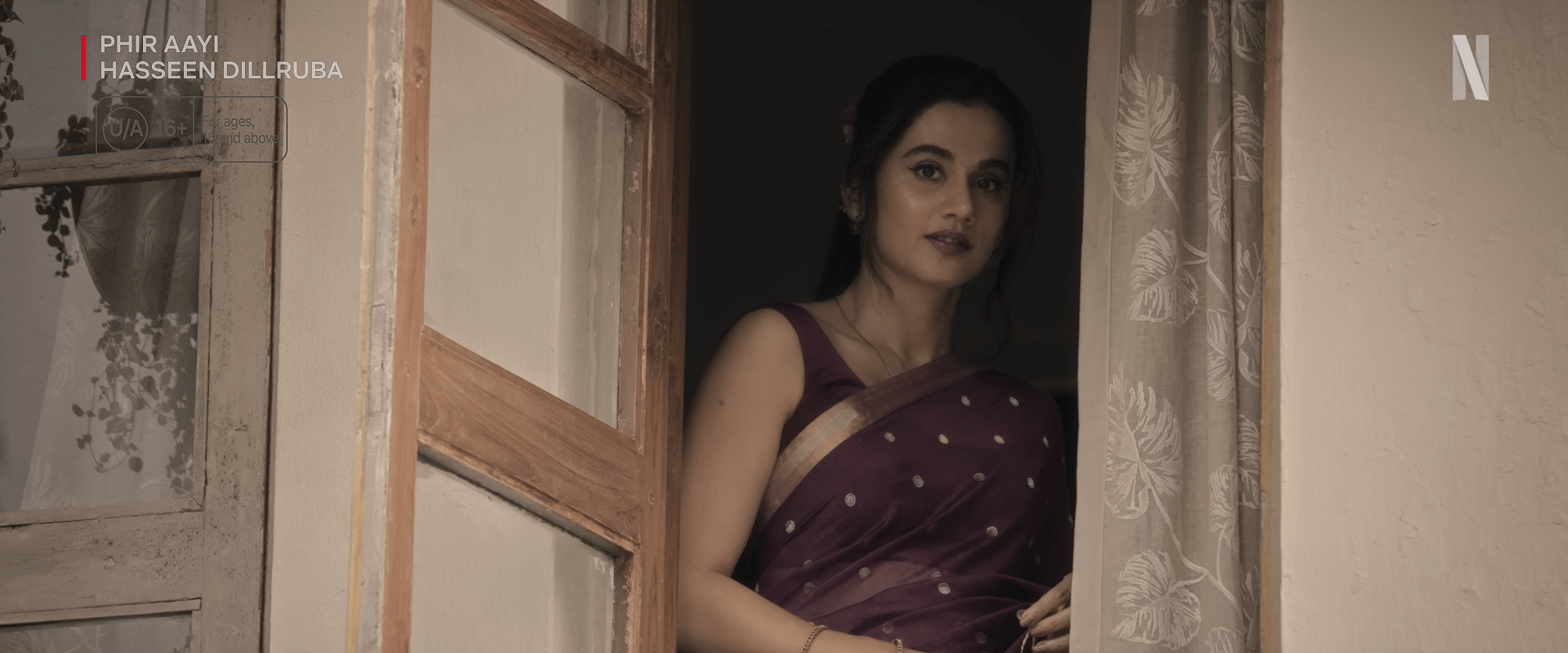
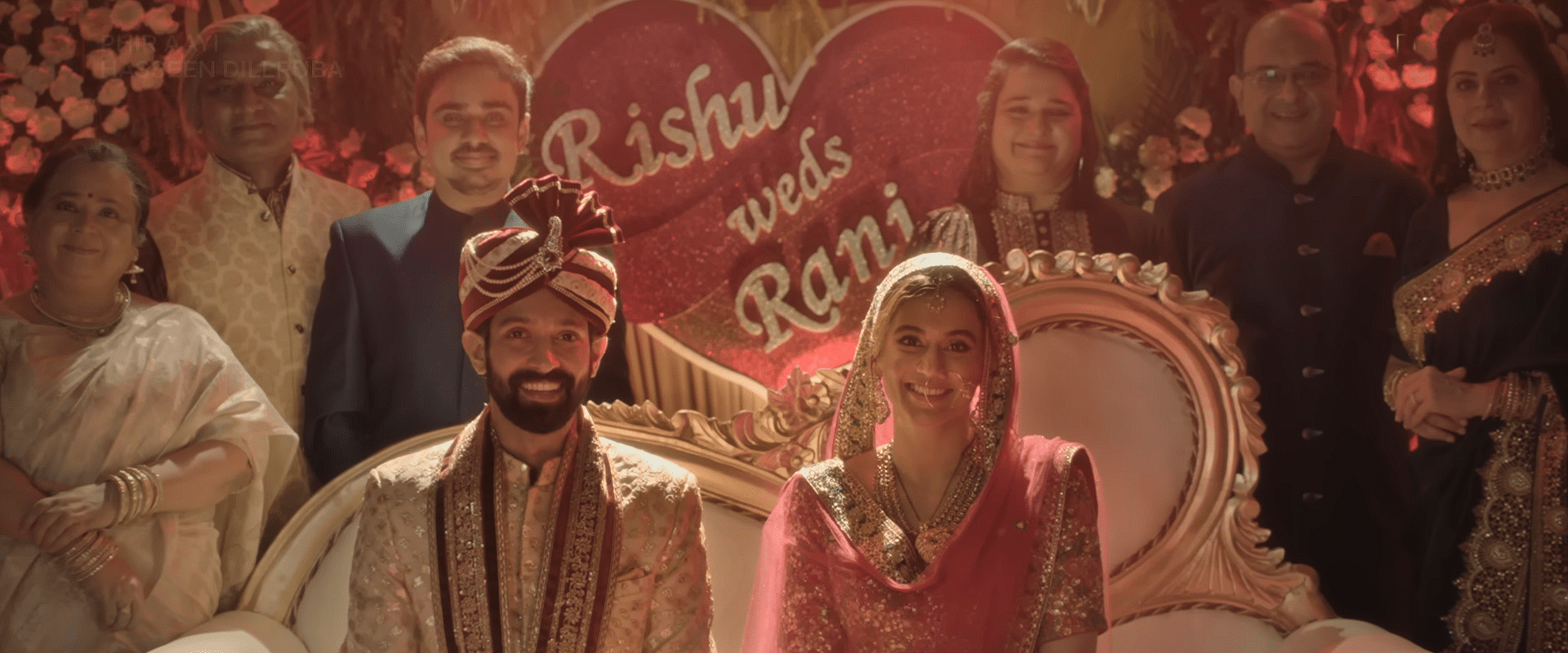
The main highlights of Part One return in unexpected ways. From Taapsee Pannu looking absolutely killer in a red sari to actually being a killer – those contrasts of beauty and brutality remain her signature. In the first film, her journey from helpless woman to seduction queen was the heart of the drama: she was volatile, fragile, vicious, and impossible to look away from. Here, the same essence exists, but it is more contained, more strategic, almost colder. Behind her, Vikrant Massey – our Rishabh – who once looked, even if only for a little while, like a fool blinded by love, evolves into something else entirely. In this picture, he is the rider-provider, the Batman of this twisted Gotham: whatever has to be done, he will do.
The transformation is drastic – if in the first movie he was the accident waiting to happen, here he becomes the one who rewrites the script of accidents altogether. The guilt, the desperation, the lost innocence – they all vanish in an instant. In his eyes, the world now has only two categories: those who threaten his home, and those who don’t. The film commits to that personality shift even when it sometimes stretches believability.
New Entrants, New Energies
Apart from the central duo, the sequel introduces two genuinely solid additions. Sunny Kaushal enters with a presence that feels calculated and quietly venomous. From the very first scene, the guess forming in your mind about his character – and the possibility he represents – is sharp. He handles that unpredictability really well. His Abhimanyu is the kind of man who smiles with his eyes but bites through your throat when you’re not looking. And Jimmy Shergill? His entry literally brings a smile to your face. The Bhojpuri he speaks – amazing, controlled, charming, and layered. His cop persona is the type that carries history without announcing it. Every line from him feels like an invitation to either confess – or run.
Dialogues That Swing Between Cheesy and Sharp
Just like its predecessor, the second film knows how to play with language. Some lines, some dialogues, some poetry – they arrive at you like small punches. They either make you chuckle, thinking “Brother, this is a little cheesy,” or they hit you with a sudden, dramatic “oh-oh.” There’s one particular line – something about how there is no problem in waiting, because doing it alone is difficult, and so it’s because of your coming… It stays hovering somewhere in your memory, not perfect but memorable enough to recall later. The movie lives in these moments – the tiny romantic explosions that sit between thriller beats.
And that is the trick of the franchise: it doesn’t want you to take everything with a straight face. It wants you to feel, to react, to blush, to laugh awkwardly. That creative courage works – at least in scattered portions of the film.
Twists That Intrigue and Then Overindulge
The story also takes risks, placing twists in front of you like trapdoors. The movie says, “Here brother, here’s a situation, you would not have imagined this.” And some of those moments genuinely make you curious about what they will show next. The energy spikes, you lean forward, and you start forming your own theories.
But right there emerges the film’s biggest flaw. As you see such acts, such turns, such sudden plot pivots, you will say – this is a bit too much. What they are showing is interesting, and you should not take the picture very seriously, but the logical brain keeps whispering, “This is a stretch.” Logic is the casualty the film repeatedly sacrifices in the name of thrill.
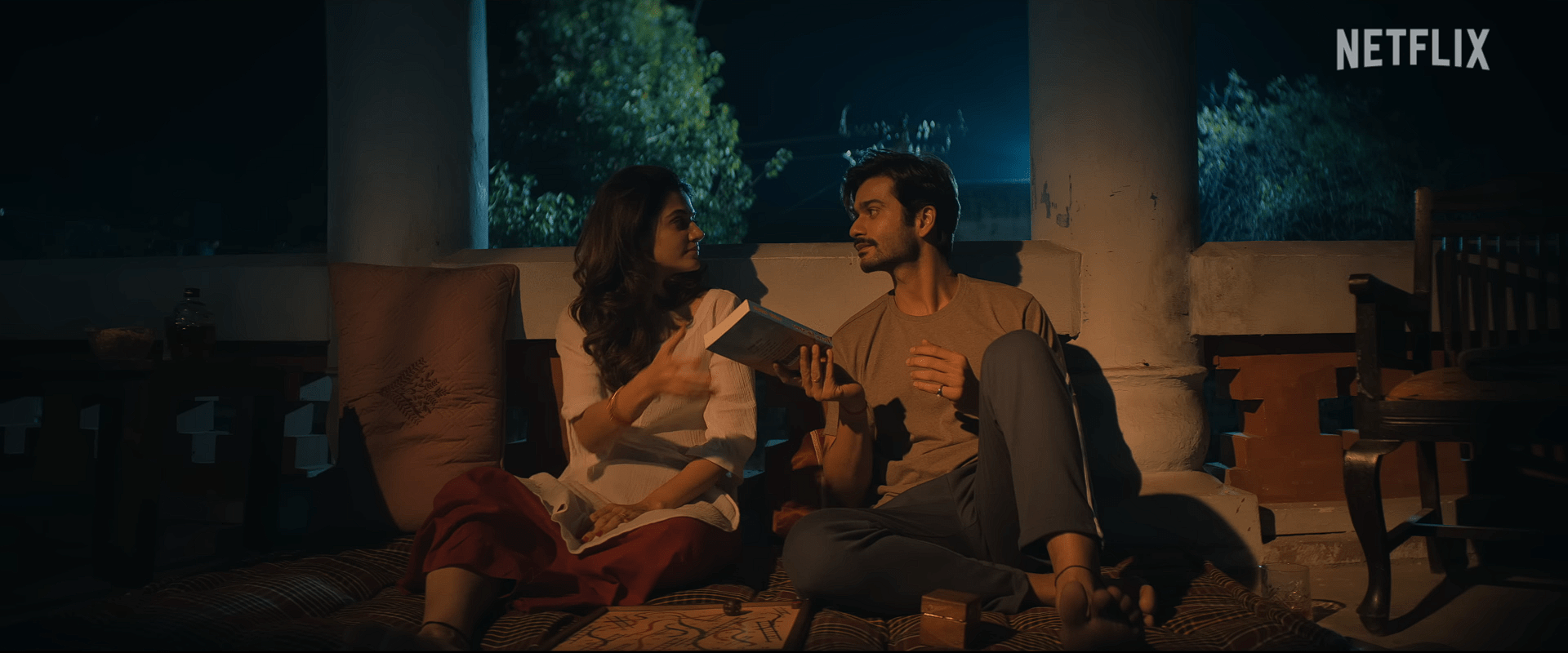
The final 5–10 minutes, for example, are completely predictable when it comes to Rani and Rishabh. Their trajectory as characters has already set its endpoint, and the film does little to disguise it. But because of Sunny Kaushal’s Abhimanyu, some guesswork does get added – just enough suspense to keep you from walking out mentally.
Crafted Beauty, Cinematic Convenience
Now, let’s give credit where it’s due. The way they used the song “Ek Haseena Thi” with slow motion at the start – what an impact! It immediately sets the tone: nostalgia, threat, lust, glamour. And at many places, using red color and red light, the film turns its frames into paintings of danger. That artistic touch, the stylized blood-tinged romance, is a big thumbs up.
But an equally big thumbs down goes to whoever thought, “If the police officers do this, it will be fun,” because they do nothing. The investigation is laughable, the procedures exist only to fill space, and the bridge incident is the peak of absurdity. You will scratch your head saying, “Are they fools?”

If characters consumed by love do extreme things, you can still accept it – blindness of emotion, loss of judgment, fine. But to show those same extreme things, the film writes convenience everywhere else, and that becomes hard to digest. It’s the difference between character madness and screenplay laziness – and the sequel dances a little too comfortably in the latter.
The Final Feeling
When you watch Phir Aayi Hasseen Dillruba and finish it, you won’t walk away thinking, “What an amazing picture, enjoyed a lot.” Instead, you’ll sense a recycled rhythm. Many things from the first movie have been reused, reheated, and served again. The film feels genuinely good only in some sections. Its first part was definitely better, and if you liked that, then you can check this second one too. Just keep your expectations low. For the positives mentioned, you can still give it a try – after all, it’s a two-hour picture, not much time, and you don’t have to pay extra from your pocket.
But yes – if you can compromise a bit with logic, then watch it. Otherwise, don’t.
Rating: 2.5/5