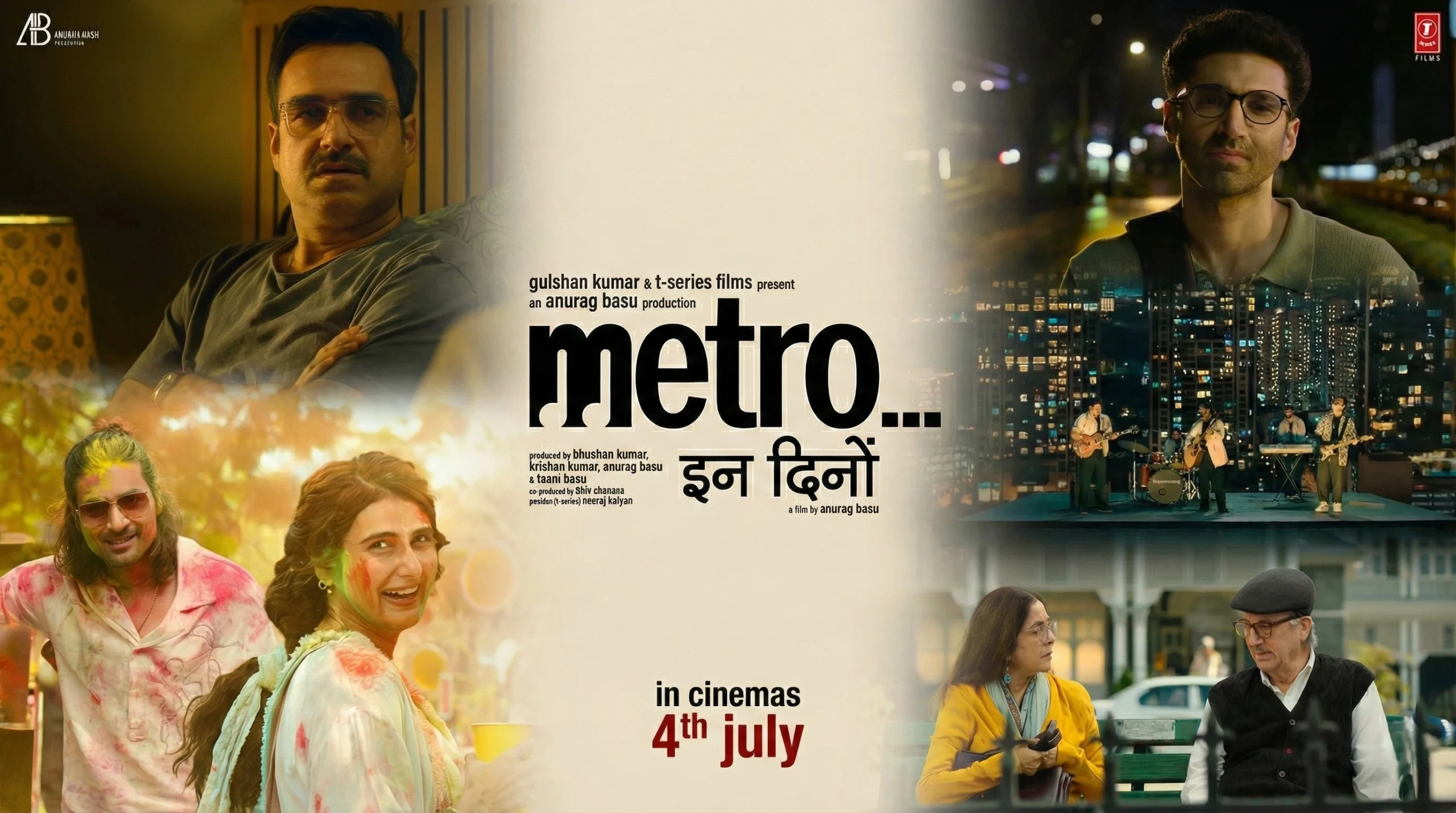
It’s honestly a little hard for me to believe this myself, but Metro… In Dino is the first Anurag Basu film I’ve ever watched in a theatre. For someone who has consumed his earlier films through laptops, televisions, and the occasional half-watched satellite premiere, sitting down in a dark hall, surrounded by a lively Friday audience, and finally witnessing Basu’s world unfold on the big screen felt unexpectedly special. The film – carrying a title that already had people humming well before release – finally arrived in cinemas, and my excitement had been building from the moment I saw its trailer. In fact, the excitement wasn’t just because it was a Basu film. It came from four solid reasons: the songs, the dialogues, Anurag Basu himself, and the promise of a full-hearted narrative centered entirely around the idea of love.
Now out of these four, which one should I talk about first? Let’s do one thing – let’s simply begin with the director himself, because Basu is the central force whose choices dramatically shape what the final verdict of this review will be.
Anurag Basu: A Director Who Refuses the Herd Mentality
One thing I’ve always admired about Anurag Basu – even before watching his work on the big screen – is that he never tries to blend into the commercial crowd. When the entire industry chases mass-masala formulas, he doesn’t pause to ask, “Should I put some of that in?” His films may not be flawless, but they always say something, and more importantly, they make you feel something that lingers long after the credits fade.
That quality alone sets him apart. His artistic choices give his films a distinctive freshness, a voice that says, “Here, today you saw something different.” And in an era where studios often pour crores into star-driven cinema, I was genuinely surprised that he was given the space to make this kind of film – one that prioritizes multi-layered storytelling over star power.
There’s no single hero, no giant face printed on a poster dictating the narrative. Instead, Basu creates an ensemble of seven to eight well-known actors, and yet the film refuses to be about any one person. That decision feels refreshing – and somehow courageous – in today’s box office landscape.
It genuinely felt good to see such a film running in theatres.
- Anurag Basu: A Director Who Refuses the Herd Mentality
- Love in Phases: A Multi-Track Narrative of Urban Emotions
- The First Stage: Teenage Discovery (Age 13–14)
- The Twenties: Chaos, Freedom, and Commitment Phobia
- The New Marriage Phase
- The Stagnant Marriage Phase
- Old Age: The Final Stage
- The Relatability Factor: Why This Film Might Hit You Hard
- A 2-Hour-40-Minute Runtime – But Mostly Justified
- An Uneven Screenplay That Still Manages to Engage
- A Brilliant Scene Ruined by a Sudden Mood Shift
- Dialogues That Land Perfectly
- The Music: The Beating Heart of the Film
- Performances: A Rich Ensemble That Delivers
- First Half vs Second Half: A Tale of Two Energies
- Final Verdict: A Film That Feels Good – Flaws and All
Love in Phases: A Multi-Track Narrative of Urban Emotions
Let’s come to the movie itself.
Inside the film, Basu unfolds multiple interconnected stories – each representing a different stage of love, of ishq, of pyaar. And honestly, that’s where the film begins to shine. Because love is not a single event; it’s a whole timeline. Basu walks us through that timeline with sensitivity, humour, and a generous helping of truth.

The First Stage: Teenage Discovery (Age 13–14)
This is that phase where everything feels new. Every crush feels life-changing. Every smile feels like a cinematic moment. You’re discovering emotions you didn’t know you could feel. It’s innocence mixed with curiosity.
The Twenties: Chaos, Freedom, and Commitment Phobia
Then comes your twenties – when you discover not only emotions, but life itself, often at a dizzying speed. And yes, not everyone is lucky, but for those who are… every four months it’s someone new.
Why? Because people now say, “I don’t want pressure, I don’t want burden, I want chill vibes.”
Translation: you’re running from commitment. You’re a coward. A full-on fattoo.
The New Marriage Phase
Someone is getting married. Someone just got married. A few years pass. There’s excitement, adjustment, and expectations. Baby incoming. Life transitions suddenly start demanding maturity.
The Stagnant Marriage Phase
Then comes the phase where the marriage loses spark. Routine begins to taste like dal-chawal – but dal-chawal that has become khichdi. Kids go to school. The monotony settles in. And occasionally, someone begins to feel tempted by the idea of something extra – an extramarital distraction.
Old Age: The Final Stage
And finally, old age. The decisions you had to make – you made. The life you had to live – you lived. Now the only thing left are the results of those decisions.
All these stages – beautifully diverse and painfully relatable – are given their own stories, and the casting aligns perfectly:
- The fiery young blood: Aditya Roy Kapur and Sara Ali Khan
- The early-marriage stage: Ali Fazal and Fatima Sana Shaikh
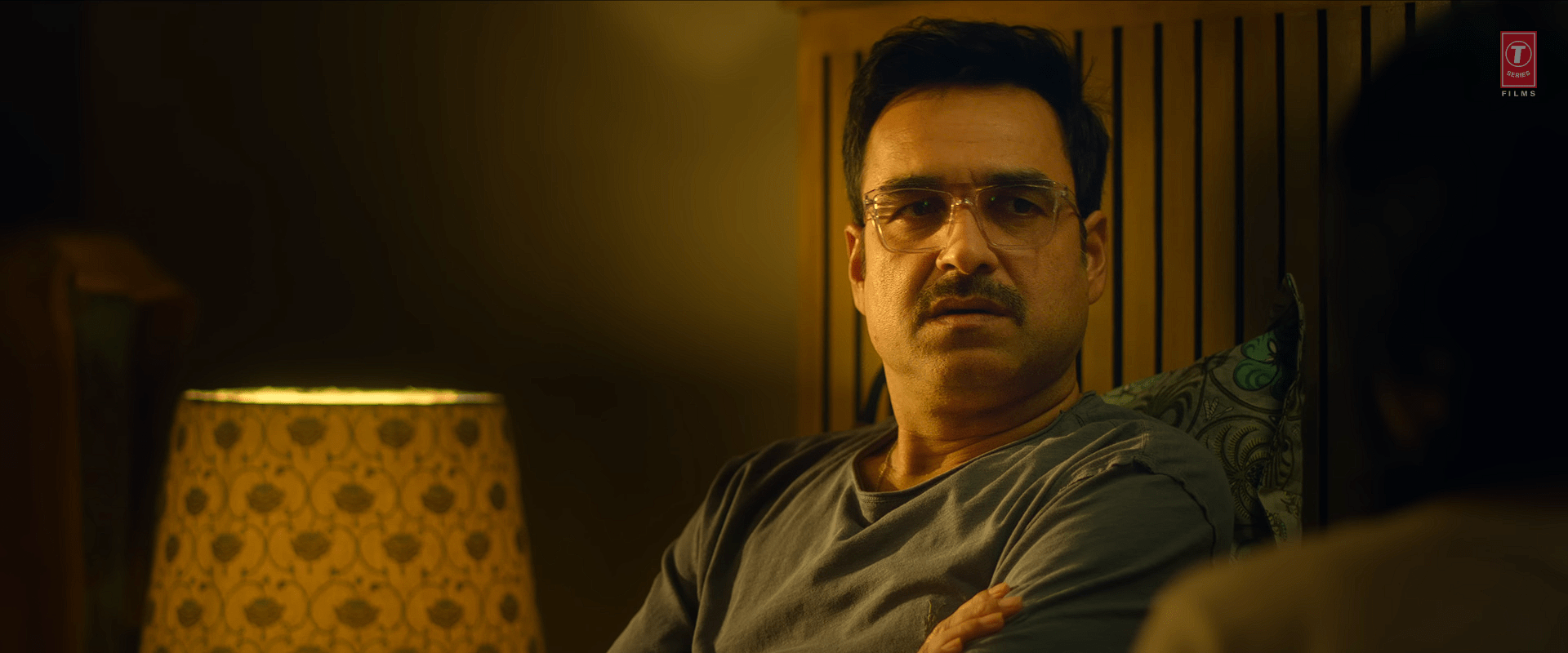
- The dry, uneventful, stagnant marriage: Konkona Sen Sharma and Pankaj Tripathi
- Old-age companionship: Anupam Kher and Neena Gupta
This structure is one of the film’s biggest strengths.
The Relatability Factor: Why This Film Might Hit You Hard
One of the main reasons this movie might genuinely work for you is that somewhere among these stages, you will find yourself, provided you’re above 13–14 and have lived even a little. Trust me, that entire situationship–benching–crumbing–lafda angle is going to feel painfully relatable.
And for reasons unknown, people nowadays love associating this modern relationship mess with Pune. The film works because the story works. The stages of love that it depicts are meaningful, engaging, and thought-provoking. Whether you agree with them or not is secondary. What matters is that the movie makes you think and makes you feel. That’s already a major win.
A 2-Hour-40-Minute Runtime – But Mostly Justified
At 2 hours 40 minutes, this film is not short. But considering it handles so many characters and storylines that often loop back into each other, the runtime makes sense. Only when I realized that three out of four women in the film are shown as being from the same family did I say, “Wait… what? Four out of five? Damn.”
That revelation alone explains why the narrative sometimes feels like it’s juggling one storyline too many.

An Uneven Screenplay That Still Manages to Engage
Now, the screenplay. It’s not smooth. I won’t pretend otherwise.
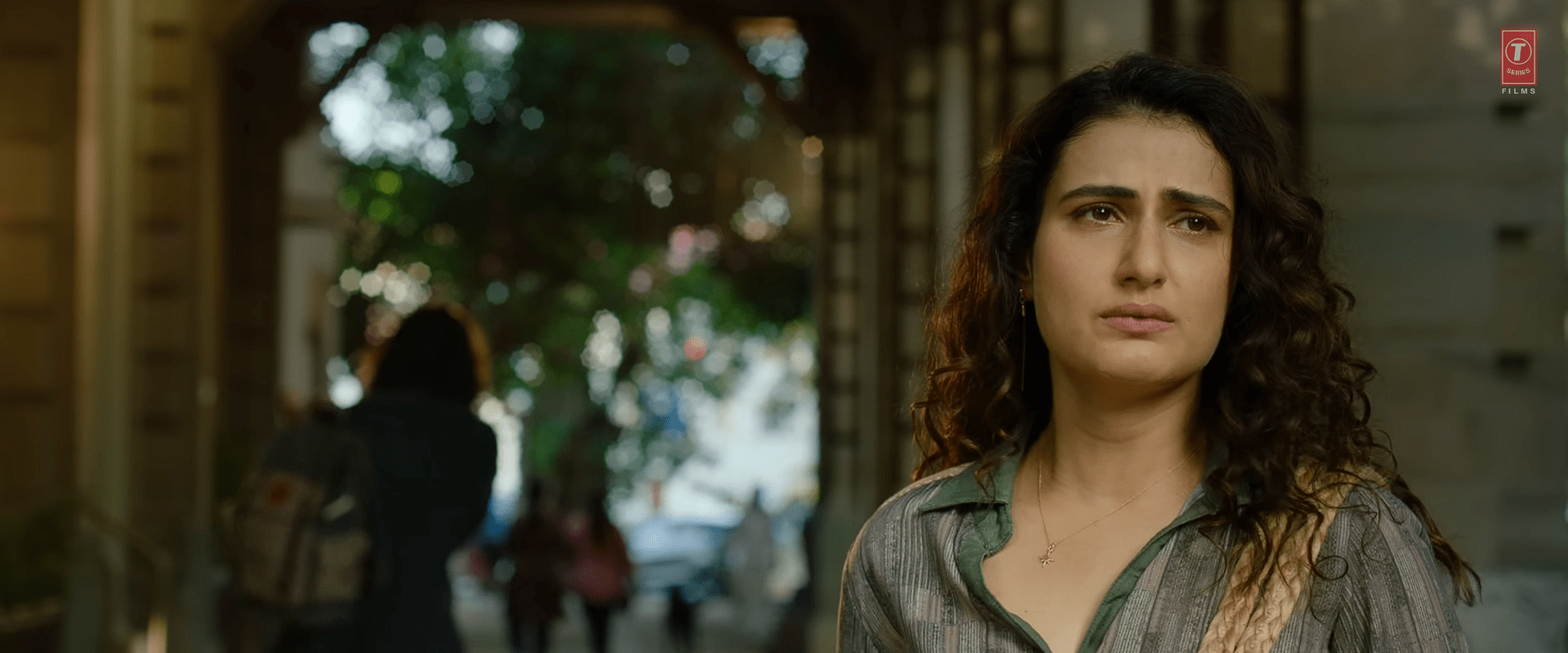
Because the film constantly jumps between multiple arcs, some stories disappear for long stretches. By the time they reappear, you’ve already forgotten that they were even part of the film. I especially felt this with the track featuring Ali Fazal and Fatima Sana Shaikh.
Their story reaches a high emotional point, but right when the impact should deepen, we cut to another storyline entirely. And by the time all other stories reach their emotional peaks, their story casually pops back in – as if the film suddenly remembered it existed.
Still, even among these structural inconsistencies, Basu places many small, beautifully observed moments that make you smile instantly.
A Brilliant Scene Ruined by a Sudden Mood Shift
Let me point out one moment that genuinely bothered me.
There’s a scene – no spoilers – where one character tells another:
“You were right. Like your father, you’re average.”
The writing builds beautifully to this moment. The context is powerful. The scene itself is strong.
But the film refuses to stay with the character long enough to let the emotional burn settle. We get a two-second reaction shot – and suddenly the background erupts into happy tappie music.
Imagine your girlfriend or wife tells you something that genuinely hurts. You’re sad. And two seconds later: tin ti tin… That abrupt tonal shift felt completely out of place.
Dialogues That Land Perfectly
Now let’s come to the dialogues, which are one of the reasons I was excited in the first place. Even in the trailer, they sounded impressive.
Lines like: “You have to fall in love again and again with the same person to spend your whole life with them.” Simple. Profound. True.
And in the theatre, one guy was enjoying the film way too much. When someone said, “Marriage teaches you how to act,” the man started clapping loudly. I agree with the line – but he clearly related on a spiritual level.
The Music: The Beating Heart of the Film
Now the most important aspect – the songs.
Some tracks are decent, but some are absolute certified bangers. Especially Dil Ka Kya – every time it plays, it just slaps. Ticket price recovered by soundtrack alone.
I’d once say “Music is what feelings sound like.” Metro… In Dino is the perfect example of that. The songs play during the scenes – not as breaks, not as fillers, but as emotional extensions of the narrative.
Performances: A Rich Ensemble That Delivers
Pankaj Tripathi is hilarious. Pure fun. Konkona Sen Sharma, his complete contrast, grounds the story with quiet strength. Aditya Roy Kapur brings a breezy, carefree energy that feels perfect for the youthful arc.
Sara Ali Khan – say what you will about her filmography – but in terms of performance alone, you cannot question why she was cast. But one question arises – who designed her look?
Neena Gupta, our ex-pradhan from Panchayat, shines like sunshine – always. Overall, the performances keep the film emotionally alive even when the screenplay falters.

First Half vs Second Half: A Tale of Two Energies
Let me set expectations clearly.
The first half is strong – engaging, cohesive, and emotionally grounded. The second half becomes a little up-and-down. It wavers. It feels like the film starts wandering in too many directions. That ultimately affects the impact of the ending.
The climax isn’t the stadium power-six you expect from Anurag Basu, like Barfi. But it’s also not crawling to the boundary like Jagga Jasoos. It lands somewhere in the middle.
Final Verdict: A Film That Feels Good – Flaws and All
Even with its imperfections, Metro… In Dino gave me a surprisingly positive experience. The film made me feel emotions, reflect on relationships, and appreciate the little truths tucked into its writing.
So here’s what I’ll say:
If the trailer even slightly caught your interest – through its cast, its songs, its dialogues, or its storytelling – then this film is worth your time and money in theatres. Because despite the flaws, the experience itself is rewarding.
It felt good, yaar.
Rating: 4/5
Recommended.