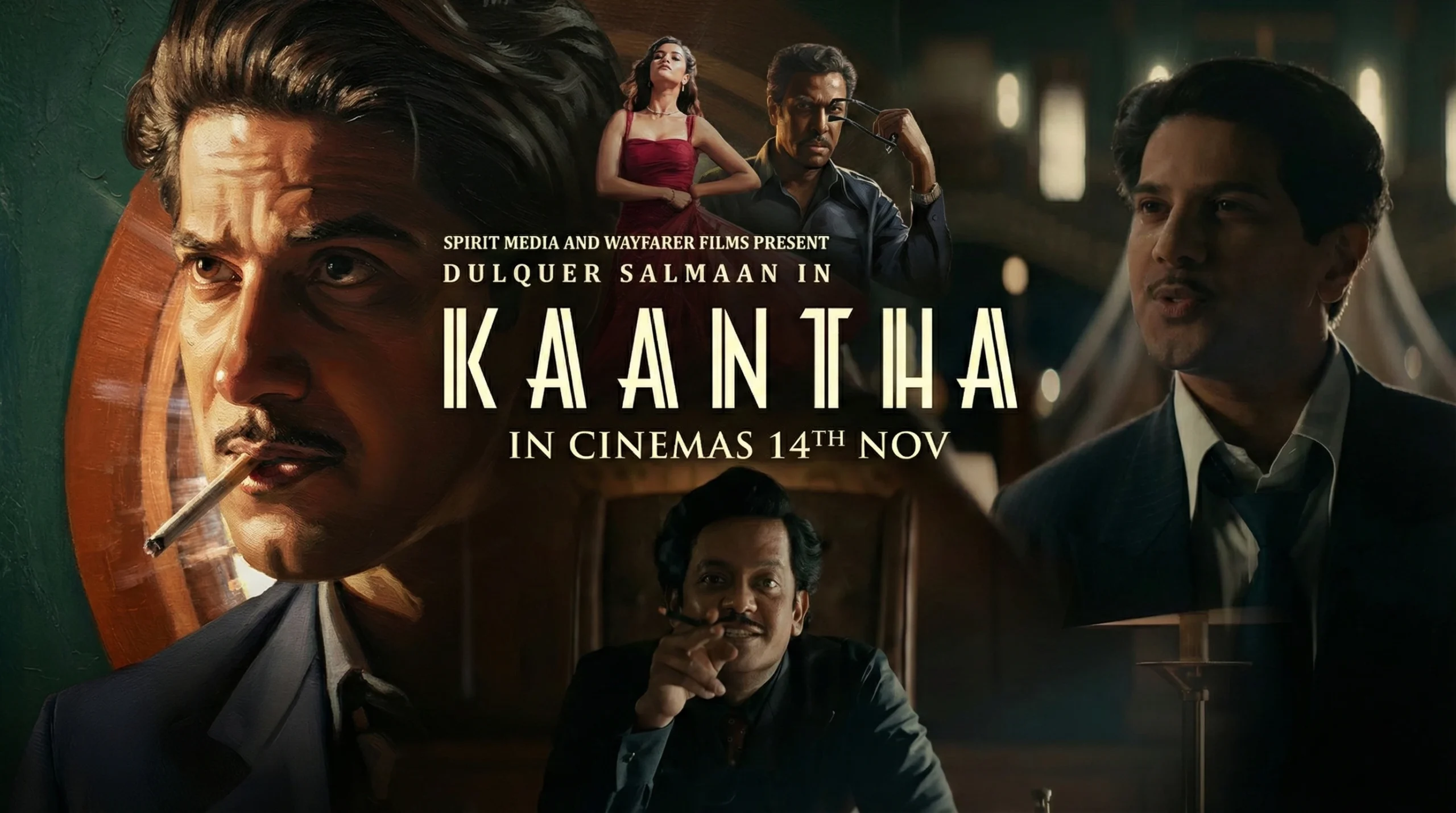
Today, in this article, I am diving into Selvamani Selvaraj’s period drama “Kaantha,” a film staged within the silver shadows of the 1950s. It’s a work that deliberately toys with nostalgia, ego, ambition, and the fragile power dynamics of stardom. From its first frames, the movie announces itself not simply as a story but as a story about stories – a film about the making of a film, where the camera becomes a mirror held up to the temperament of the industry.
The narrative opens unexpectedly: a project that once stopped halfway due to a clash between a hero and his own director gets revived. That conflict becomes the foundation of the entire drama. It isn’t just creative tension – it’s ego, hierarchy, and desperation colliding in cinematic slow motion. The director, a veteran whose earlier films have all flopped, stands in the market like a man whose shadow is longer than his relevance. Meanwhile, the hero he once introduced to fame has delivered an almost impossible streak – ten blockbuster hits – and stands at the peak of his career.
From here, “Kaantha” reveals its first moral fault line: When a creation outgrows its creator, who truly owns the narrative? The hero, now hailed by his fanbase as a demigod, demands that the film be shaped to match his image. “My fans see me like a god. So my film should be made to suit that,” he insists. The director refuses with cold creative pride: “I’m the director of this film, and I’ll shoot it the way I say.” And thus begins the tug-of-war, not only for artistic vision but for existential dominance.
Caught in this duel is the film’s heroine – Bhagyashri Borse. Introduced as a new face, she becomes a pawn between two men whose self-image is more important than the project itself. She is not just struggling; she is trapped, suffocated beneath a machine turning even vulnerability into spectacle. What happens when a major incident explodes between them? What shifts, what collapses, who cracks first? That is where “Kaantha” situates its central mystery.
An Electrifying First Half, Carried by Performances
The film’s first half is where I found myself thoroughly engaged. It does not deliver a powerful screenplay, nor does it unravel a tightly wound plot. Instead, scene after scene walks a tight line of tension, emotion, and charisma – scenes that make you lean back and whisper, “That was a super moment.”
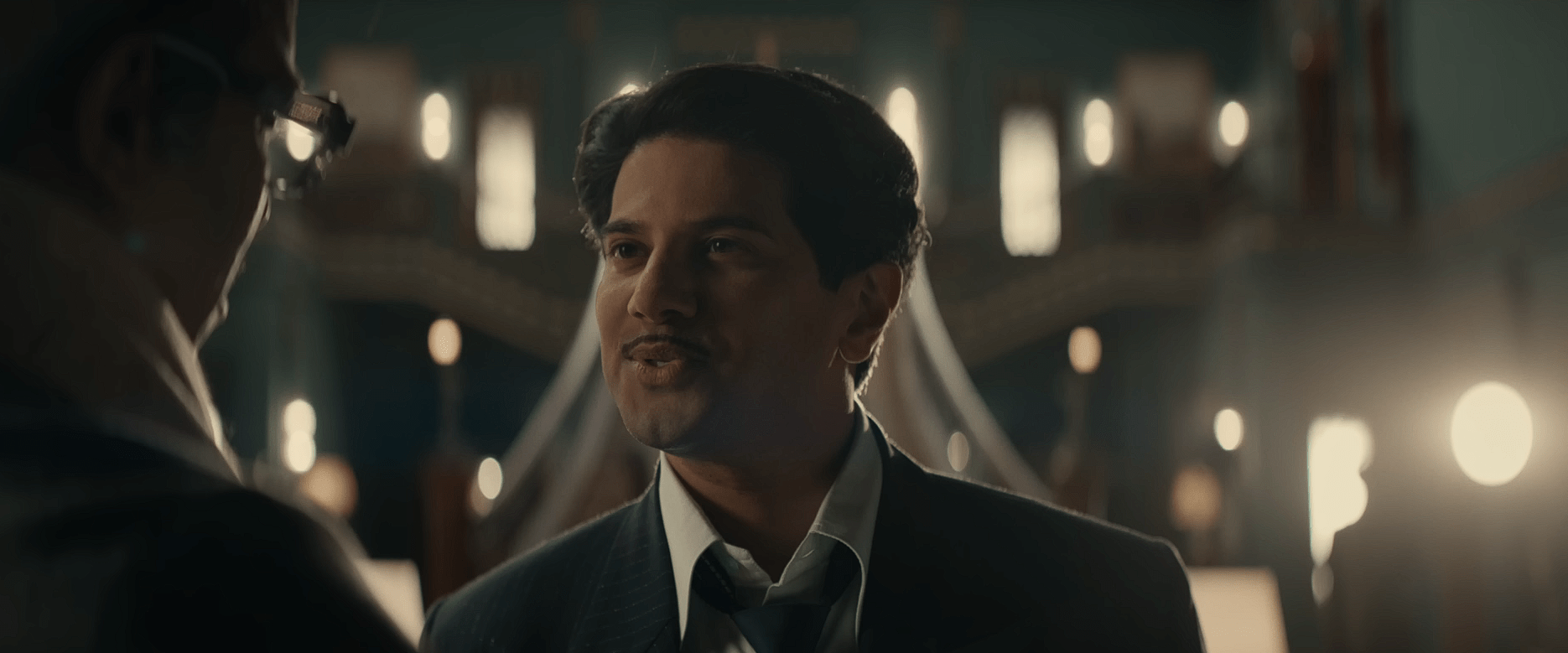
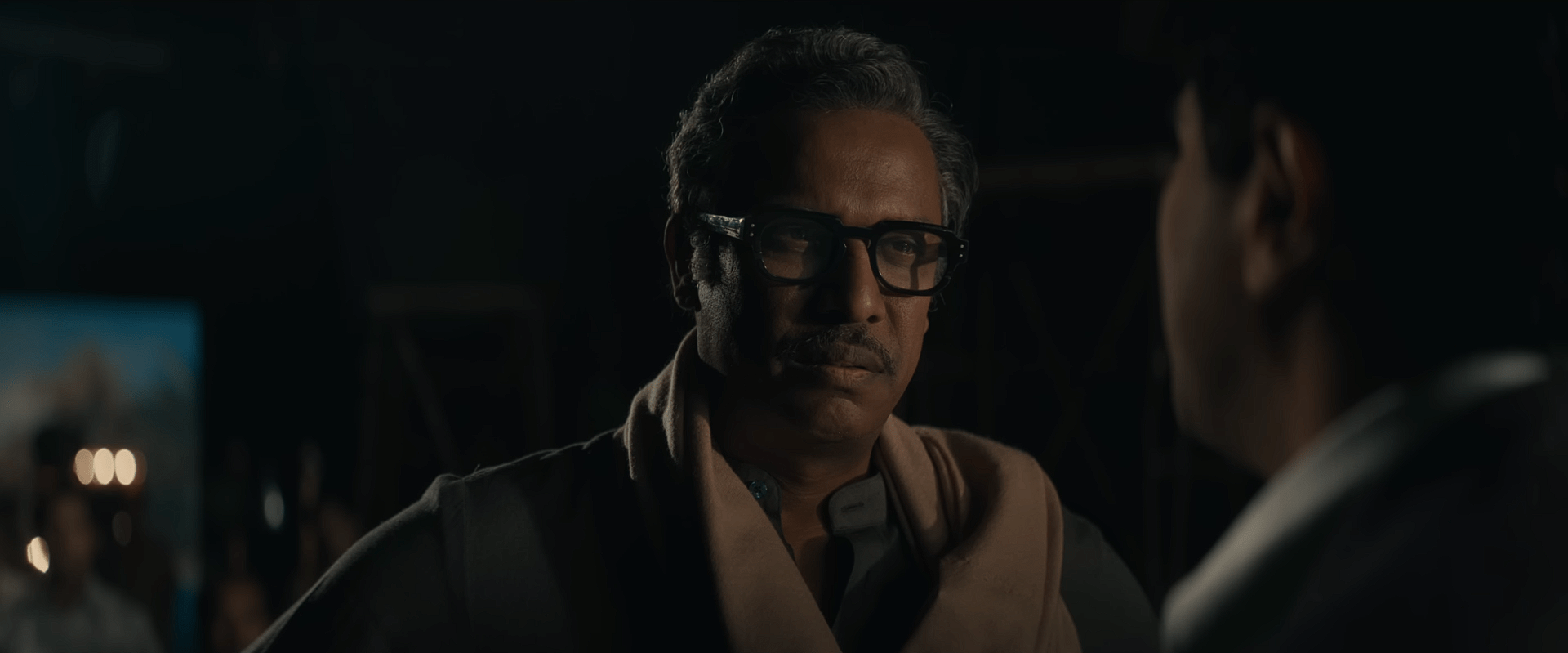
The real magic comes from the performances. Dulquer Salmaan and Samuthirakani are a rare pairing: two actors who refuse to bend even a millimeter. Their characters are meant to reflect two kinds of power – one rooted in youthful dominance, the other in bruised authority. Had one of them surrendered emotionally, the delicate balance of the film would have collapsed. Their performances compete, clash, and eventually collide in a way that elevates every exchange.
Beside them, Bhagyashri is the surprise of the hour. At points I genuinely found myself asking, “Who is this girl?” Her presence, her restraint, her rawness – all of it works. She doesn’t merely react to dialogue; she reacts to pressure, to scrutiny, to the weight of expectations. Her work breathes unexpected freshness into the narrative. And in truth, it is the trio of Dulquer, Samuthirakani, and Bhagyashri that carries the entire first half.
Where the Film Trips: The Second Half
Unfortunately, Kaantha’s second half swings in the opposite direction. Where the first half is lively and gripping, the latter becomes an emotional and narrative slog. The movie turns investigative – slow, procedural, and strangely hollow. Scenes stretch beyond their weight. The mystery becomes less interesting the more the film tries to deepen it.
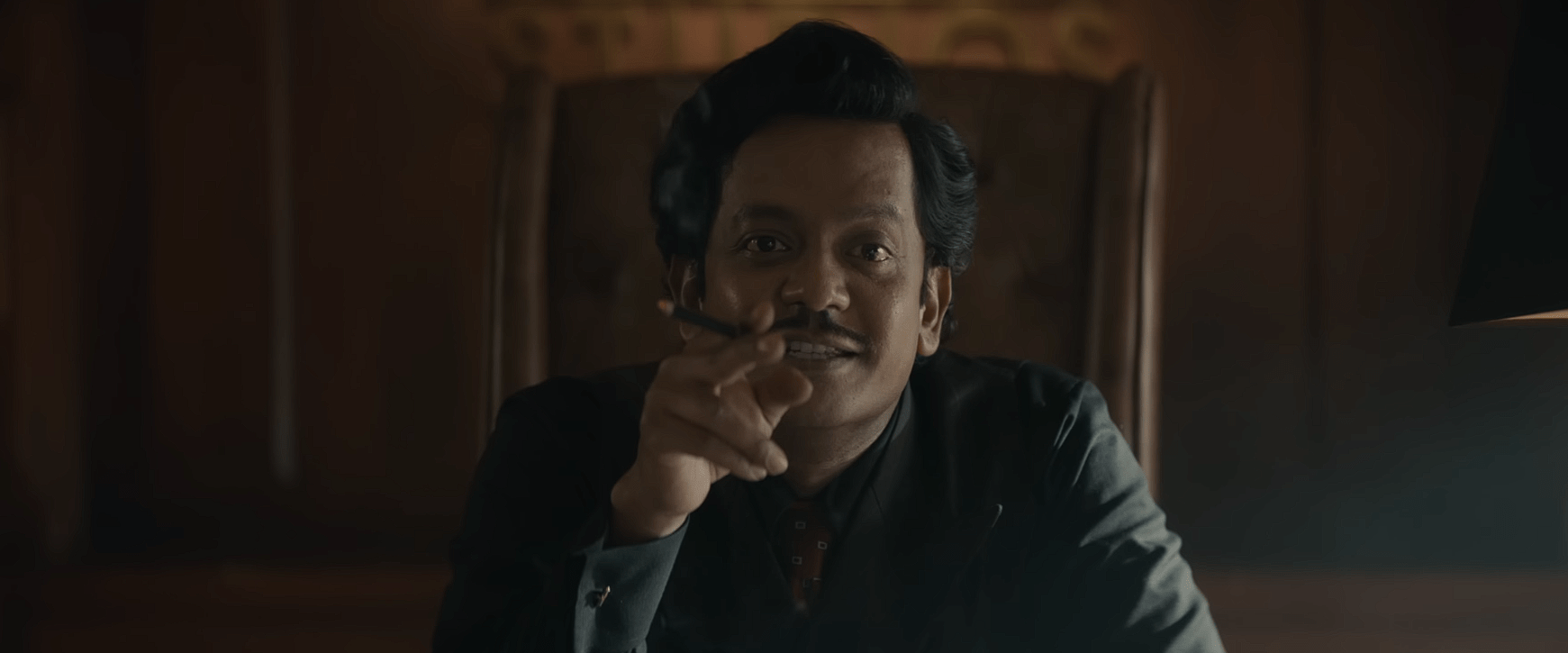
The moment Rana’s character enters, the spell breaks. His performance feels theatrical – almost deliberately artificial – like watching a stage play instead of a cinematic drama. This is not the kind of heightened performance that electrifies a screen. Instead, it distances the viewer. The investigation sequences that should tighten the tension instead become exercises in patience. Even when the film finally reveals what the investigation uncovers, the answer lands with a dull thud rather than surprise or intellectual satisfaction.
Dialogues, Cinematography, and Technical Brilliance
One aspect that refuses to crumble is the dialogue, especially those delivered by Samuthirakani. His lines carry resonance:
- “A fan exists only for 50 years. But this film will exist even after that.”
- “Don’t act after I say cut.”
These are not throwaway lines. They form the ideological backbone of “Kaantha” – cinema as legacy versus cinema as fandom, performance as authenticity versus performance as illusion.
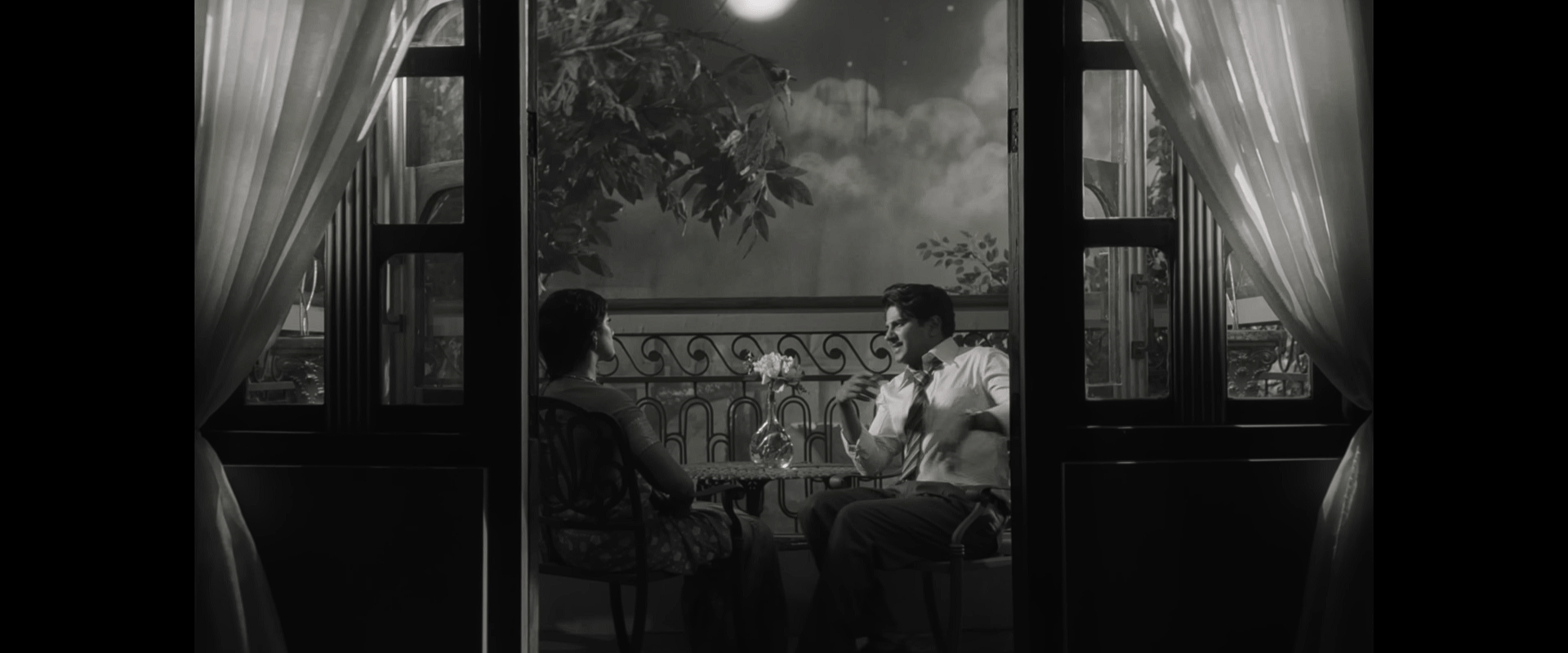
The cinematography is equally impressive. Mirror compositions, reflections, the way bodies fragment and recombine in the frame – these visual ideas speak more loudly than many scenes. Technically, “Kaantha” is rigorous. Camera work, staging, and production detail are consistently sharp throughout. The movie knows how it wants to look, even when it doesn’t know how it wants to feel.
The Problem of Ambition
Ultimately, the film attempts to stretch a middling story across nearly two hours and forty-five minutes. Ambition without narrative muscle becomes endurance, and that is exactly what happens here. The central conceit – cinema within cinema – is not something mainstream audiences naturally connect with. It speaks mostly to cinephiles, artists, and those who hunt for experimental storytelling.
If you are one of those viewers who loves unconventional cinema, the first half will absolutely work for you. But the second half? It may exhaust you.
Final Verdict
Kaantha is an intriguing film trapped in a conflicted screenplay. Its performances, dialogues, and camera work form an impressive foundation, but the narrative structure drags and dilutes its own promise. It wants to be a masterpiece about ego, but ends up being a fascinating half-finished mirror.
Rating: 2.5 out of 5.