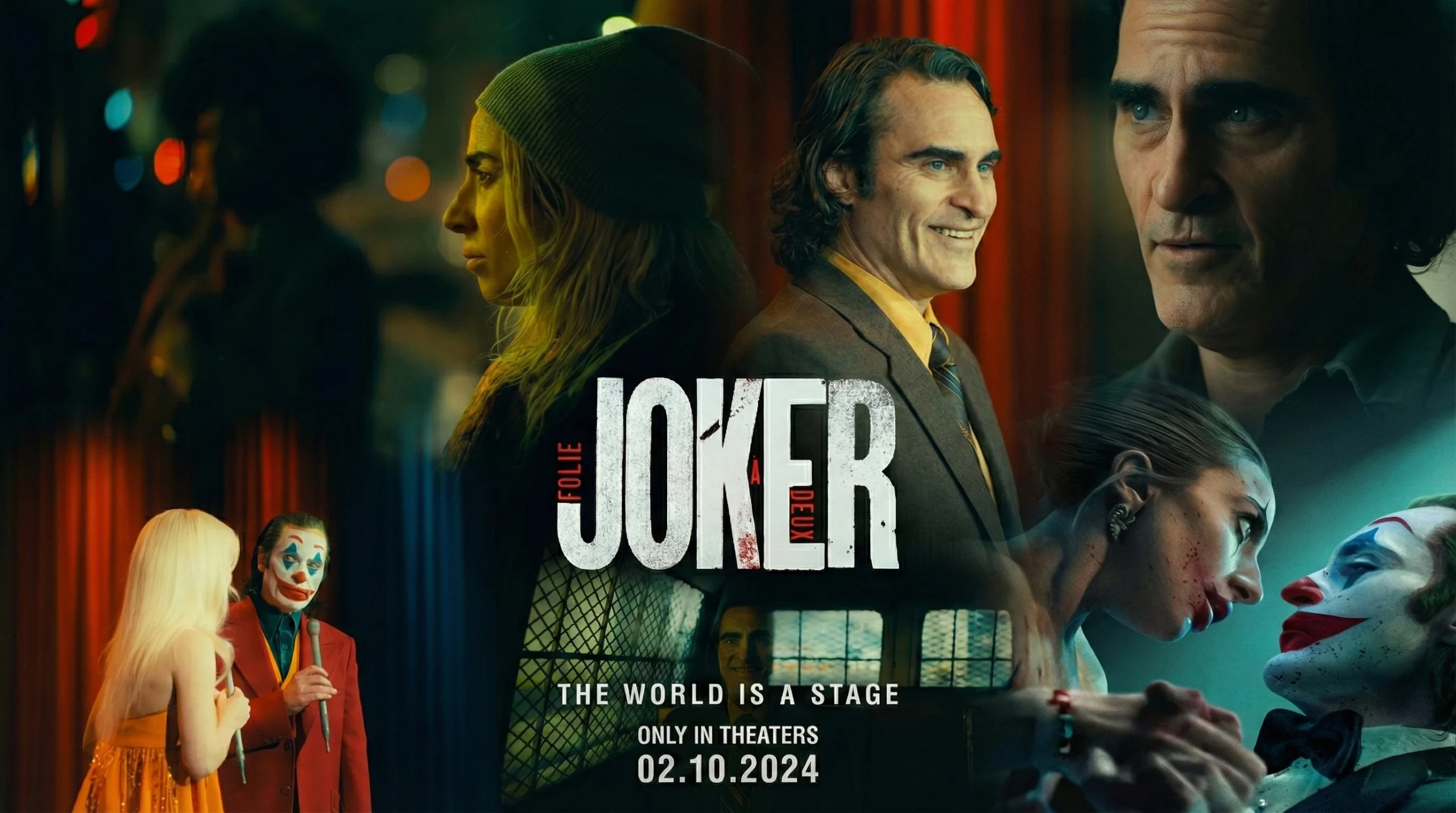
Joker movie’s part two has finally been released in theatres today. I walked into the cinema carrying the weight of a five-year legacy. The original film wasn’t simply successful – it was a cultural explosion. Joker became one of the most debated films of the decade, a billion-dollar phenomenon driven by audacity, controversy, and Joaquin Phoenix’s devastating performance. Most sequels exist because executives smell profit; this one exists because the first film became too powerful to ignore. But as soon as I saw the title, I realized the creative team wasn’t pretending: its official title isn’t Joker 2 – it’s Joker: Folie à Deux, a phrase from psychology meaning “Madness of Two.” A promise that this time the descent wouldn’t be Arthur’s alone.
And that premise excited me. Not because it would be loud or comic-book flashy. The first Joker movie was a character study drenched in urban despair. This sequel seemed poised to dissect something even more unnerving: the consequences. What happens when a civilization watches a disturbed man shoot a host on live television? What happens when the murderer becomes a symbol? If the first film asked “How was Joker created?”, this one asks “What happens after the world embraces him?”
The Inescapable Legend: Joker as an Idea, Not a Man
As much as I remember about the first movie, Arthur Fleck was a random, broken man beaten by systemic cruelty – mocked, ignored, stripped of dignity until he fractured and transformed. By the end, society didn’t just watch him – they baptized him. He killed a host live on television; people saw it, talked about it, mythologized it. Everyone projected their rage and hopelessness onto this one madman and turned a failed comedian into a legend. They created an idea, an identity that Arthur Fleck himself could never escape.
Folie à Deux picks up exactly where that phenomenon left off. Todd Phillips and his team want to explore the consequences of society’s reaction to Arthur’s transformation. If you keep these things clearly in mind beforehand, maybe the ending becomes easier to understand. The film’s message is chillingly simple: if Arthur himself does not become Joker, someone else will. Because Joker is not a person – he is an idea. Wherever society exists, under the disguise of “system” and “law and order,” many will suffer injustice. If any one of them slips just a little bit, it won’t take long for another Joker to be created.
Around these points they have attempted to construct this entire second movie. The thought is genuinely amazing – I must admit. On paper, this is cinema with teeth. But ideas alone don’t make a great film. It’s the execution that matters, and that is where my issues began.
- The Inescapable Legend: Joker as an Idea, Not a Man
- A Slower Burn Than It Should Be
- The Musical Ambition – Bold, but Not Always Effective
- Plot: A Prison of the Mind, a Trial of Perception
- The Slow Climb Toward Interesting
- Technical Craft: At Least It Looks Beautiful
- Joaquin Phoenix: Still the Crown Jewel
- A Few Surprises and Frustrations
- Final Thoughts: Beautiful, Ambitious, and Ultimately… Unnecessary
A Slower Burn Than It Should Be
The movie starts with a pace so molasses-slow that I wondered if this was a deliberate strategy or a sign of self-indulgence. Many films use a slow opening to set tone – letting you decompress from the chaos of the outside world and adjust to a new rhythm. The original Joker did this masterfully. Its world moved at its own tempo, and once the viewer synced with it, every beat felt devastating.
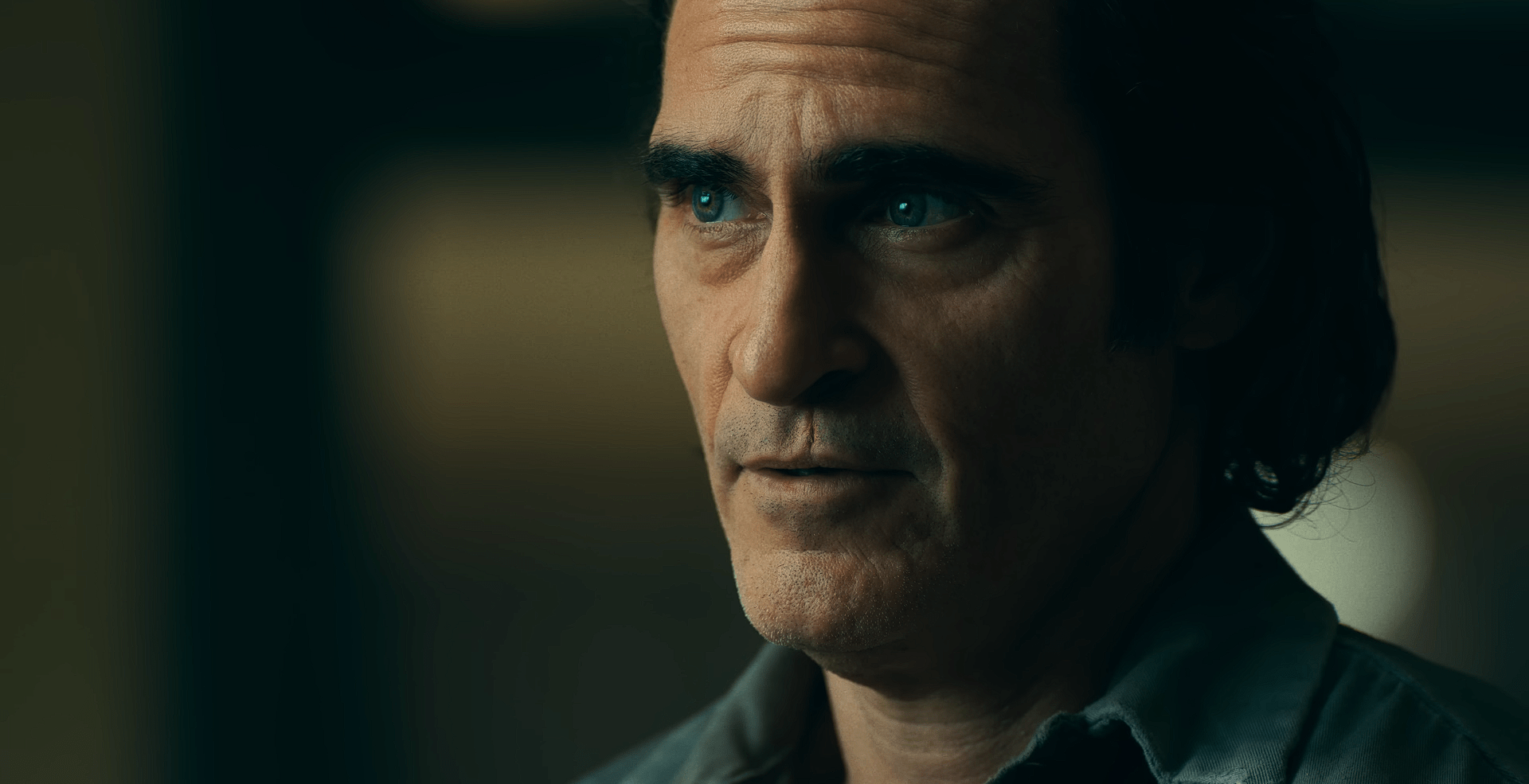
This time, however, the slowness works against the film. Some shots linger so long that they say nothing – no emotions, no narrative progression – just… continuing. I could feel the camera staring back at me, daring me to admire its artistry. It felt pretentious. I began thinking that if someone walked into this movie impressed with part one, expecting similar tonal precision, they’d be shocked by the change – especially in the characterizations of Joker and Harley Quinn.
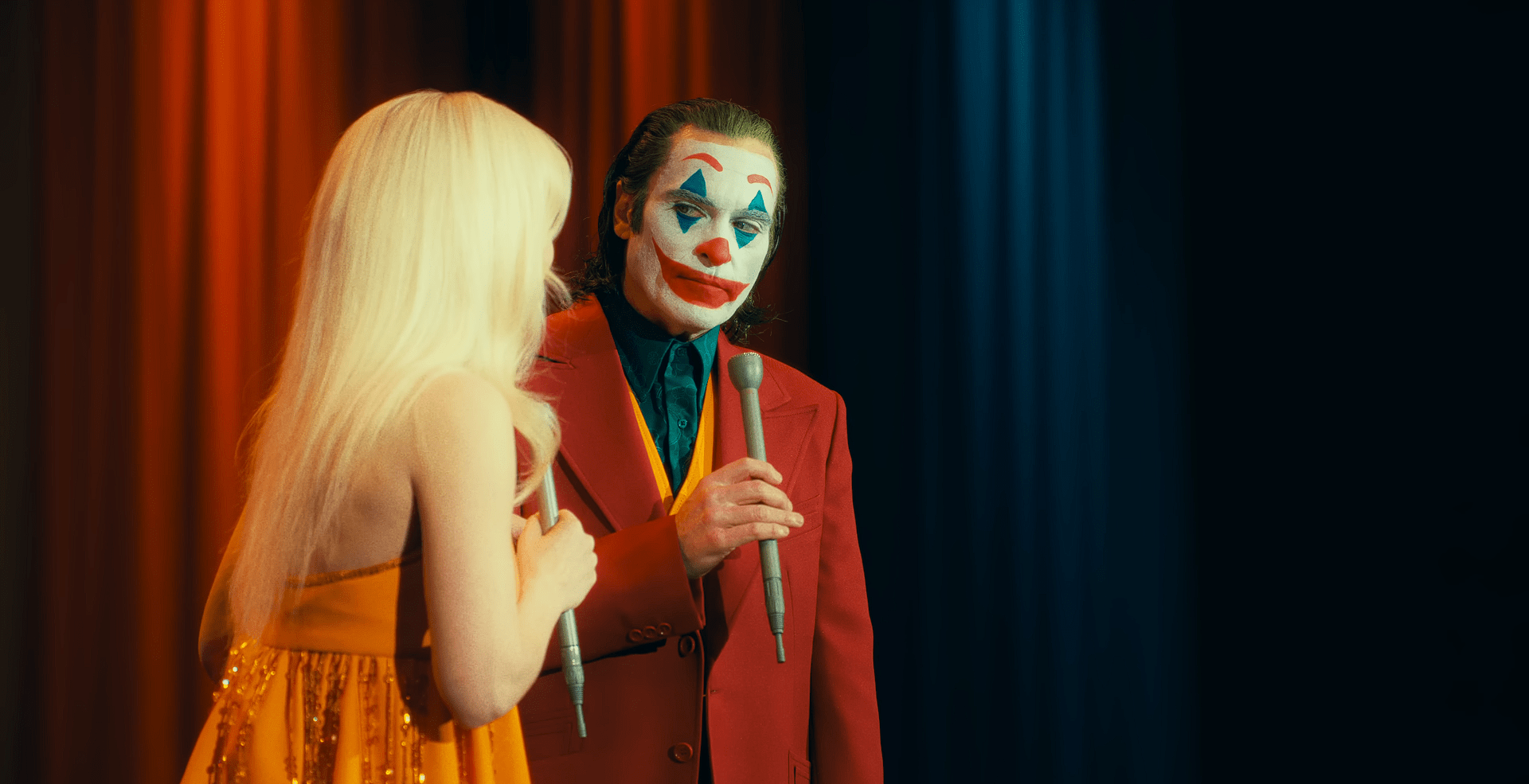
And that’s where the surprise hits: Arthur Fleck suddenly starts singing. Not jukebox karaoke, but cinematic musical numbers. Yes, you can categorize this as a musical. But I understand the intention: the songs visualize what’s happening inside their minds – their thoughts, their delusions, their shared insanity. In theory this can be powerful. When musical fantasy merges with psychological deterioration, cinema can achieve transcendence. Think of something like La La Land, where music isn’t just music – it’s a window into the characters’ inner worlds.
Here, though, the magic never fully ignites.
The Musical Ambition – Bold, but Not Always Effective
In Joker 2, the songs are actually quite good. There are moments where the sheer performance power of Joaquin Phoenix and Lady Gaga creates a vortex of emotion. But the mystical, surreal spell the film tries to cast? I didn’t feel it. And the reason is structural, not emotional. The first movie handled delusion brilliantly: it would show us reality, then later reveal we were seeing Arthur’s hallucinations. That twist would hit like a gut punch.
Here, however, the film broadcasts its illusions from mile one. Arthur starts singing and killing people, and instead of feeling danger or horror, I relaxed in my seat thinking, “Bro, this is not real; it’s in his mind.” Once that expectation is installed, every musical outburst becomes predictable. I wasn’t gripped – I was merely observing.
Plot: A Prison of the Mind, a Trial of Perception
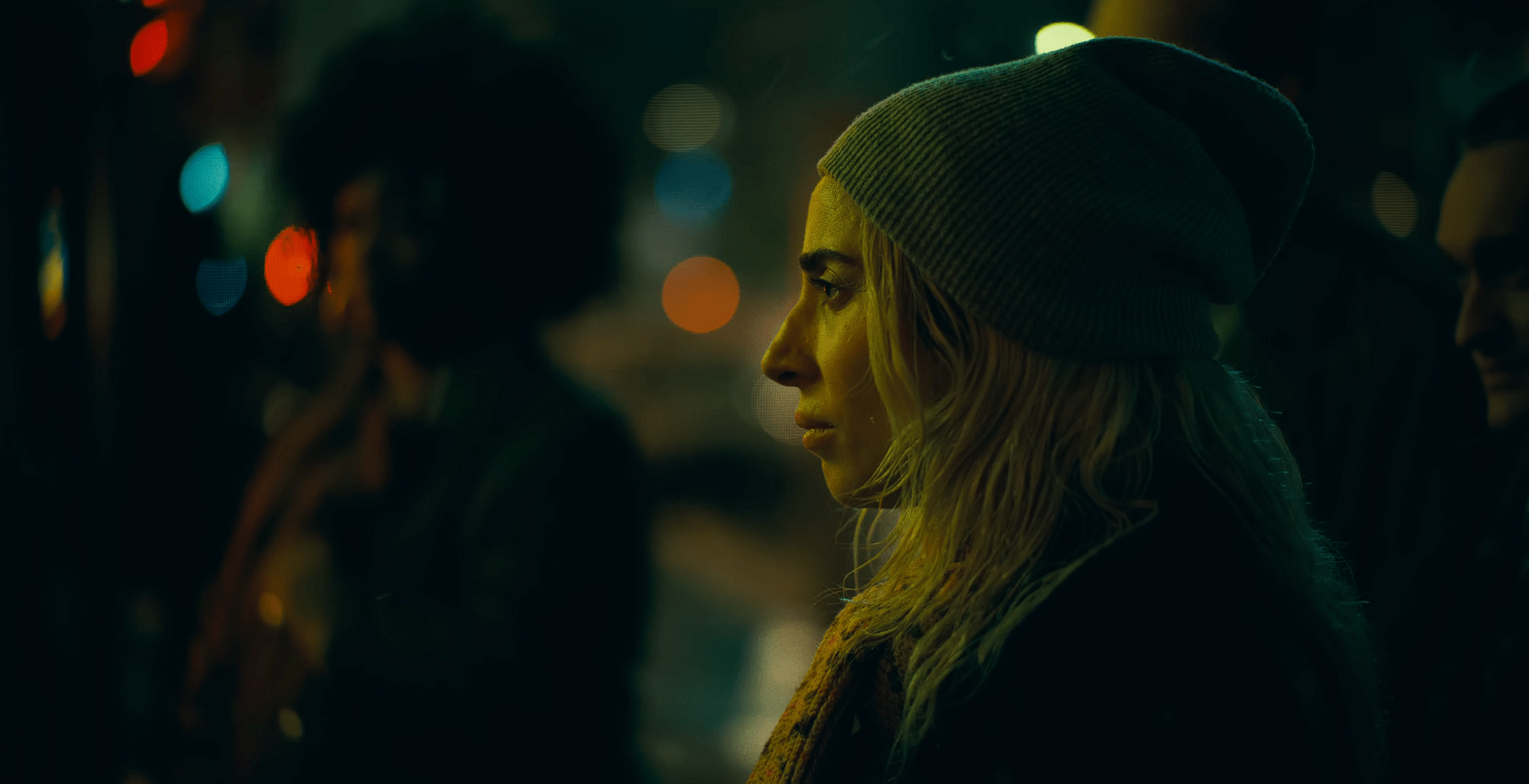
If I have to give a synopsis of part two’s story, it goes like this: Arthur Fleck is locked in jail, and he spends the entire film in jail. We see how the security guards and the others imprisoned there treat him. His life is narrowed down to confined walls, medication, therapy sessions, and a fragile grip on his identity. One random day he hears a girl singing – a performer whose madness mirrors his own – and from there a romance angle begins to sprout. That woman, of course, is Harley Quinn.
Then comes the courtroom drama after he comes out of jail. Yes, the entire film’s runtime is basically this trial, where the debate revolves around a single question: Should a man who has killed five–six people be released into public? Does he deserve to live free? Which leads to the film’s central thesis: Does Arthur even know what he is? Is he a mentally ill man who blacked out during crimes? Or is Joker the murderer, an entirely separate identity who hijacks Arthur Fleck?
It’s a gamble the screenplay takes, and at times it works. In the courtroom scenes, I felt the movie cleverly reflecting the world we live in today. A comment on reality – that even if there is clear evidence, recorded on video, that he killed a man in front of everyone, still masses will defend him, worship him, and follow him. It mirrors our bizarre modern culture of villain-adoration, conspiracy hunting, and cult fandom.
The Slow Climb Toward Interesting
The first half hour didn’t impress me much, but once the trial begins and Arthur Fleck does some drama, it finally starts to get somewhat interesting. There are hints of brilliance – moments when the film lets Joker weaponize charm and madness to sway people, when Phoenix’s performance reminds you why this character terrifies audiences.
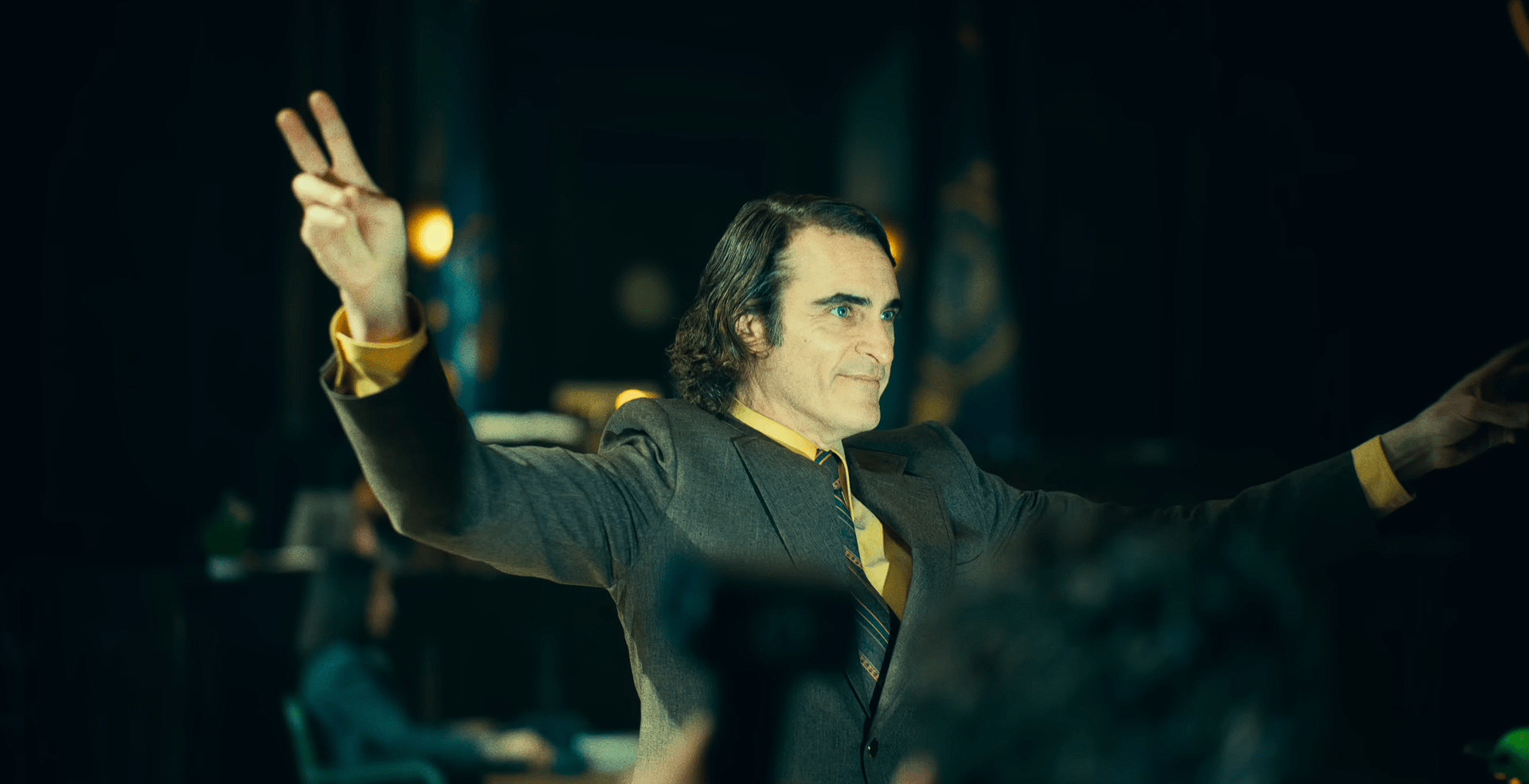
But before the final act begins, something happens with Arthur Fleck – his internal switch flips – and the transformation the film wants you to believe… simply didn’t convince me. It felt rushed emotionally despite the film’s slow pacing. The concept of “two minds sharing one madness” is rich terrain, but the film never plants its emotional stakes deep enough to make the final psychological turn feel inevitable.
Toward the end, things do get interesting. There are twists – one about a son, for example – that you might discuss even after leaving the theatre. Personally, I feel that was a lie. If you’ve seen the film, tell me in comments what you think. The editing leaves those threads purposefully ambiguous, but not in a satisfying way – more like unresolved graffiti written on the walls of the script.
Technical Craft: At Least It Looks Beautiful
Even when the narrative frustrated me, I must praise the movie’s set design and cinematography. The interior prison scenes, the fever-dream musical sequences, the hallucinatory madness with Harley Quinn – they visually captivate. The film’s lighting, color palette, and framing remind you that you’re watching something expensive and meticulously crafted. There is breathtaking imagery when Arthur escapes into imagination and the songs begin. If there’s one universal benefit of watching this film in theatres, it’s that everything looks beautiful. On that front, Todd Phillips remains a master of visual atmospherics.
Joaquin Phoenix: Still the Crown Jewel
Like the previous part, there is one towering takeaway: Joaquin Phoenix’s performance. From the first shot itself, so many people will gasp “Oh my God” simply seeing his body – bones poking through skin, posture unnatural, eyes flickering with mania and anguish. It’s not acting; it’s inhabitation. Phoenix crafts Arthur like a porcelain figurine cracked in a hundred places.

But honestly, I was disappointed by Harley Quinn’s character, played by Lady Gaga. Her work was good – there are scenes where she genuinely matches Arthur’s madness, humming his tune with equal emotional instability. Those who don’t know her will be surprised to know she is a singer first. And yes, she demonstrates formidable presence. But the problem is these moments are only a few scenes. When they confirmed Joker and Harley would share the screen, I expected actual Joker-like chaos. I expected this to be the film where the clown prince finally unleashes. But after the first movie, I accepted that was his origin story. I thought: fine, in part two, we’ll see him truly become Joker.
No. I am telling you beforehand – if you’re going in expecting something like that, don’t go. Or better, just don’t go at all.
A Few Surprises and Frustrations
For superhero fans or those who loved the Christian Bale Batman trilogy, there are a few easter eggs, especially at the end. Nothing revolutionary, but enough to stir your memory. There was no mid-credit scene; I didn’t stay for the post-credit. If there is one, let me know in comments.
And man, theatres really don’t know how to handle intervals. They put two intervals. The movie suddenly stops, starts again after fifteen minutes, runs for five minutes, and stops again with “INTERVAL” flashing. Then they show the gutka–khaini ads. How hard is it to pause a movie where the interval is already marked?
Final Thoughts: Beautiful, Ambitious, and Ultimately… Unnecessary
Finally, my overall thoughts about Joker: Folie à Deux are conflicted. I already had low expectations from it because I felt they were only making it due to the first movie earning a billion. And in many ways, I still believe that’s true. But since they were making it, they did sprinkle in some cool ideas, especially near the end. Yet making a two-and-a-half-hour movie for this concept felt excessive. The runtime felt more like three hours.
Still, there is a benefit in watching it on the big screen: it’s visually gorgeous, and Phoenix remains magnetic. But would I watch it again? Absolutely not.
Rating: 2.5/5 – a beautifully shot, admirably ambitious film that never justifies its own existence.