Today when I walked into the theatre to watch Idli Kadai, directed by Dhanush, I expected a fairly straightforward drama – something rooted in familial emotions, village nostalgia, and the classic battle between personal ambition and moral responsibility. What I didn’t expect was how sincerely the film tries to explore all of these themes, even when it occasionally stumbles. The film begins with an interesting setup, develops with admirable warmth, and then shifts gears into a much more exaggerated, commercial tone. The blend isn’t always seamless, but it’s a journey that has moments of real beauty.

A Promising Setup: When Duty, Love, and Legacy Collide
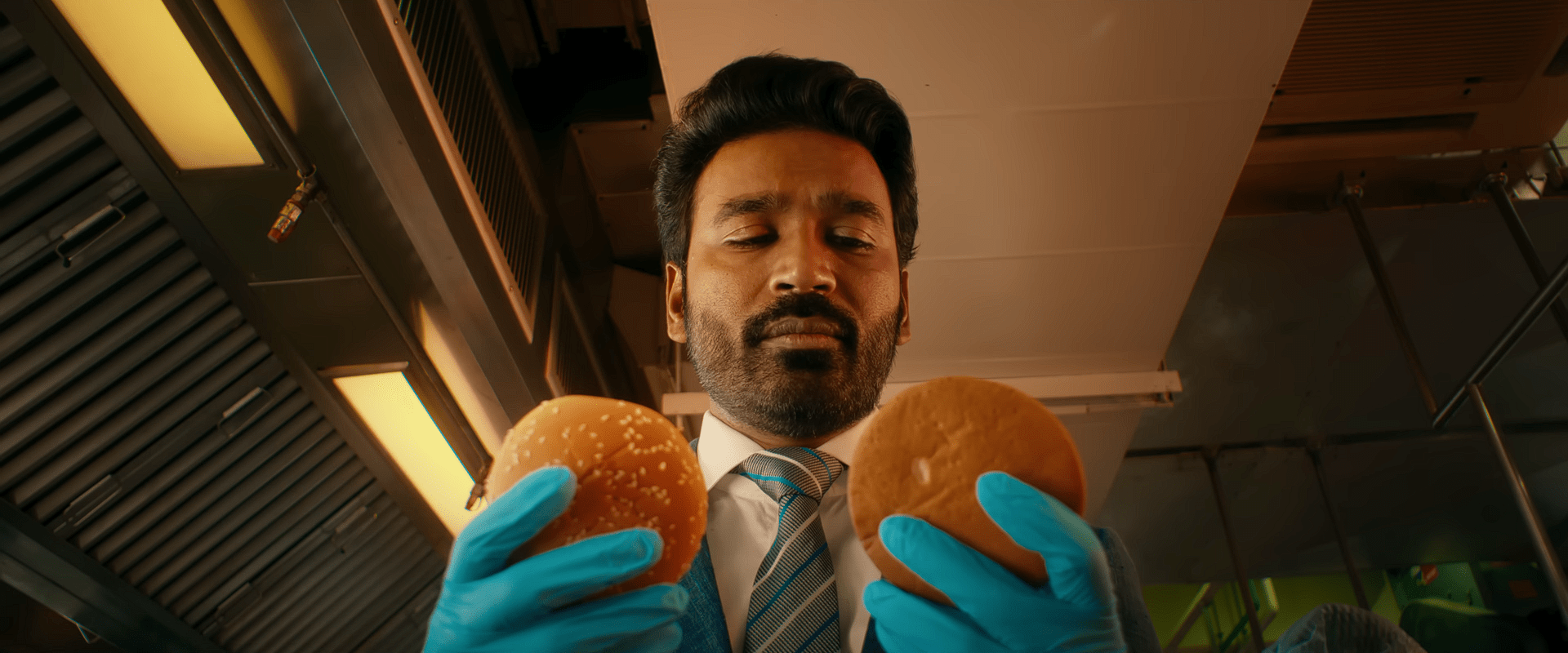
The story opens abroad, where Dhanush – the hero and the emotional pivot of the film – is working in a major hotel chain owned by Sathyaraj. Dhanush is not just another employee; he holds a crucial managerial position, and the film quickly establishes him as someone who can be trusted with responsibility. Sathyaraj sees exactly that. His daughter sees something more: she falls in love with Dhanush, and Sathyaraj is immediately convinced that this match will anchor their family even more strongly.
One thing I liked here is that Sathyaraj’s acceptance never feels arrogant or condescending. In fact, the film clearly states he doesn’t care about status barriers or class differences. He sees a good man and wants him in the family – simple, warm, and refreshingly direct.
But the hurdle arrives from within the family: Arun Vijay, Sathyaraj’s son, completely disapproves of the marriage. His disapproval is loud, emotional, and set up as a looming problem long before the real conflict even begins.
The wedding date is fixed, momentum builds, and the tone feels steady – until tragedy reshapes everything.
- A Promising Setup: When Duty, Love, and Legacy Collide
- A Death That Redefines the Story’s Soul
- Strong Themes Wrapped Inside a Simple Plot
- The First Half: Grounded, Beautiful, and Deeply Relatable
- Ilavarasu and the Mother Scene
- Nithya Menen’s Confrontation
- Rajkiran’s Funeral and the Cow Ritual
- The Loyal Regular Customer
- Sathyaraj’s Character: Richly Written
- The Rajkiran–Dhanush Franchise Argument
- A Flawed Hero: Dhanush’s Most Confusing Character Yet
- The Second Half: Too Cinematic, Too Convenient
- Final Thoughts: A Mature Attempt with Noticeable Rough Edges
A Death That Redefines the Story’s Soul
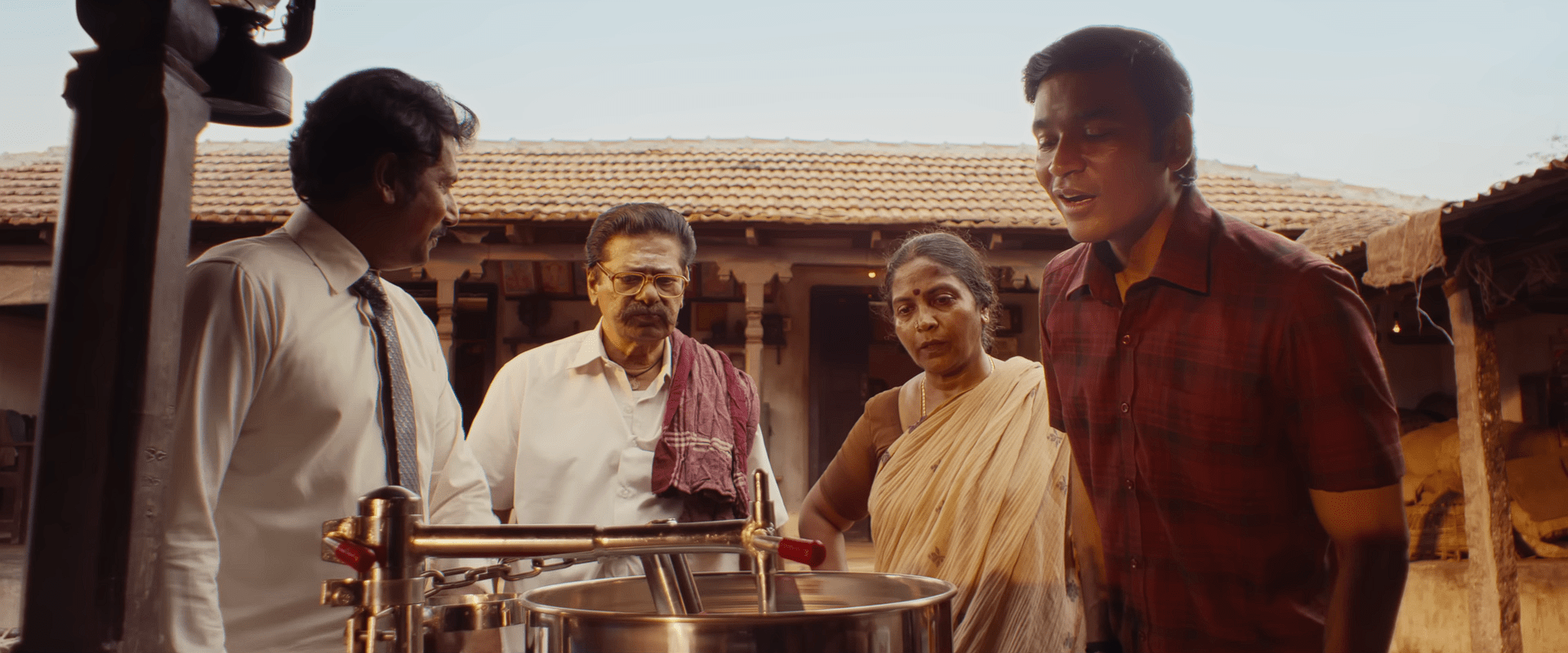
Right before the wedding, Dhanush receives devastating news from his village: his father has passed away. He leaves with the promise that he’ll return in time for the ceremony, but what he discovers back home shifts his worldview.
There’s a quiet, emotional punch in the realization that he wasn’t with his father during the final days. The film captures this regret well. The visual and emotional texture of his hometown also plays a big role – there’s a nostalgic melancholy that feels authentic.
Most importantly, Dhanush begins questioning the future of his father’s respected idli kadai. Should he take over the shop? Should he honour the legacy that built his family’s name? These questions form the emotional backbone of the film.
But then another unexpected problem ties him to the village, preventing him from leaving – and the wedding date arrives without him. The bride’s family begs him, pleads with him, even threatens him, yet he refuses to return.
This sets up the core conflict: Arun Vijay decides to take revenge. What follows is the dramatic escalation that drives Idli Kadai into a more commercial tone.
Strong Themes Wrapped Inside a Simple Plot
At its heart, Idli Kadai is not just a hero–villain drama. The film quietly delivers a message about parenting – how a child grows based on the values taught, and what happens when affection becomes blind indulgence. Arun Vijay’s behaviour becomes a direct consequence of being raised without discipline, while Dhanush, despite being flawed, is the product of a grounded, hardworking environment.
The contrast is clear, and the film uses it effectively.
The First Half: Grounded, Beautiful, and Deeply Relatable
For me, the film’s first half is where Idli Kadai truly shines. It’s realistic, emotional, and filled with small but meaningful scenes that stay with you.
Ilavarasu and the Mother Scene
Ilavarasu returns to see his aged mother – played by Dhanush’s own grandmother – after years away. Their reunion is one of the most heartwarming moments in the entire film. The authenticity is palpable.

Nithya Menen’s Confrontation
Her argument about why the idli shop was sold is powerful. Nithya brings emotional weight and moral clarity, and the scene feels raw and honest.
Rajkiran’s Funeral and the Cow Ritual
On the day Rajkiran dies, the family performs the traditional cow eye-dotting ritual. The belief that the newborn calf is Rajkiran reborn adds a cultural depth rarely explored with such tenderness.
The Loyal Regular Customer
There’s a character – a large, long-time customer – who comes repeatedly to eat at the shop. He adds humour, warmth, and a sense of the shop’s legacy.
Sathyaraj’s Character: Richly Written
Sathyaraj gets one of the film’s best-written roles. As a businessman, he’s sharp. As a father, he’s conflicted. And as a man stuck between loyalty, profit, and family stability, he is wonderfully nuanced.
The Rajkiran–Dhanush Franchise Argument
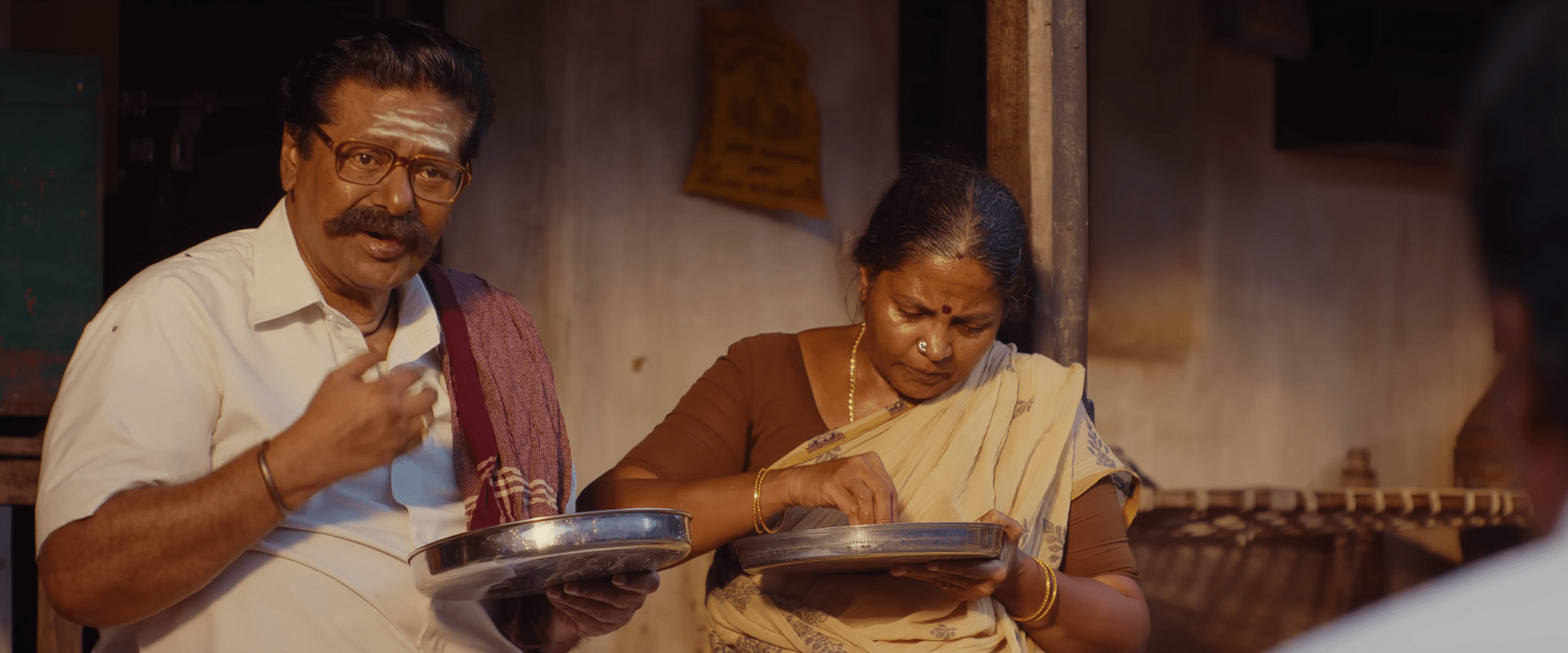
This is arguably the best-written dialogue exchange in the script. Dhanush dreams of expanding the idli kadai into a franchise chain. Rajkiran shuts it down gently but firmly:
“I can’t cook in every shop.”
“Why should you cook? We can hire people.”
“This shop runs because of our name. If someone else cooks, how will it be? People trust us – we shouldn’t cheat them.”
It’s a beautiful moment, capturing generational ethics versus modern ambition.
A Flawed Hero: Dhanush’s Most Confusing Character Yet
One of the biggest issues I had is the inconsistent writing of Dhanush’s own character. The film wants to portray him as a good man, yet his decisions repeatedly revolve around his convenience.
He loves a girl, moves all the way to the point of marriage, and then abandons the plan without considering her emotional devastation. Earlier, he loved another girl in the 9th standard and left her too. He cares only about what works for him in the moment. This trait could have been an intentional complexity, but the film never justifies it, leaving the character incomplete.
The Second Half: Too Cinematic, Too Convenient

The film loses its realistic tone in the second half. Arun Vijay’s revenge arc becomes overly dramatic – almost like a third-rate villain from an old commercial potboiler. A mind-game-driven conflict would have elevated the narrative.
We also never understand why Dhanush hates his hometown people initially, or why he suddenly reconnects with them later. These emotional leaps deserved stronger justification.
Final Thoughts: A Mature Attempt with Noticeable Rough Edges
Despite its shortcomings, Dhanush’s direction displays undeniable maturity. Known for making youth-centric films, he shifts gears here to deliver something clearly crafted for families. And in that regard, Idli Kadai is an appealing, safe, emotional film. Youngsters and general audiences may find it just “okay,” but families will embrace it warmly.
It’s a film with heart, even when the seasoning isn’t perfect.
Rating: 3/5