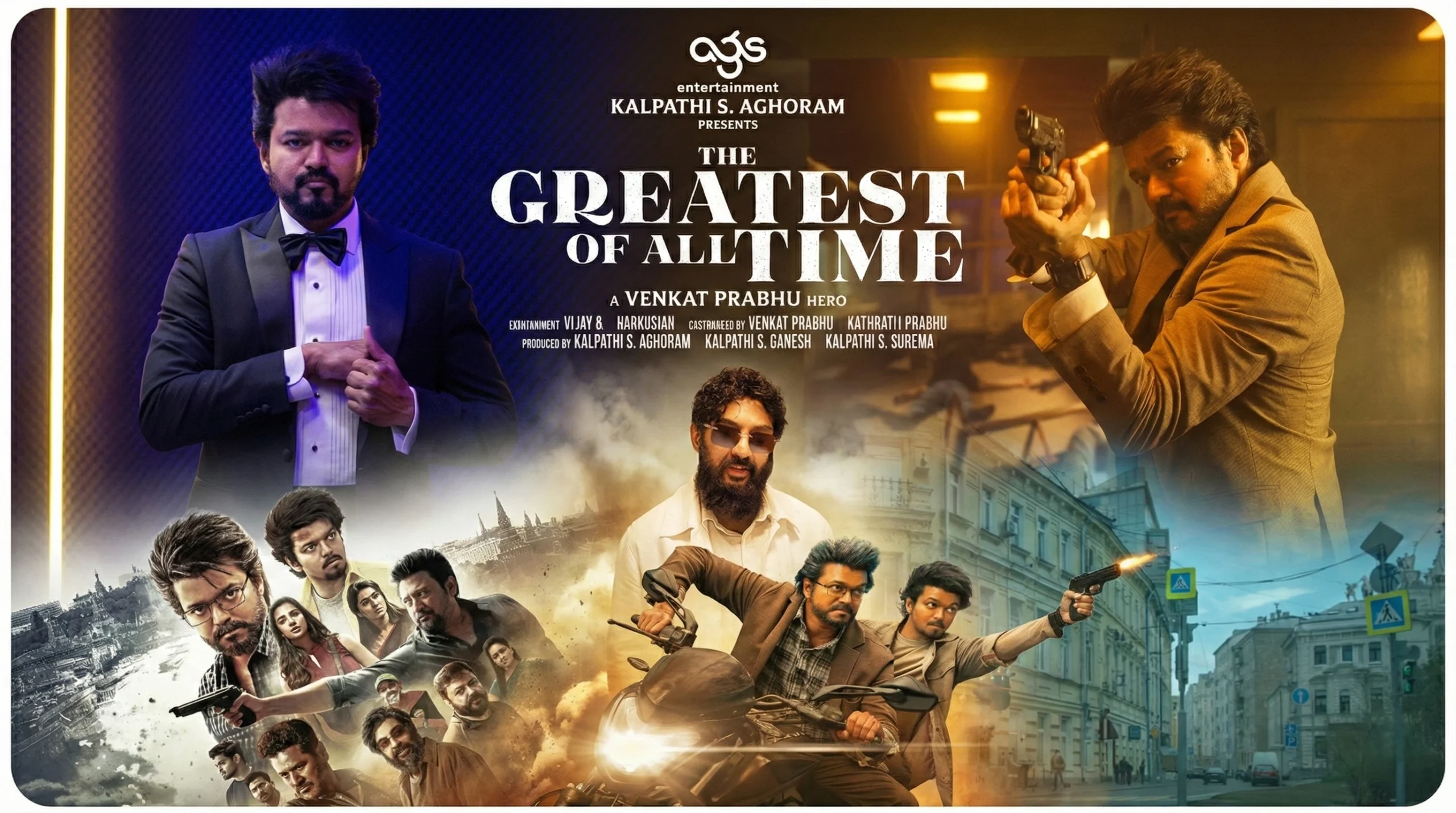
When the makers of Thalapathiy Vijay’s latest film officially titled it GOAT – The Greatest of All Time, my very first reaction was plain confusion. I remember seeing the name for the first time and thinking, “What kind of title is this? What are they trying to say?” It had the absurdity of a marketing gimmick, and yet, deep inside the title, there was an uncomfortable hint of what the film actually aimed to do. I didn’t fully understand it at the beginning, but after sitting through the 3 hours and 3 minutes runtime, I realized: the film is less a narrative and more a celebration of its star. In fact, the name itself tells you the approach, the ego, and the ambition behind this cinematic experiment.
And before I get into the cinematic discussion, let me suggest one crucial thing: this film is absolutely not for everyone. I’m not talking about elitist cinema tastes or niche arthouse lovers – I’m talking about the regular audience who might be even mildly curious about it, people scrolling through theatre listings thinking, “Maybe I’ll check it out.” If you fall into that category, brace yourself for a shock.
Why do I say that? Because in most major multiplex chains – PVR, INOX, Cinepolis – the movie did not release. Some contractual mess happened around the Hindi version distribution, which resulted in these chains collectively refusing to screen it. So, if you intend to watch GOAT in theatres, be prepared to hunt for smaller multiplexes or single-screen cinemas. This, in a strange twist of fate, sets the tone for the movie itself: a massy, loud, unfiltered product made for fans rather than for a standard theatrical audience.
A Spy, A Lie, and a Shattering Twist
At the center of the narrative is a character named Gandhi, played by actor Vijay – known affectionately as Thalapathy Vijay. I’m also going to refer to him as Thalapathy throughout this review, because it’s not just habit; it’s respect. And please, don’t abuse me for this. Deal done.
Gandhi works for an anti-terrorism squad, keeping his true identity hidden from his wife and young son. The film makes a point of treating this secret profession as something shadowy, dangerous, and deeply personal. Gandhi’s job takes him across international borders, eliminating threats while maintaining the façade of a simple, ordinary family man.
Of course, the foundation of that façade is built on lies. His wife knows nothing, his son knows nothing – he has lied about every aspect of his career, every dangerous mission, every confession he never made. The story pivots dramatically when Gandhi can no longer sustain his secret life, leading him to take his wife and son to Thailand – yes, the stereotypical “massage massage” getaway. And during this trip, a major incident rocks his world and resets the story forever.
- A Spy, A Lie, and a Shattering Twist
- Sixteen Years Later – A Father, a Son, and a Hunter in the Shadows
- The Real Film: A Love Letter to its Stars
- Vijay: A Performer Who Understands Mass Cinema
- The Thriller Element – Sometimes Sharp, Mostly Just Present
- Songs and Dance – Annoying, Yet Watchable
- The Three Vijays – Uncanny but Serviceable
- VFX: Explosions That Hurt Your Eyes
- Expectations, Reality, and a Superstar Highlight
- The Runtime, the Ending, and the Dhoni Problem
- Final Verdict
Sixteen Years Later – A Father, a Son, and a Hunter in the Shadows
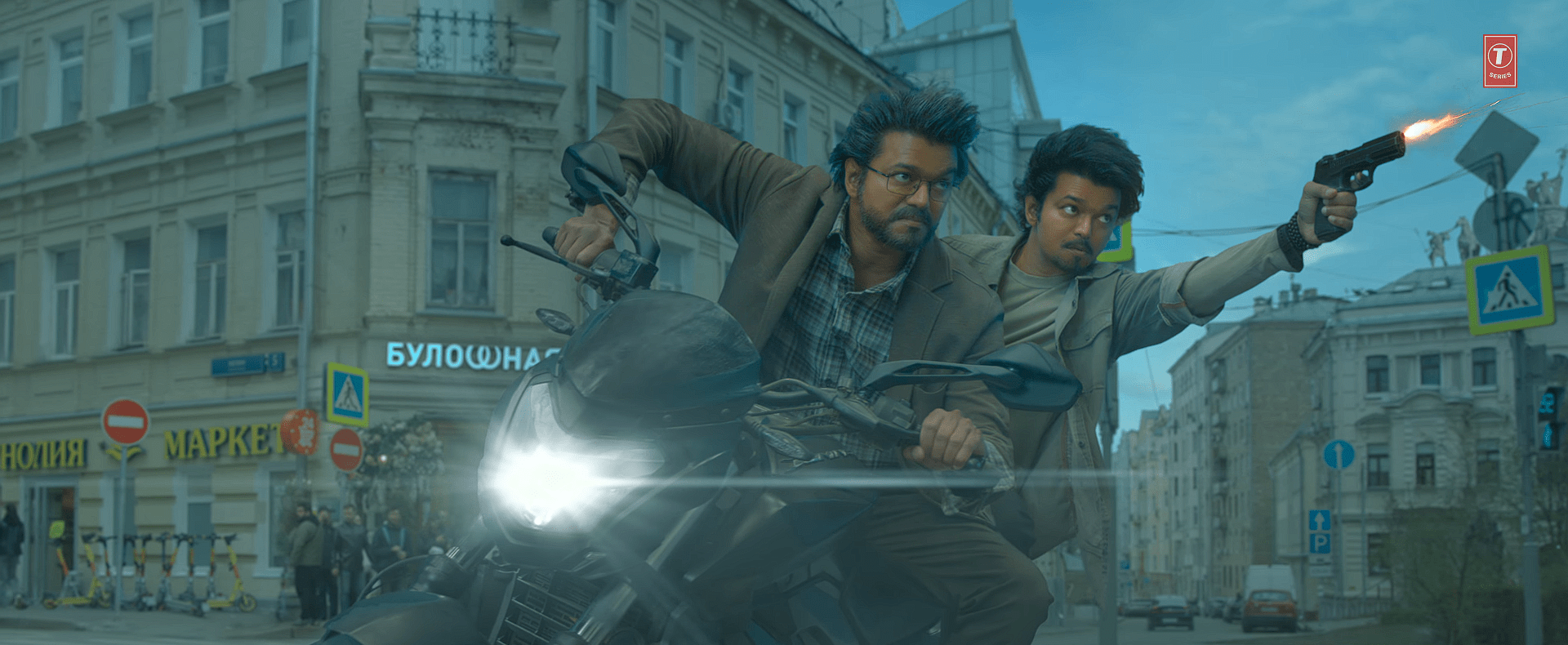
The film fast-forwards 16 years. Gandhi is now older, visibly worn by years of violence and regret. His son, meanwhile, has grown into a young adult who looks exactly like him. The resemblance is not simply narrative convenience – Thalapathy Vijay plays both roles, a father and a mirror reflection of his younger self.
Members of Gandhi’s anti-terrorism squad start getting assassinated one by one. Among them is Prabhu Deva, the only name from the supporting cast I actually remember. Some mysterious figure is hunting these people down. Their identities, intentions, and motives are the central mystery that stretches through the film. The resolution of that tension eventually unfolds in a cricket stadium – yes, a stadium – because in this cinematic universe, spectacle always wins over subtlety.
That’s the broad overview of the story. It sounds pulpy, almost classic in structure. And that’s exactly the problem: there is nothing here that feels fresh or innovative. Every narrative ingredient – double identities, mysterious assassins, time jumps, estranged family bonds – has been used in countless action thrillers before. If you use even half your brain while watching, you can predict every twist well before the movie serves it. But I’m convinced this movie never cared about twists in the first place.
The Real Film: A Love Letter to its Stars
From the title “Greatest of All Time”, to the heroic actor-title cards, staged entrances, dramatic dialogue lines, and the cricket-stadium climax – every single thing in this movie exists to worship its stars. It’s not a narrative film; it’s a celebration event.
For Thala and Thalapathy fans, that’s understandable. But even beyond Thalapathy, every supporting actor, even the minor characters, get highlighted with stylized intros, flashy interval cards, and text appearing on-screen like they’re professional wrestlers walking into the ring. The movie is honest about this from the first five minutes: you will know exactly what kind of film this is very early.
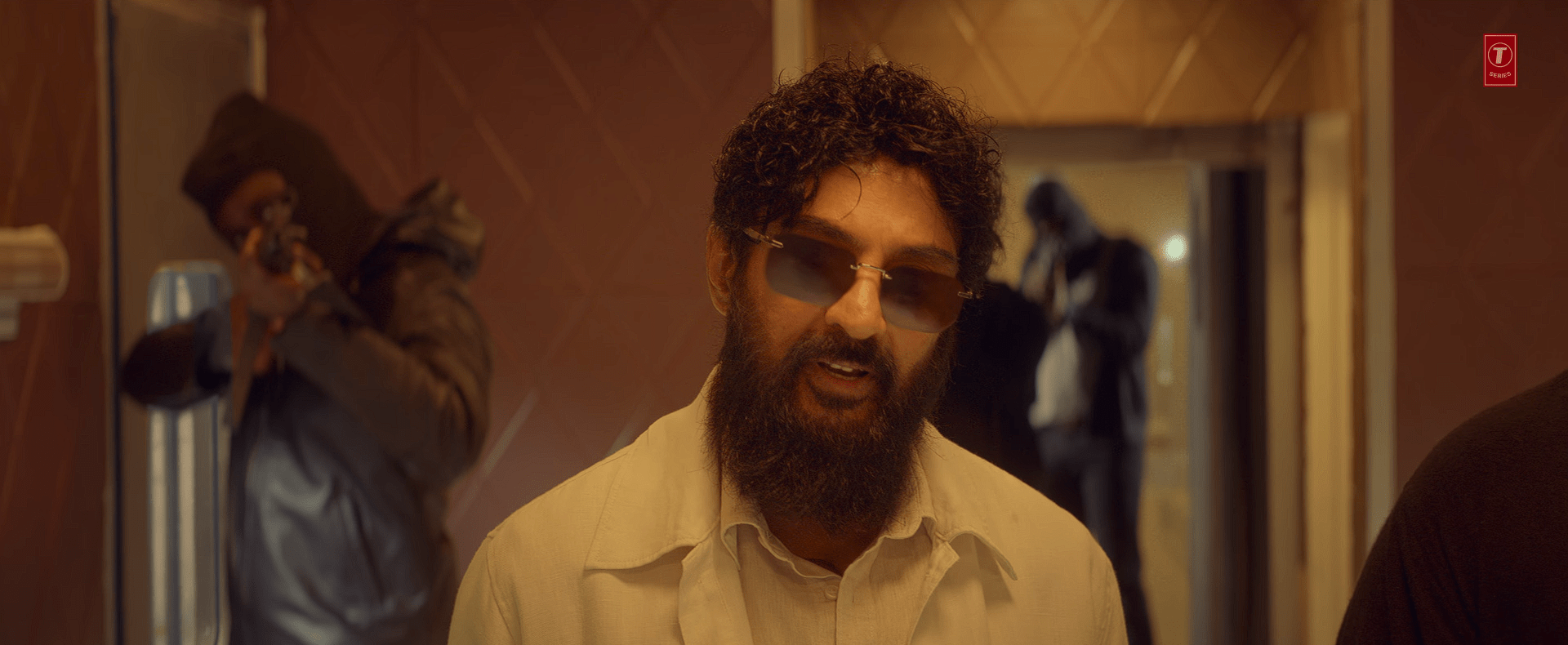
Prabhu Deva’s first action moment involves animated, exaggerated choreography – throwing objects in dramatic slow motion. The moment I saw it, I mentally adjusted my expectations and said: “Okay. I know what ride I’m on.” And to the film’s credit – it never breaks those expectations. It commits to its fan-service identity with unwavering confidence.
Vijay: A Performer Who Understands Mass Cinema
Some emotional scenes work surprisingly well, not because of the writing, but because of Thalapathy Vijay’s sheer screen presence. His body language is the film’s strongest asset. Whether he’s delivering a punchline, reacting to absurd circumstances, or pushing into high-intensity action, his physical performance is precise, effortless, and charismatic. Even in the comedic bits, his expressions and timing are genuinely entertaining. You may not like the film, but you cannot deny the magnetism of its leading man.
Let me be extremely clear and offer 25% of my conclusion right now:
If you are a fan of Thalapathy Vijay, go watch this movie—but keep your expectations low.
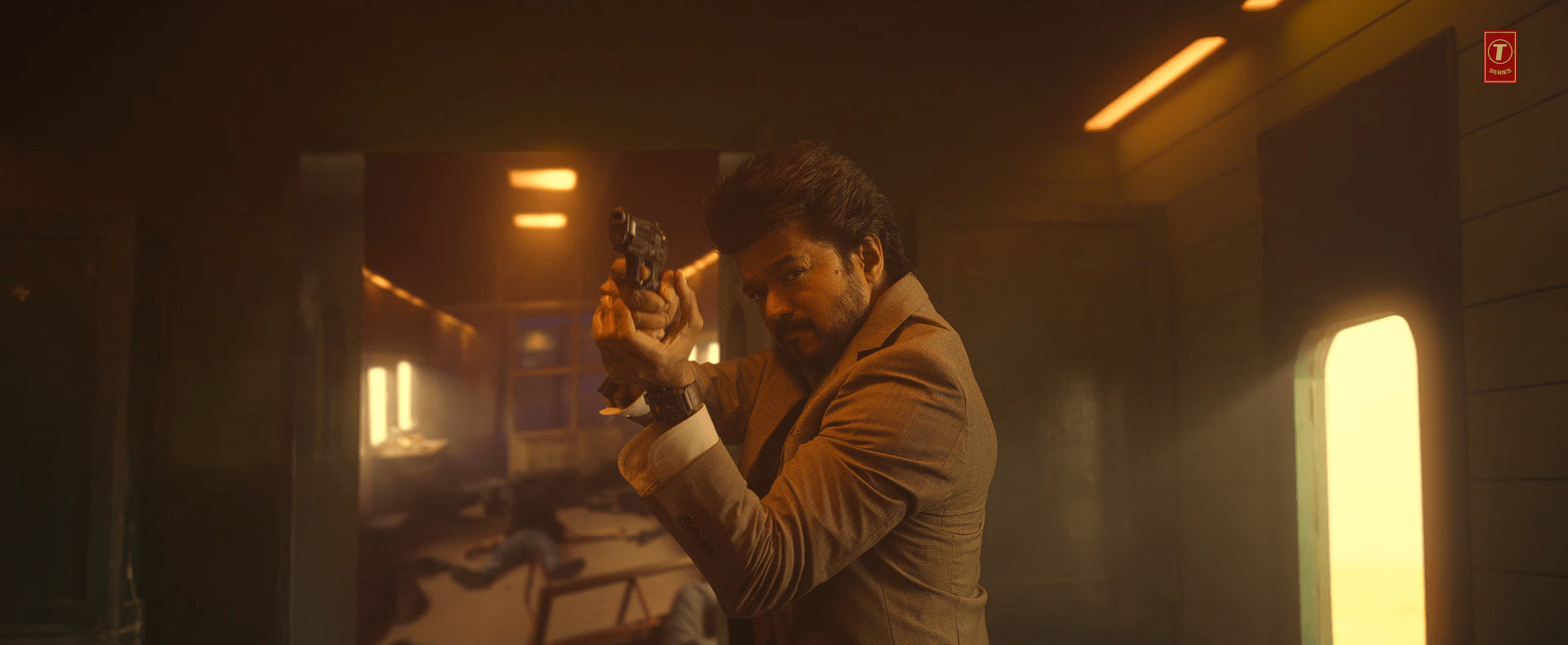
On its own, GOAT is just an action thriller, and the action is, overall, decent. The punches and kicks are shot in hyperactive, fast-cut sequences that make it difficult to follow. But the impact shots – people crashing down, dramatic body flips, the hero literally sitting on someone’s shoulders while firing a gun – those moments land precisely the way mass fans expect. They are stylish, meme-worthy, and cheer-inducing.
And yes, I will say this: it is definitely better than some other action movies – KGF, but it is far from the best.
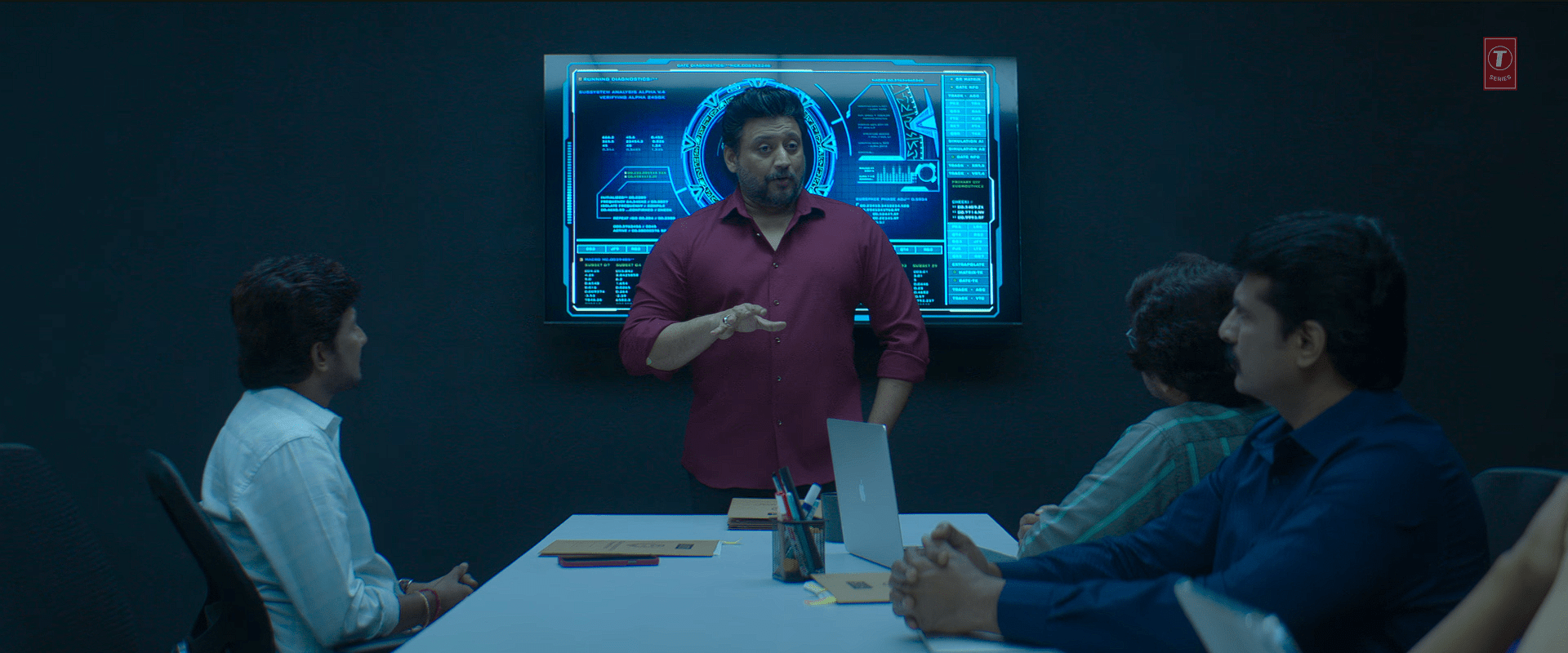
The Thriller Element – Sometimes Sharp, Mostly Just Present
As a thriller, GOAT falls into a middle zone. There are moments where you lean forward in your seat, genuinely curious about what’s coming next. But these moments are sporadic. The rest of it simply flows – not unwatchably, not embarrassingly – but just… there. It never achieves full immersion. It never surprises you. It just continues moving.
And while I was leaving the theatre, reflecting on the film, I realized something: this observation applies to almost every single element – music, pacing, emotional arcs, even character reveals. The movie constantly rests in a safe zone. Slightly above mediocre, never truly impressive.
Songs and Dance – Annoying, Yet Watchable
The songs are a classic example. I watched the Hindi-dubbed version – and if you’ve suffered through Hindi dubs of South Indian films before, you know exactly how bad they usually sound. GOAT’s songs are slightly better than the typical dubbed disaster, but still nowhere near good. More frustrating than the quality is the frequency – they appear at awkward moments, interrupting the narrative flow just when something interesting is about to happen. You sit there thinking: “Bro, let me enjoy the scene at least.”
Still, the dance sequences are another story. When Vijay moves, it’s impossible not to watch. His choreography is smooth, effortless, charming. Even if the song playing is painfully mediocre, his dance elevates it to something you want to keep your eyes on.
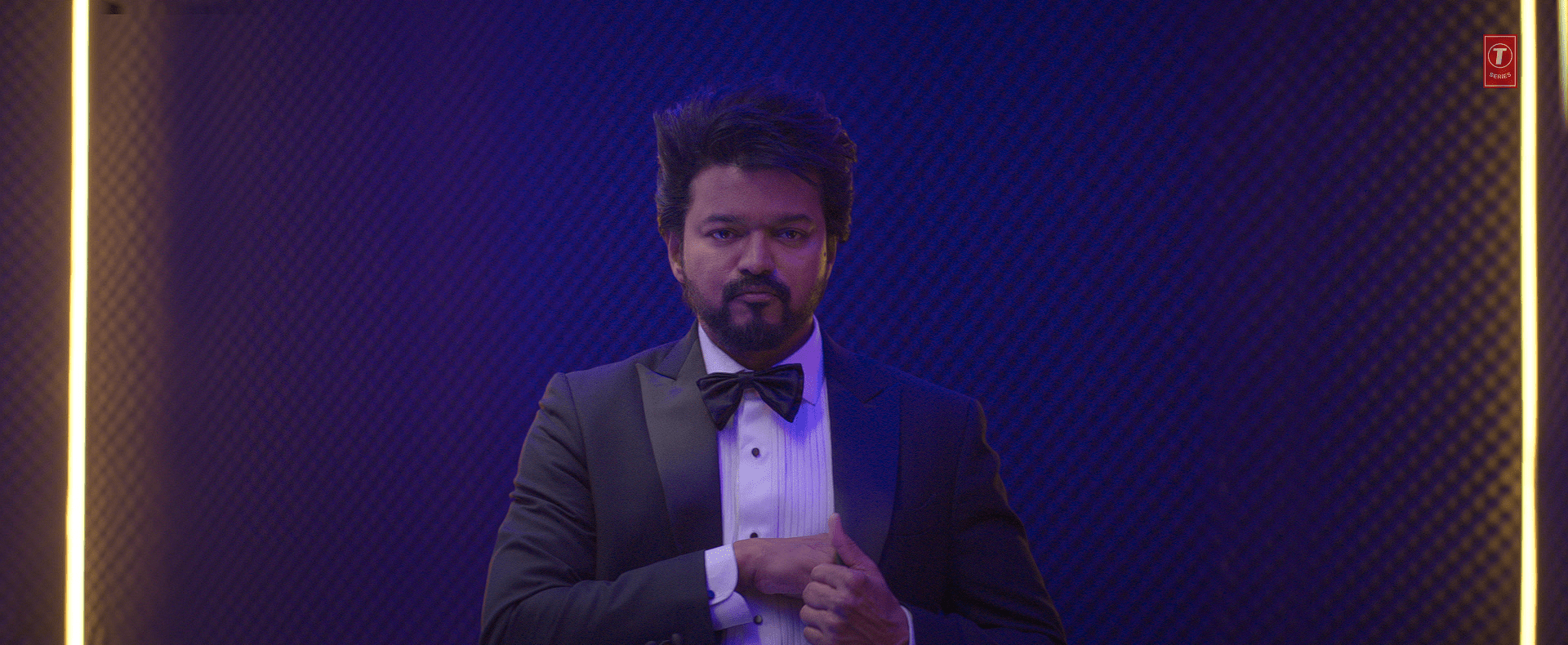
The Three Vijays – Uncanny but Serviceable
The movie presents Vijay at three different ages: a young 21-year-old, a mid-range 25–30-year-old, and a mature 40–45-year-old. The trailers already sparked debate online – everyone questioned why the younger version looked plasticky, why the makeup felt artificial. The digital facial de-aging lands squarely in the uncanny valley. It isn’t horrendous, not a total failure, but certainly not convincing. It’s workable – but just barely.
VFX: Explosions That Hurt Your Eyes
Then we arrive at the VFX – the bomb blasts, the train explosion. There’s no polite way to phrase this. They’re bad. Straight-up bad. Cheap, unpolished, distracting. When your movie’s central theme is scale and spectacle, the visual effects have to carry weight. Here, they sabotage it.
Expectations, Reality, and a Superstar Highlight
I haven’t watched many of Thalapathy’s films – mostly the Hindi-dubbed versions that randomly show up on TV. Last year when Leo arrived, I was excited. After that, I was genuinely curious to see what Vijay would do next. And compared to my expectations, GOAT was definitely below them. I will not watch it a second time.
And yet – this movie is not “bad bad.” It is fairly decent, especially when judged as a mass entertainer. There is nothing here that makes you shout, “Bro, this was insane!” But there is one thing that absolutely works: the film never loses sight of its mission to celebrate its hero. The few moments where the audience claps or whistles are overwhelmingly driven by Vijay’s screen presence. That’s the biggest highlight.
The Runtime, the Ending, and the Dhoni Problem
If you expect something truly innovative, forget it. If you just want a mass action flick, options in theatres are limited anyway. The film doesn’t bore you constantly – though its 3-hour runtime is its biggest enemy. And then comes a modern filmmaking trend I despise: the final twist or cameo after the movie is functionally over. That hopeful lollypop – “This is only the beginning, something massive is coming next” – is becoming an obsession with filmmakers.
I’m a huge Dhoni fan. But what they do in the climax – dragging focus away from the actual conflict just to go “Dhoni Dhoni Dhoni” – was simply too much. It hijacks the emotional and narrative stakes of the film in favor of cheap fan service.
Final Verdict
GOAT: The Greatest of All Time is not a movie built for surprise or originality – it is a glorified tribute to Thalapathy Vijay. If you adore him, you will find your moments of joy. If you go in expecting quality storytelling, intelligent action, or memorable thrills, you will walk out disappointed. The film never offends, but it rarely impresses.
Rating: 2.8 out of 5