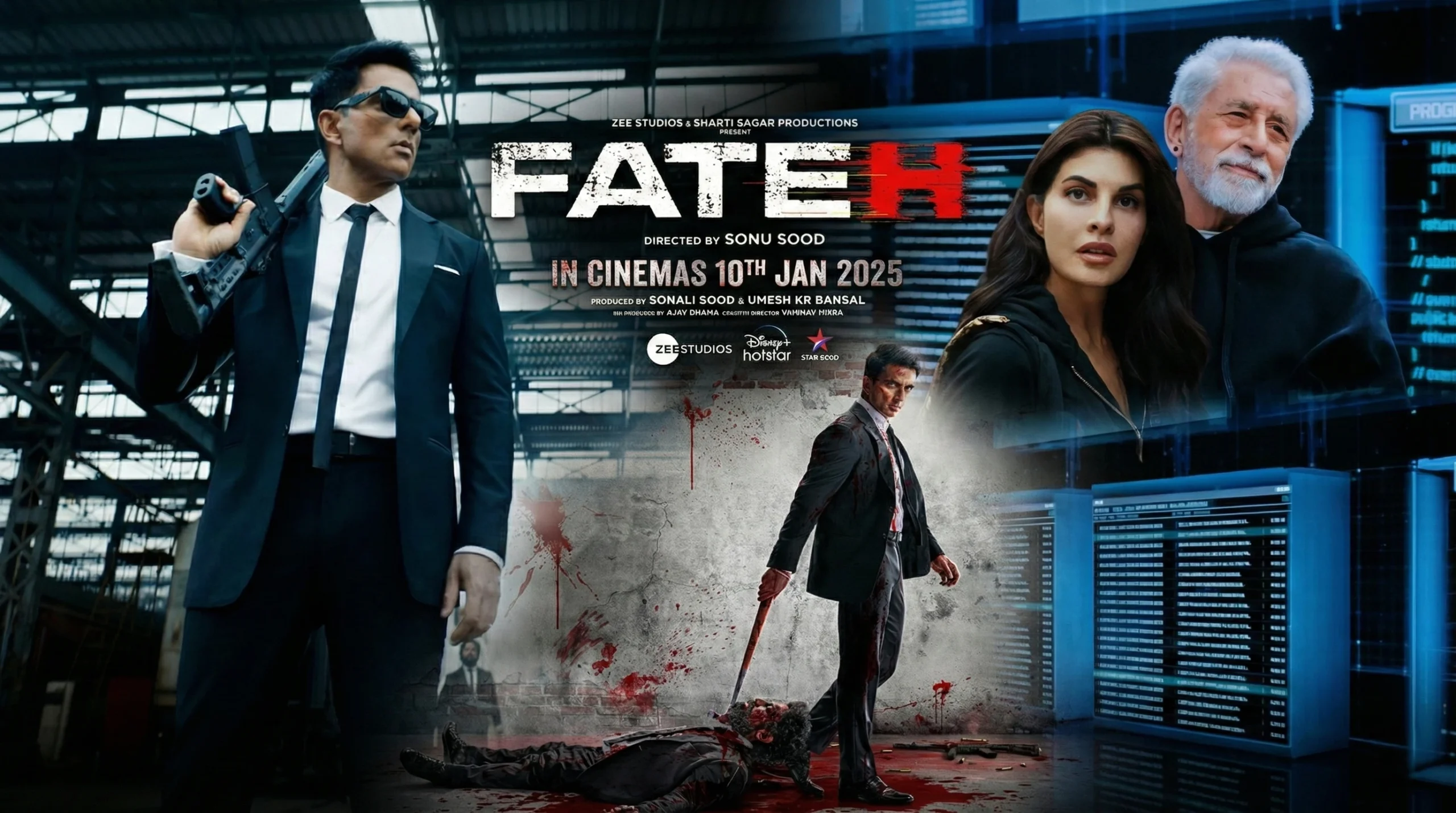
When Fateh arrived in theatres, the first thing that struck me was its promise: a completely slick, gun-filled, violence-heavy action drama headlined, directed, produced, and written by Sonu Sood himself. For someone making his directorial debut in mainstream Hindi cinema – a landscape often dominated by over-processed, slow-motion action filled with generic machismo – I walked in curious but cautious. And after watching the entire film, I can say this with full honesty: Sonu Sood deserves a certain level of respect just for attempting something so full-bodied, so stylized, and so unapologetically brutal as his first directorial venture. It may not always land, but it tries harder than the usual “crap we get to see in the name of action movies.”
A Familiar Yet Engaging Premise Rooted in Punjab and Cybercrime
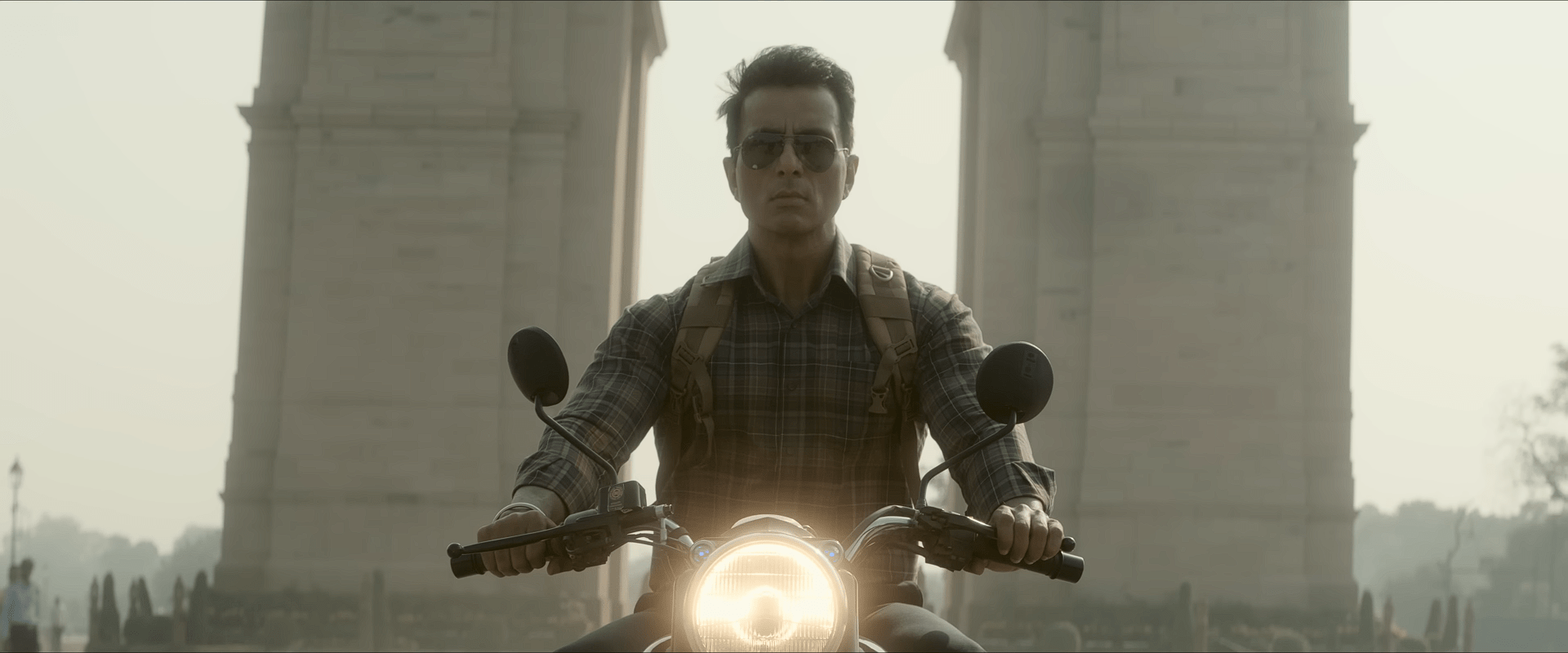
The film opens in a small Punjab village, where Sonu Sood’s character, Fateh, runs a dairy farm. He is soft-hearted, helpful to everyone, the man who would show up for neighbours even before they asked. But the moment you look at his physique – his solid frame, chiseled muscles, and action-hero presence – you immediately feel a disconnect. It is hard to believe this man spends his days milking cows.
Still, the narrative moves forward quickly. One day, a girl from the neighbourhood goes missing. Fateh steps forward to find her, and this simple beginning leads him deep into a world where cybercrime is the real villain. Phone-call scams, police threats, loan fraud threats – things that have genuinely become part of everyday anxiety – form the spine of the story. And I must admit: the theme is chosen well. At its best, the movie becomes an educational warning, showing the anatomy of modern digital traps. At times, though, it becomes too heavy-handed, trying to explain rather than simply let the film breathe.
- A Familiar Yet Engaging Premise Rooted in Punjab and Cybercrime
- The Action: Fateh’s Sharpest Weapon
- The Dialogues That Hit Hard
- Vijay Raaz Shines… Until the Film Fumbles
- A Heartbreaking Performance Misfire
- Emotionally Flat Despite a Relevant Theme
- When the Music Hits… and When It Doesn’t
- The Interval Card That Promised More Than It Delivered
- Final Thoughts: Ambitious, Flawed, But Better Than Generic Bollywood Action
The Action: Fateh’s Sharpest Weapon
If there is one department where Sonu Sood does not disappoint, it is the action design. Without exaggeration, the action sequences are the film’s strongest element – and perhaps the reason one may choose to watch Fateh at all.
The film fully makes use of its 18+ certificate. It doesn’t go to the extreme of someone like Marko Zaror, but it is violent, bloody, and intense. If you enjoy barebones physicality, bone-crunching fights, and close-quarters combat, the movie gives you plenty. The choreography is tight, the camera work is dynamic, and the execution has a visceral energy missing from most commercial Hindi films. Whenever the guns come out or fists start flying, I genuinely enjoyed myself.
Sure, seasoned viewers will spot inspirations from other franchises, and not every sequence is flawless. But overall – considering Bollywood’s usual obsession with glossy slow-motion posturing – this is refreshingly different. A big thumbs up.
The Dialogues That Hit Hard
One thing that genuinely surprised me was the quality of a few one-liners. Amid all the seriousness and carnage, there are some dialogues that actually land perfectly:
- “Next time keep the character clean, the funeral will come out grand.”
- Vijay Raaz’s subtle gem: “Gaadi nikaal na yaar, sorry bolne jaana hai.”
These moments aren’t many, but the ones that exist are genuinely good enough to make you react, smile, and appreciate the writing.
Vijay Raaz Shines… Until the Film Fumbles
Vijay Raaz, who plays the film’s primary antagonist, enjoys the longest runtime after Sonu Sood. His performance, for the most part, is strong – menacing yet restrained. But this is also the point where the film’s biggest flaw becomes apparent.
Because once we step outside the action sequences, the film struggles.
The dramatic scenes, the emotional buildup, the narrative bridge between action beats – most of it simply did not work for me. The film repeatedly misses emotional depth, despite clearly trying to achieve it. And nothing highlights this more sharply than the portrayal of the “top-level hacker,” played by an actor I genuinely admire.
A Heartbreaking Performance Misfire
There is an actor – one of my absolute favourites – who plays a high-profile hacker here. And for the first time ever, I found his performance painfully out of place.
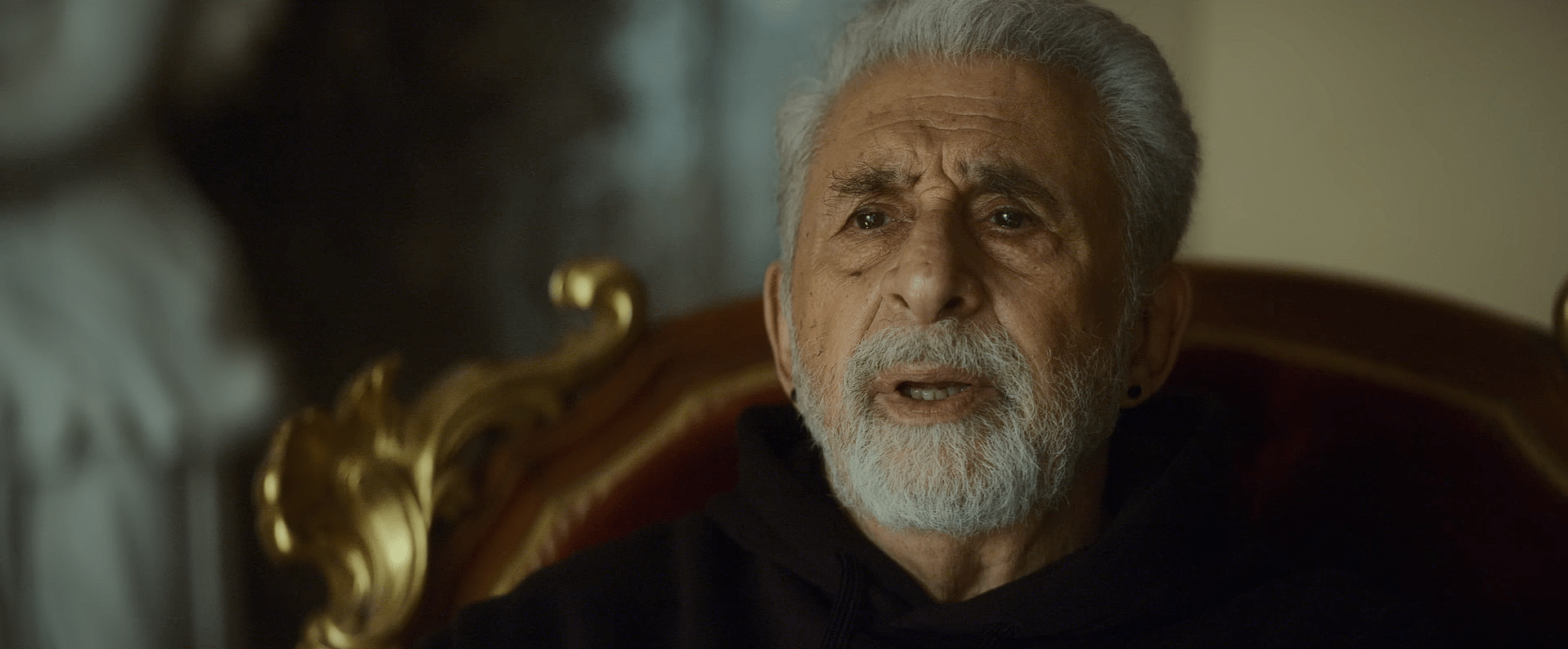
Ninety percent of his scenes show him sitting in front of a CGI screen, accompanied by a cleavage-heavy assistant, delivering lines that neither intimidate nor convince. The artificiality of the green-screened environment drains all authenticity from his presence.
And the film itself proves this unintentionally. Near the end, when he finally steps out of the CGI room and onto a real set – face-to-face with another major character – you suddenly see the difference. It’s like sky versus earth. The moment he interacts in a real-world environment, you are reminded instantly what a fantastic actor he is. The contrast between the digital scenes and the grounded scenes is so staggering that it almost becomes symbolic of the movie’s overall unevenness.
Emotionally Flat Despite a Relevant Theme
While the film takes up the timely and important issue of online scams, the emotional storyline built around this theme simply does not connect. Even in scenes designed to be heartbreaking, I found myself waiting for the next action block rather than feeling invested in the characters.
This lack of emotional grip dilutes the impact significantly. The dramatic arcs feel functional rather than compelling. And a film like Fateh – which wants to be both action-heavy and emotionally strong – suffers when only one side succeeds.
When the Music Hits… and When It Doesn’t
The background music during action scenes works well. You feel the impact, you sense the brutality, and the sound design enhances the physicality of the fight sequences.
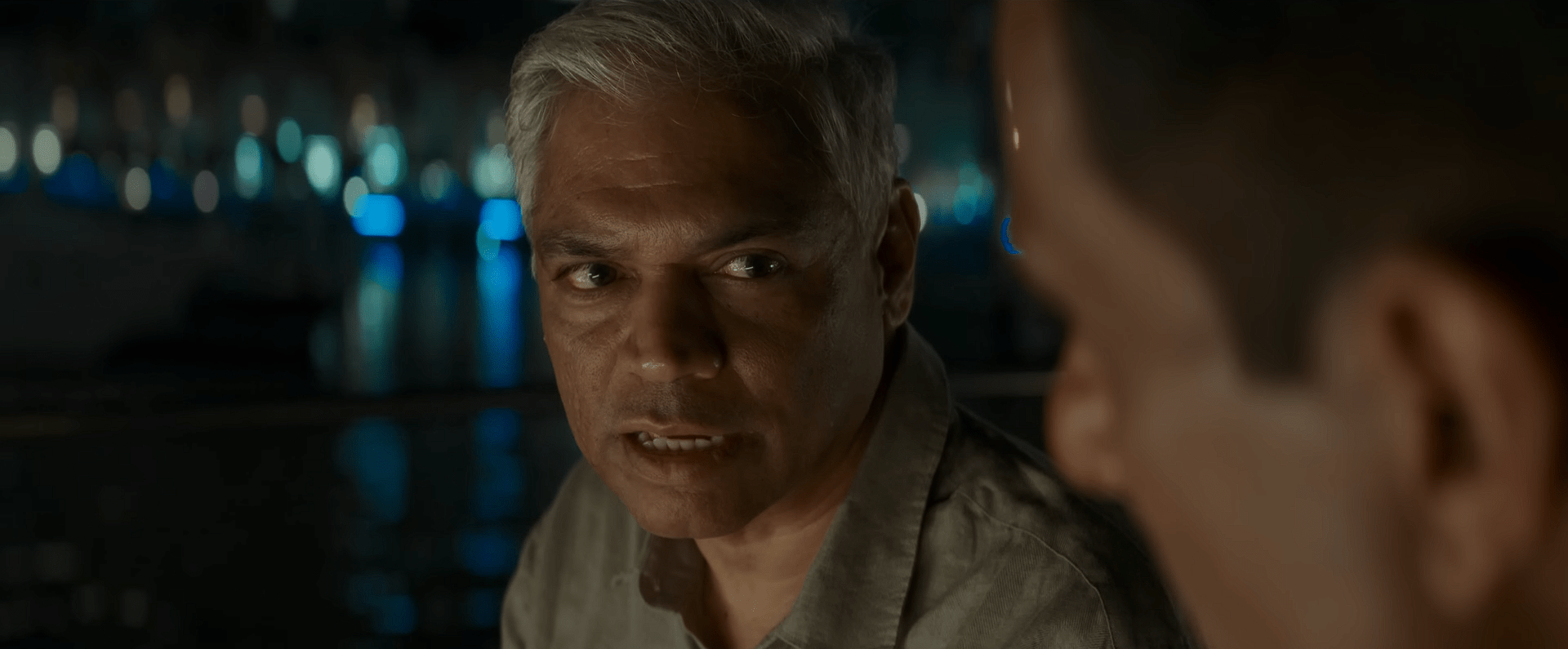
But then there is the title track, “Fateh Kar Fateh.” Unfortunately, it lands with a melodramatic thud. It’s not my taste, and its placement does little to elevate the scenes.
Later, I noticed that Hans Zimmer had been credited for a track titled “To The Moon.” Before excitement could kick in, I realized the truth: the film had simply licensed an existing Zimmer composition. Nothing original was created for Fateh. Not a complaint, just a clarification.
The Interval Card That Promised More Than It Delivered
During interval, the screen flashes:
“Brace yourself, you will need this break.”
Naturally, I assumed the second half would go full throttle – more brutality, more intensity, maybe even Marko-level madness. And while the action remains solid, the film around the action never rises to the same level. The narrative keeps pulling the impact down, especially whenever it tries to get emotional.
At that point, I genuinely felt the movie needed to make a choice: Either fully commit to a raw, bare-bones action film, OR build an emotionally powerful story.
Instead, it stays stuck in the middle, diluting both.
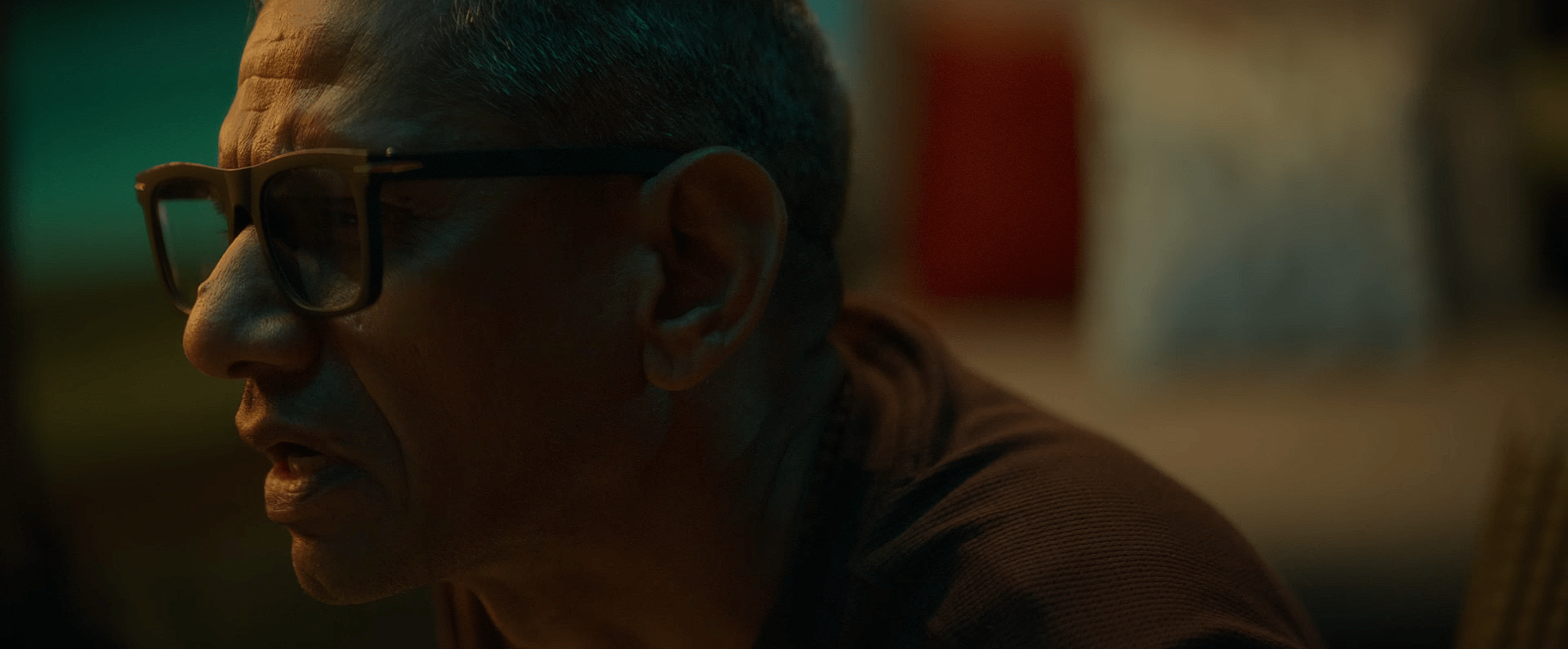
Final Thoughts: Ambitious, Flawed, But Better Than Generic Bollywood Action
In the end, I did my job – I watched the movie, felt its highs and lows, and shared what worked and what didn’t. Whether you want to watch it or not is entirely your call.
But if I compare Fateh to the usual generic films hitting theatres, I will still say this: despite its flaws, despite its uneven emotional arc, despite the missteps in performance and CGI – it is at least trying something different.
And yes, I can confidently say this experience was definitely better than Game Changer.
Rating: 3/5
A commendable effort with intense action and sincere ambition, weighed down by shallow emotional depth and uneven storytelling.