Junior NTR’s Devara: Part 1 has finally crashed into theatres – an arrival that almost feels overdue. If you didn’t know, this is the same man who last electrified audiences in RRR: the guy who danced “Naatu Naatu,” outran a tiger, and emerged like an action god. After that phenomenon, Devara is his next gigantic cinematic chapter – an ocean-sized film, steeped in promise, scale, and ambition.
But here’s the thing I wish someone had whispered into the ears of the makers: if even a fraction of the money splurged on production design, VFX, soundscape, and casting had been spent on the story – just the story – this movie could have been a totally different beast. It would’ve been fun; it would’ve been layered; it could’ve lived up to its own thunder. Instead we get a film that’s been waiting to release for what feels like forever, teasing for years, dripping with hype – and ultimately landing with the narrative satisfaction of a half-told tale.
When Devara’s first teaser landed, the scale was clear. You could feel what they were reaching for: cinematic spectacle, sandpaper grit, and mythic grandeur. And yes, on paper, that ambition is impressive. But then the execution begins – the mid-level shots layered with VFX that don’t quite translate, the creative choices that feel overly familiar – and the illusion of a bold, original epic slides away.
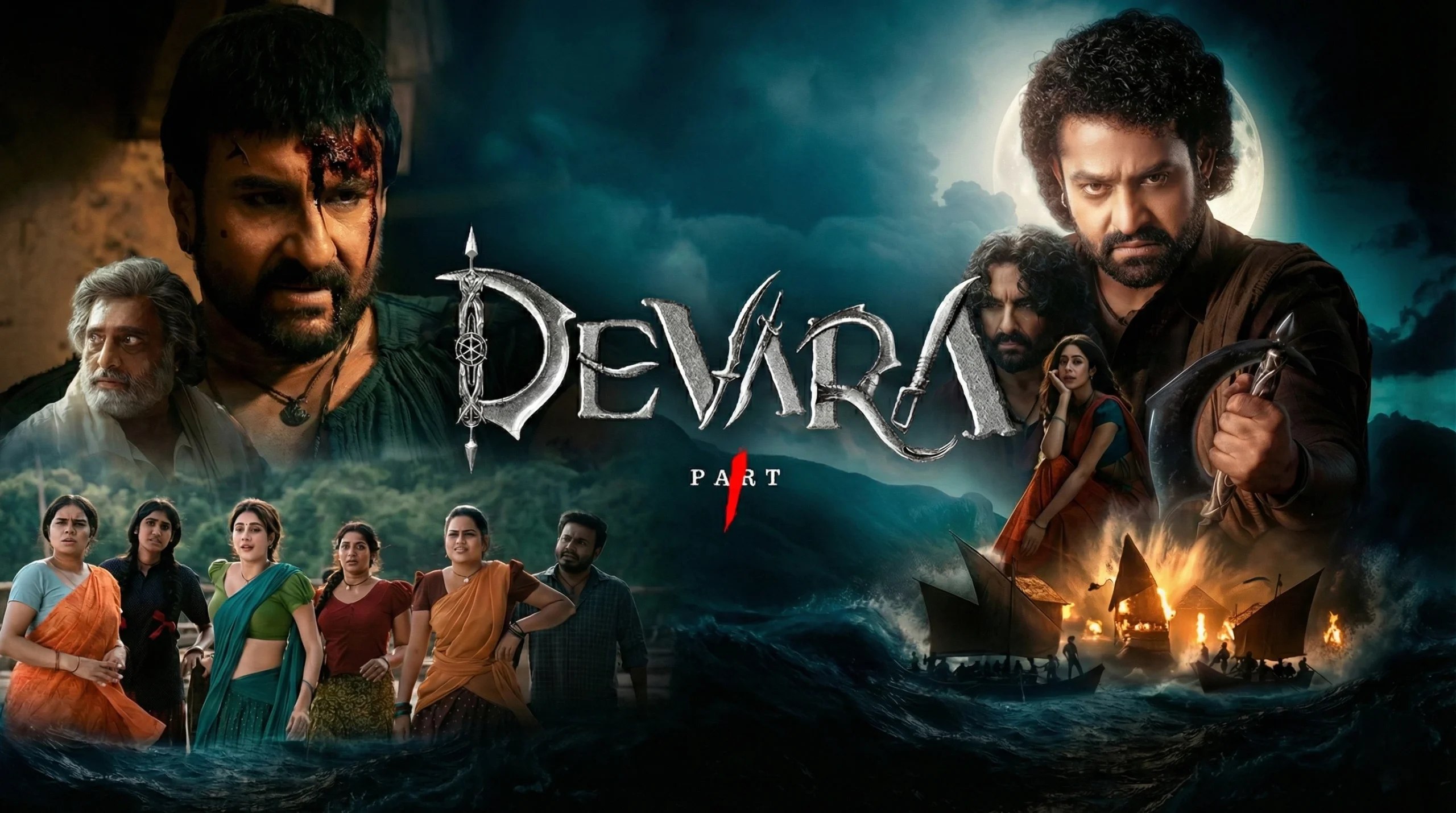
And the moment the film opens, five minutes into the runtime, I literally thought to myself:
“Ah, they’re making the movie on that formula.”
The Formula of Two Halves – And the Ghost of a Trendsetter
Which formula am I talking about?
Five years ago, a film arrived that changed the way Indian mainstream cinema thought about storytelling. It created a blueprint: grand mythos + personal vendetta + dramatic cliffhanger → split into Part 1 and Part 2. We saw many studios attempt that template afterward, across genres and regions.
Let me make it obvious – yes, I’m talking about Baahubali.
This trend has since produced movies and franchises that treat Part 1 as an extended introduction, a breathing room to tease, to world-build, and to dangle narrative hooks just above your head, forcing you to come back for closure. Devara not only follows that same pattern – it copies it in spirit so blatantly that it feels like the creative bloodline was traced beat for beat.
For the little kids confused about what Devara’s story even is, let me walk you through it.
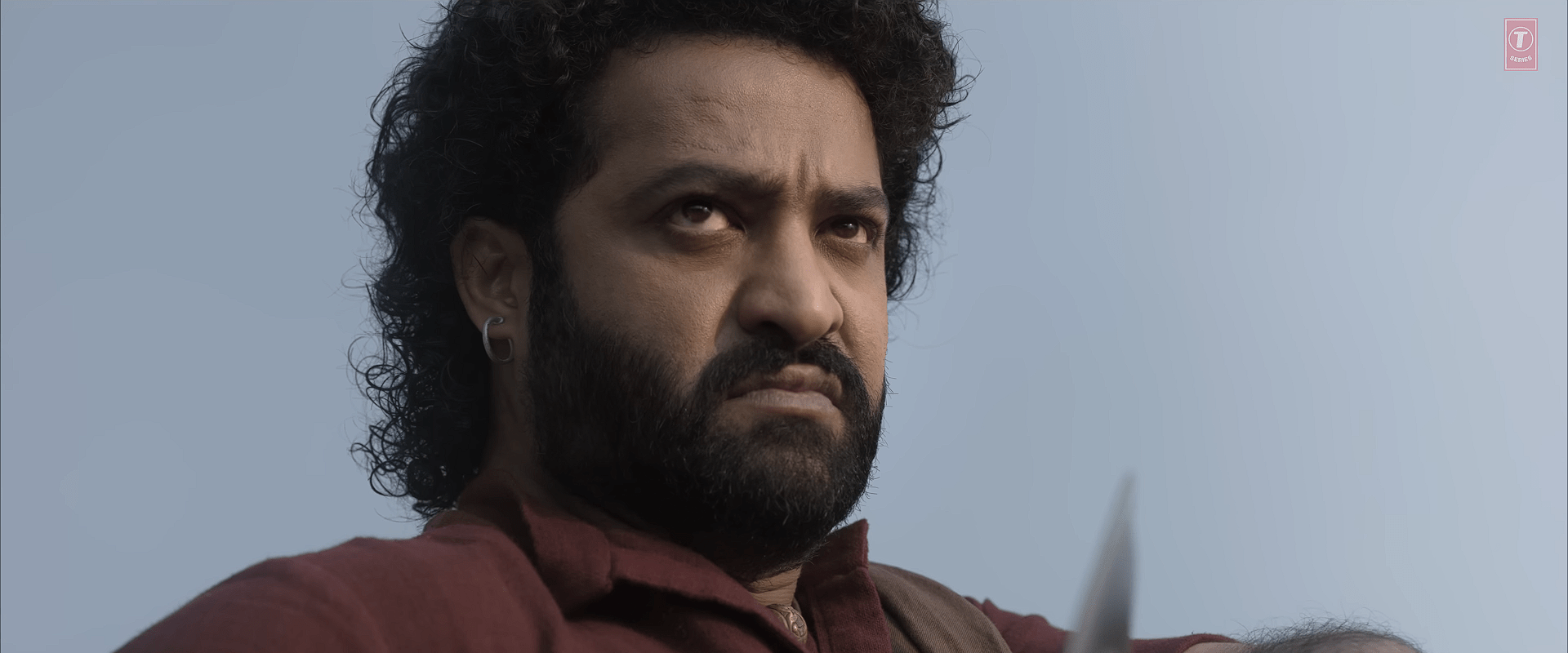
We begin inside the Police High Command. A minister arrives, furious and venomous, wielding the power of law like a hammer. He orders a major raid. His command? “Too much hooliganism is happening – go find him and bring him.” There is a dangerous man. The language is sharp, decisive. “Bring him.”
A police team sets off in pursuit. During the search, they stumble into the presence of Prakash Raj’s character, who becomes a narrative anchor. He begins telling a story, narrating the past, and suddenly we tumble headfirst into flashbacks – flashbacks within flashbacks – layering narrative time like a stack of shuffled papers.
- The Formula of Two Halves – And the Ghost of a Trendsetter
- An Island of Violence, Honor, and Ego
- Junior NTR – The Man Who Holds the Frame Like a Titan
- The Paradox Named Janhvi Kapoor
- Melodrama, Meme Fuel, and the South-Style Massification
- Where the Film Actually Works – Action and Anirudh
- A Story Lost at Sea
- Does This Elevate Junior NTR?
- Final Verdict
An Island of Violence, Honor, and Ego
The island we arrive on feels like a separate civilization. A group of people live there, governed by a figure of towering moral rigidity. He is a savior of the poor, a wall of justice, a man who cannot witness cruelty happening to good people. He would beat his own men into the ground if they violated his principles. His presence commands fear, respect, and devotion. This is Junior NTR’s titular character – Devara.
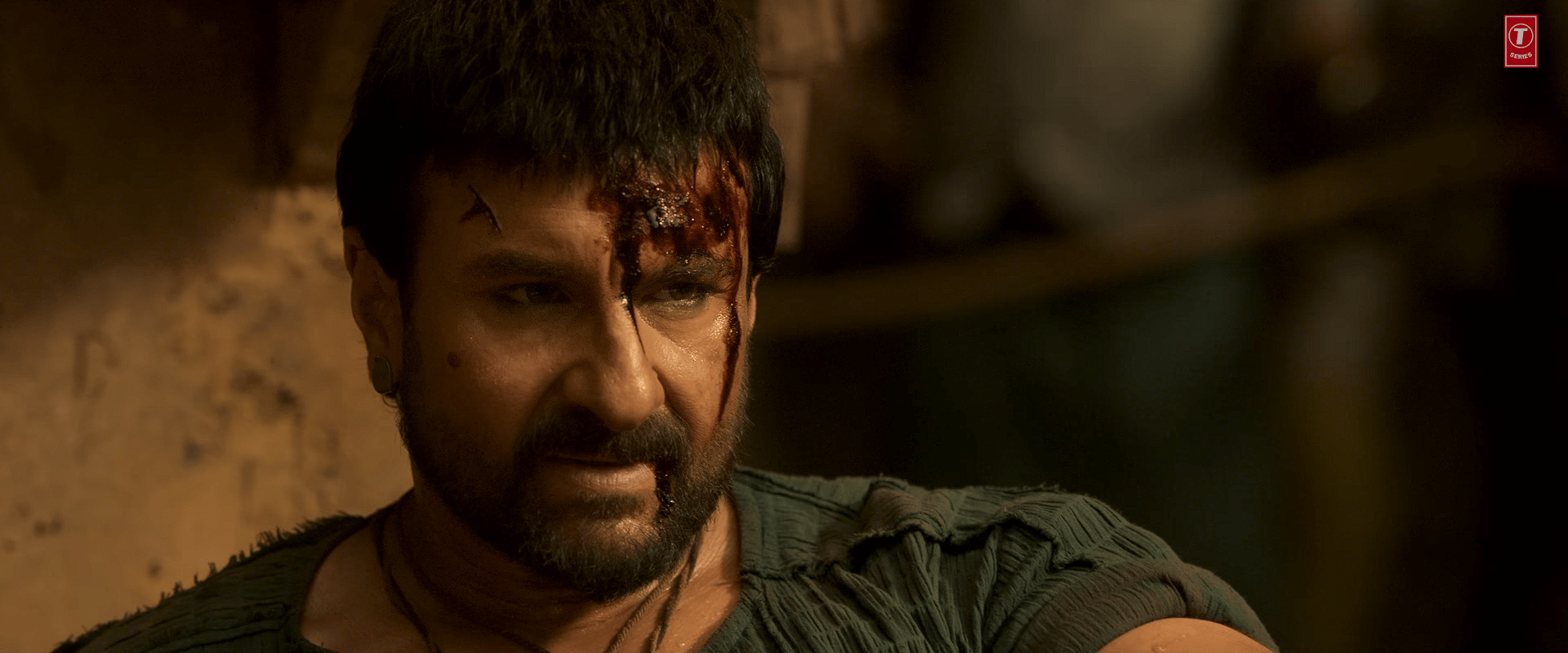
On the opposite end of this moral spectrum stands his rival: a man nearly equal in strength, but far from equal in ethics. He wants money, dominance, leverage. If an officer stands in his way? He might as well slit a throat. This antagonist is played by Saif Ali Khan.
Then the story evolves. We meet Devara’s son – Vara. A mirror image, identical in visage, also played by Junior NTR. The duality isn’t just in casting – it becomes thematic: legacy, inheritance, bloodline vengeance, the sins of the father washed upon the son.
And when the film ends, the makers attempt to hurl a shock twist that forces you to ask, “Bro, why did they do that?” The intention is clear: to generate speculation, to mimic the timeless “Why did X kill Y?” questions that dominated post-Baahubali pop culture. But the problem is this – those narrative beats were once fresh. Now, we’ve seen every possible variation of them. The template is so exhausted that Devara feels like a photocopy of storytelling DNA that was revolutionary years ago but has now turned generic.
And I’ll say it without hesitation:
The story is the film’s biggest disappointment.
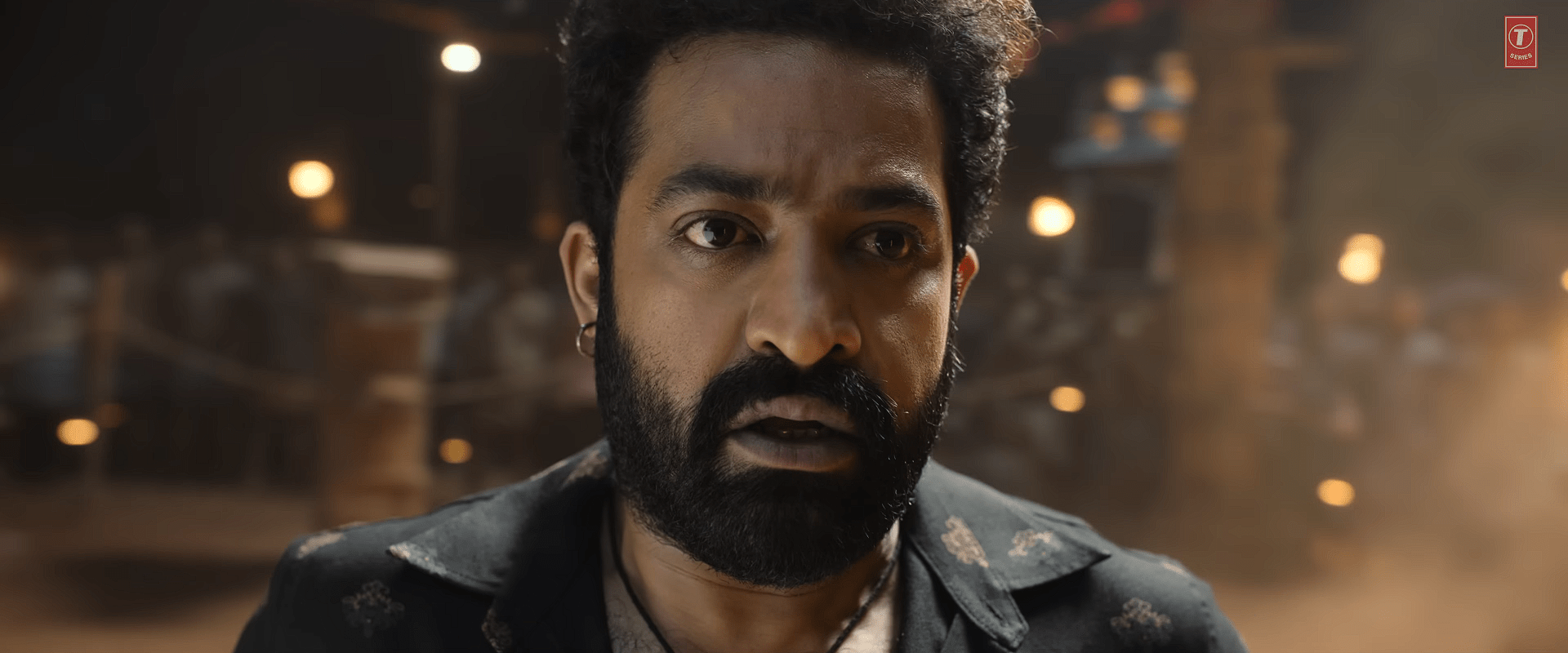
Junior NTR – The Man Who Holds the Frame Like a Titan
Let’s be fair. The movie is not without strengths. Start with the obvious: Junior NTR. He absolutely delivers. He plays a double role – not particularly different in their physical look, but unmistakably different in personality and presence.
The way he inhabits the camera space makes you feel the character is larger-than-life. His screen presence is a full-force tidal wave. When emotional beats are required, you see the vulnerability on his face. When action erupts, he carries it with the kind of kinetic conviction that makes audiences applaud. You never doubt his capability inside a frame.
And then there is Saif Ali Khan. Rarely does Bollywood get to send one of its most versatile actors into the aesthetic of an underworld tyrant. As a challenger to Devara – especially in the film’s first half – he is shockingly convincing. There’s a predatory glint behind his eyes, the sort of character who might cut a throat at breakfast without skipping butter on the toast. But the treatment of his role in the second half? That’s where the film drops him like a loose rope.
The Paradox Named Janhvi Kapoor
This might surprise some people, but listen carefully: The second-most noticeable actor is not Saif Ali Khan. It is Janhvi Kapoor. And arguably, she becomes the most impactful character on screen.
Her actual screen time is maybe 15–20 minutes. Entirely in the second half.
Her introduction? Within the first five minutes we see her, she’s undressed twice. It is a bathing scene, and the film does not waste a second establishing what it believes is her cinematic value – visual seduction.
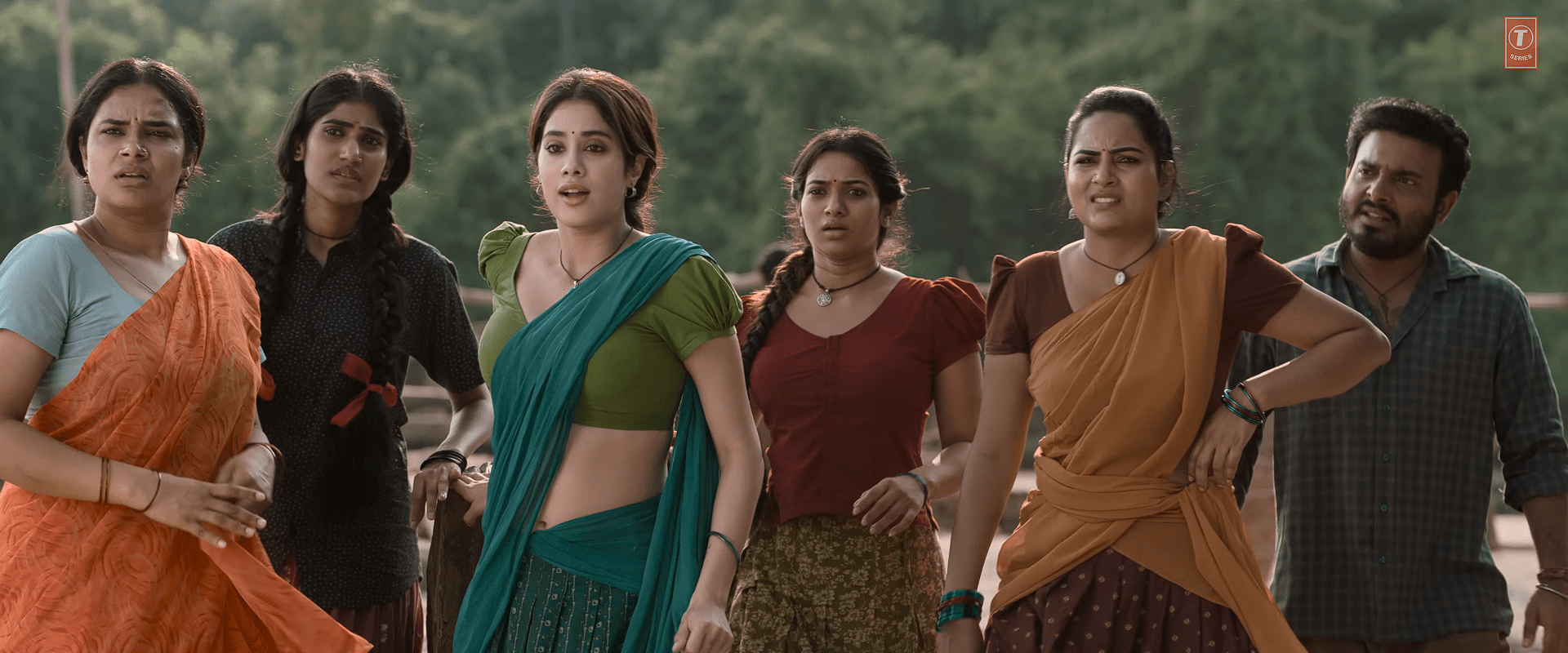
Her presence shakes the equilibrium of the movie. Even in this hyper-masculine world of blood, blades, and testosterone, she becomes the gravitational force. And the funniest moment of the movie – yes, I laughed out loud – was a reaction Vara gives during an action sequence. The way he stares at her felt almost… orgasmic. I turned to my friend sitting beside me and we blinked at each other. Did that seriously happen?
And that isn’t even her most powerful contribution. Her song – the fourth song – turns the entire theatre into a trance. The moment it ended, I sat there thinking, “Why stop? Play it again.” If I could openly say how the ticket price got justified, it was because of her. The film recoups its investment from her presence alone.
But then the movie commits its most baffling sin – it sidelines her.
Once the romance arc has played its purpose, she is discarded like a folded napkin. The camera moves on. And everything becomes a bullet list of scenes: “This happened. That happened.” The movie starts skipping beats, accelerating through emotional moments like an old video player stuck on double-speed. You can literally feel the storytelling gasping for air.
There was a point where I was physically fidgeting in my seat, whispering to myself:
“Okay fine, wrap it up. I need to leave for Panvel tomorrow morning.”
Melodrama, Meme Fuel, and the South-Style Massification
I know some people will hurl abuse at me for this, but I must point it out: Devara is loaded with meme-quality moments.
The clichés are undeniable:
- Characters hyping the hero: “He is the savior of the poor!”
- The slow-motion strut
- The “crying for the suffering of strangers” trope
- The god-like reverence from villagers
These moments aren’t homage; they’re repetition. They’re tropes deployed in predictable rhythm. And sometimes, the melodrama goes further: moments where the background score begs you to feel emotional – “please feed me too” kind of music – like someone pushing mood buttons on a remote.
Not too much, but enough to make you mutter, “Bro… relax.”
Where the Film Actually Works – Action and Anirudh
Despite all this, I finished Devara Part 1. Why?
Because the action sequences are legitimately good.
There is a raw, visceral pulse running through the film’s physical scenes. Fights become storm fronts. The choreography is strong enough to hold attention when the script isn’t. From slicing to gunplay to Devara riding a shark like a horse – yes, that is a thing – it’s enthusiastically over-the-top, and genuinely entertaining.
The chase sequence involving container theft from a shipping vessel? That is a masterstroke. The tension builds properly, visually, kinetically. You feel anticipation. You feel threat.
And above all – Anirudh Ravichander. His music lifts this movie far above the limitation of its writing. The trailer didn’t do justice to the soundtrack. Whenever a song unexpectedly triggers, you don’t groan – you lean in. You take out your phone, ready to relax, then the screen erupts in dance, and you’re like, “Oh wait – this looks cool.”
The score is sprinkled like little fireworks throughout the runtime. These small good things – if you’re a fan of South masala cinema – deliver a one-time theatrical rush.
When the film goes above water – massive ship sequences, moonlit combat – the scale is a visual feast. And credit where due: the VFX holds up. Never once did I feel like I was staring at bad green-screen stitching. If these elements had faltered, audiences would curse them. Instead, I’m applauding them.

A Story Lost at Sea
But here is the ultimate problem. The story sabotages the film.
The movie begins with a hunt. A minister orders the arrest of this criminal mastermind. After the first fifteen minutes… that storyline vanishes. The criminal evaporates from existence for the remaining two and a half hours. What you assume is the central conflict becomes a narrative ghost.
Where does it return? In Part 2.
And this is where the formula reveals itself in full daylight. Devara Part 1 is not a film; it is a prolonged prelude. It is exposition, weighed down by its own trailer-like structure. It begins at a point, promises payoff, and then tells you, “Come back later.”
Does This Elevate Junior NTR?
We’ve already seen Junior NTR handle action magnificently in RRR. This is not a direct comparison, but you can’t help thinking about it. He is a phenomenal actor – and he performs well here too – but Devara does not elevate him. It doesn’t stretch his craft, nor does it expand his legacy. It lets him exist in familiar territory, without giving him the narrative worthiness of his talent.
The one person who unexpectedly elevates the movie is Janhvi Kapoor. For all the chaos, at least watching her was fun.
Final Verdict
Devara: Part 1 is an ocean of spectacle crashing against a sandcastle of a story. It has star power, strong action, huge scale, and Anirudh’s musical backbone. But it also has a hollow core, momentum-killing clichés, and the worst symptom of modern blockbuster production: a cinematic Part 1 that is not a movie, but a trailer for Part 2.
Rating: 2.5 out of 5.