When I walked into the theatre today to watch De De Pyaar De 2, starring Ajay Devgn, R. Madhavan, and Rakul Preet Singh, I honestly didn’t expect much – not even a little. To be completely transparent, I had zero expectations from the film. I was on a holiday anyway, minding my own business, and this movie wasn’t even on my priority list. Yet somehow I found myself inside the theatre, popcorn in hand, prepared more for disappointment than entertainment. But films have a funny way of surprising you, especially the ones you least expect anything from.
And that is exactly what happened with this mischievous, playful sequel.

A Direct Continuation – And Surprisingly Accessible
Before anything else, De De Pyaar De 2 makes one thing clear: this is a direct continuation of the first film. In Part One, Ajay Devgn played a 50-plus man who fell in love with a girl nearly half his age – 26 or 27. He wished to marry her but had one massive problem: he needed his “ex-wife’s” permission. Except she wasn’t really an ex-wife. Their marriage had never ended. He was still married. He had simply lied.
This complicated balancing act between love, age, marriage, and honesty formed the backbone of the original, with Tabu playing the significant role of the not-so-ex wife. The film did well enough to justify a sequel, and here we are – except instead of recycling the same conflicts, Part Two cleverly shifts its lens.
The first film was about convincing the man’s family. This second film flips the coin – now the challenge lies in convincing the girl’s family.
What I especially appreciated is the way the film eases viewers in. For those who don’t remember the first movie, or skipped it entirely, the team thoughtfully provides a recap at the very start. And it isn’t a boring recap – it’s delivered in a slightly humorous style that outlines what happened, what mattered, and which events will shape this chapter of the story. It is simple but effective, and most importantly, it reduces the panic of newcomers entering mid-franchise.
- A Direct Continuation – And Surprisingly Accessible
- The Comedy: If It Clicks, It Clicks Hard
- Self-Referential Humour That Actually Works
- Not a Classic Rom-Com, Not a Message Film – Just a Fun Entertainer
- Twists and a Surprisingly Thoughtful Emotional Layer
- Strong Performances – Especially R. Madhavan
- A Sequel That Outperforms Expectations
The Comedy: If It Clicks, It Clicks Hard

For me, the most important factor in the film – and indeed, its most successful aspect – is the comedy. I want to emphasize that comedy is subjective. If it doesn’t land for you, nothing else in this film will. You might find yourself thinking, “What rubbish am I watching?” But if it hits the right spot, the humour genuinely clicks, and you’ll find yourself amused throughout.
The premise itself is already unconventional: a 26-year-old woman and a 50-year-old man planning to get married. Naturally, this odd dynamic opens up room for humour, awkwardness, and self-aware jokes.
This time, the regular-person lens – the voice of societal normalcy – is represented by R. Madhavan’s character, who plays the father of Rakul Preet Singh’s character. And here’s where it gets juicy: my inner instinct immediately told me that R. Madhavan is younger than Ajay Devgn in real life. And in the film, that younger man is playing the father of the woman Ajay’s character wants to marry. This ironic, almost reverse-age-casting situation creates several goldmine comedic scenes involving what exactly Ajay Devgn’s character should call his future mother-in-law. Mummy ji? Aunty ji? Sister ji? When everyone looks the same age, titles become punchlines.
These moments aren’t just funny – they reflect the core absurdity of the plot in a playful way that kept a smile on my face.
Self-Referential Humour That Actually Works
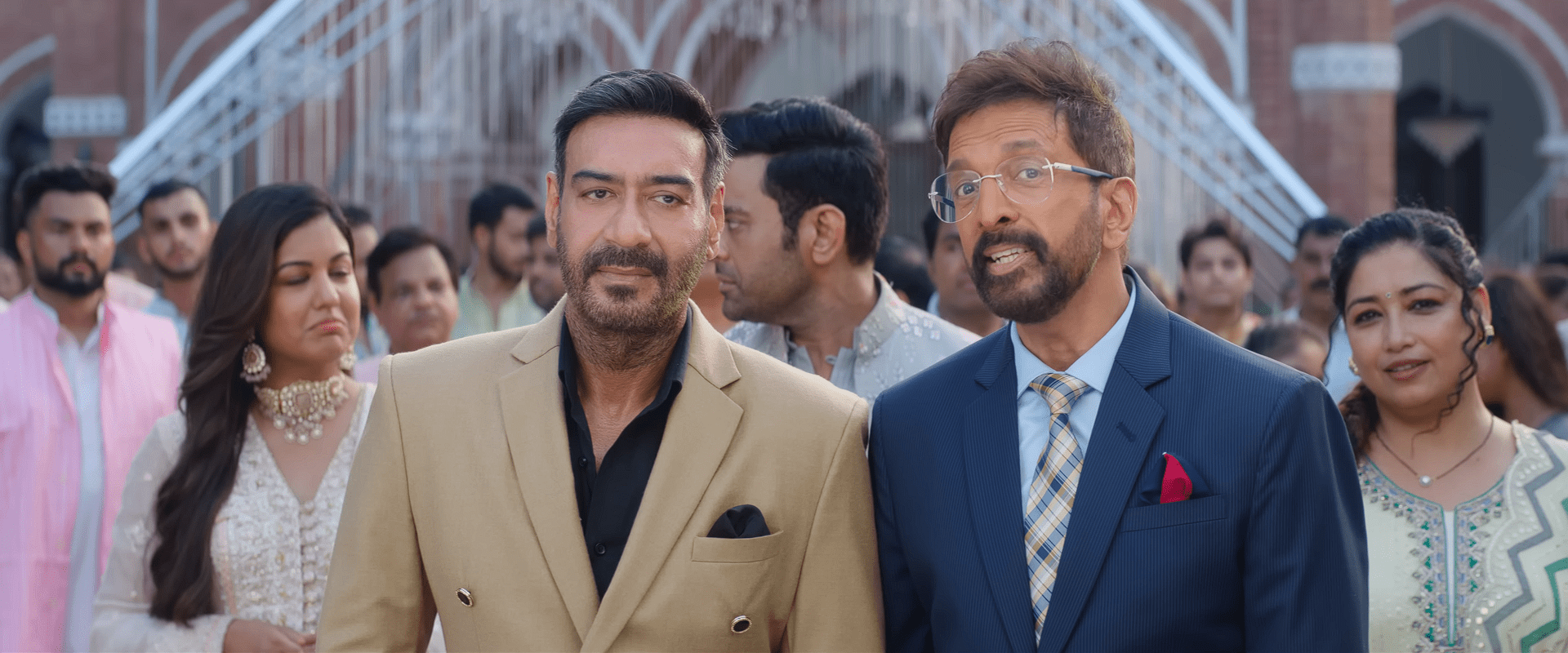
What really made me laugh, however, were the many references sprinkled throughout the film. The writers have intentionally injected self-aware jokes – meta-humour that rewards attentive viewers.
You probably saw one in the trailer: the stylish car entry where Ajay Devgn tries to step out dramatically but gets scared because that kind of heroic entry belongs to Singham, not him. It’s not subtle. It’s not serious. But it works.
Then there’s the clever nod to Shaitaan, where Ajay Devgn’s daughter was chased by R. Madhavan’s character. In this film, the situation reverses: now Madhavan’s daughter is being wooed by Ajay Devgn’s character. The writers acknowledge this irony with a wink, and it lands perfectly.
There’s also a moment involving a young boy, who in real life is the son of Jaaved Jaaferi. The dialogue written around this connection is so specific that if you know the reference, you’ll instantly say, “Bro, that’s perfect.” These self-aware touches elevate the comedy beyond generic rom-com humour.
Overall, the comedy worked for me – not mildly, but genuinely. And I wanted to highlight this right at the start because humour is not just a feature here; it is the core personality of the film.
Not a Classic Rom-Com, Not a Message Film – Just a Fun Entertainer
Let me make one thing clear: this is not a typical romantic comedy where you evaluate the romance, nor is it a social drama designed to teach lessons. The film occasionally tries to explore deeper emotional or moral questions, but only lightly.
Yet what surprised me was the limited presence Ajay Devgn has in the first half. For a large portion, he stands at the back of the frame, reacting quietly while others take the lead. It’s unusual to see a star of his stature being given minimal dialogue early on. There’s one scene where he finally speaks for two to three minutes straight, and the moment he did, I thought, “Yes, the man has finally spoken.” And what he says there – well, the humour hits a certain level that is both unexpected and bold.
The second half dips slightly, leaning into seriousness. But eventually the film picks itself up and wraps things with an ending that delivers enough satisfaction to make up for the slowdown.
Twists and a Surprisingly Thoughtful Emotional Layer
While the film might appear light and breezy on the surface, it slips in some interesting emotional beats. A recurring theme from the first movie resurfaces: Does sleeping together once make you fall in love? And if it doesn’t make you fall in love, does sleeping together once break love?
You may or may not agree with the moral angle here. It’s subjective. But the film uses this question not as moral preaching, but as a device to create layered situations. The characters find themselves entangled in scenarios that test comfort, trust, and personal boundaries.
Is it philosophical? Slightly. Is it meaningful? Yes, in a popcorn-entertainment kind of way. Does it make the film unique? Absolutely.
And unique, I think, is the reason the first film worked. Whether people agreed with the storyline or not, at least it attempted something different. Today’s cinema often plays too safe, and sometimes being different is more refreshing than being perfect.
Strong Performances – Especially R. Madhavan
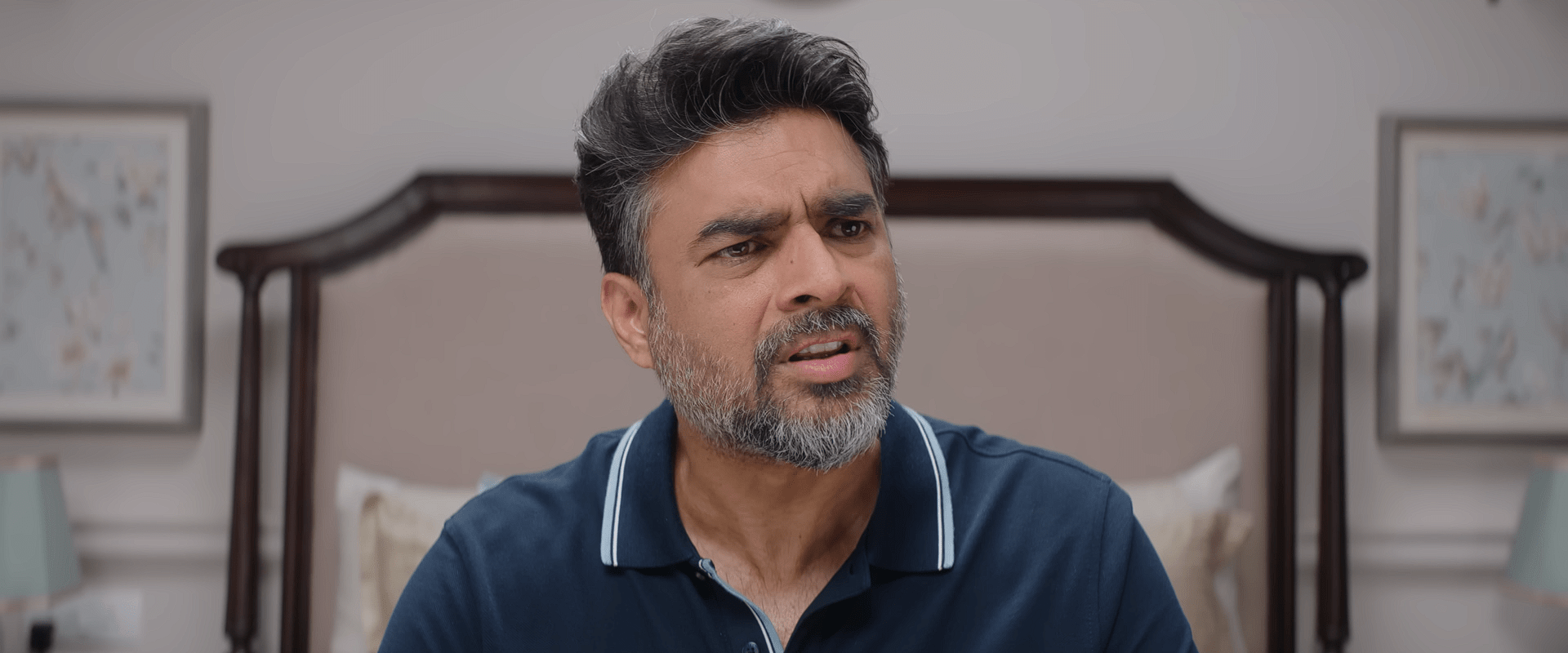
The performances enhance the film significantly. Ajay Devgn is intentionally underplayed for much of the runtime. His expressions, reactions, and slow-burn comedic timing are the backbone of many scenes. But the real surprise for me was R. Madhavan.
He isn’t just good – he’s “actually really good.” His character represents the audience’s confusion, irritation, disbelief, and eventual understanding. And he executes this role with charm and confidence.
Rakul Preet Singh gets more prominence in the emotional dynamic this time. For once, I genuinely appreciated that the makers did not replace the heroine, as some sequels tend to do without justification. Here, keeping her was essential, and her chemistry with both actors makes the story feel more grounded.

A Sequel That Outperforms Expectations
Towards the end, I couldn’t help but think: I wish Son of Sardaar 2 had been even half as funny as this. Maybe that’s why I walked into De De Pyaar De 2 with zero expectations. But what I witnessed was a film that understands exactly what it wants to be – and delivers that experience earnestly.
I’m not saying this is an incredible masterpiece. I didn’t roll on the floor laughing. But it is a decent entertainer, and that is enough.
I also understand that this humour may not work for everyone. Before watching, I would recommend checking the trailer. If even a small part of the humour appeals to you, then there’s a strong chance the movie will work for you too.
In today’s landscape, where most comedy films follow the same template, this one stands almost in opposition to them – more self-aware, less desperate, more mischievous than melodramatic. And that alone makes it worthy of a “go for it.”
Just remember: you already know exactly what you’re getting into. And if you want to watch the kind of film promised in the trailer, then this one will likely satisfy you.
Rating: 3.5/5
A fun, unexpectedly amusing sequel that doesn’t pretend to be anything more than an entertainer – and succeeds at being just that.