There are few superheroes who divide audiences as sharply as Daredevil. Over the years, I’ve noticed that when it comes to Matt Murdock – the masked vigilante of Hell’s Kitchen – people fall into two very predictable categories. On one side are the die-hard loyalists: the fans who’ve followed him through every dark alley and courtroom, who walked into Daredevil: Born Again with one prayer – “Bro, please don’t destroy him the way you destroyed She-Hulk and Secret Invasion.” The expectations were sky-high, but more than that, the fear was real.
Then there’s the second group – the ones who only know Daredevil as “some guy in red,” or worse, mistake him for a local politician. For them, this new series is simply another Marvel title floating in the endless sea of content. If you’re one of those people, relax. In this review, I’ll walk you through everything you need to know – short, crisp, and without any homework pressure. And trust me, the lore behind this character is so rich, so intense, and so strangely emotional that even the uninitiated will find themselves drawn into the story.
A Decade-Long Journey Back to Hell’s Kitchen
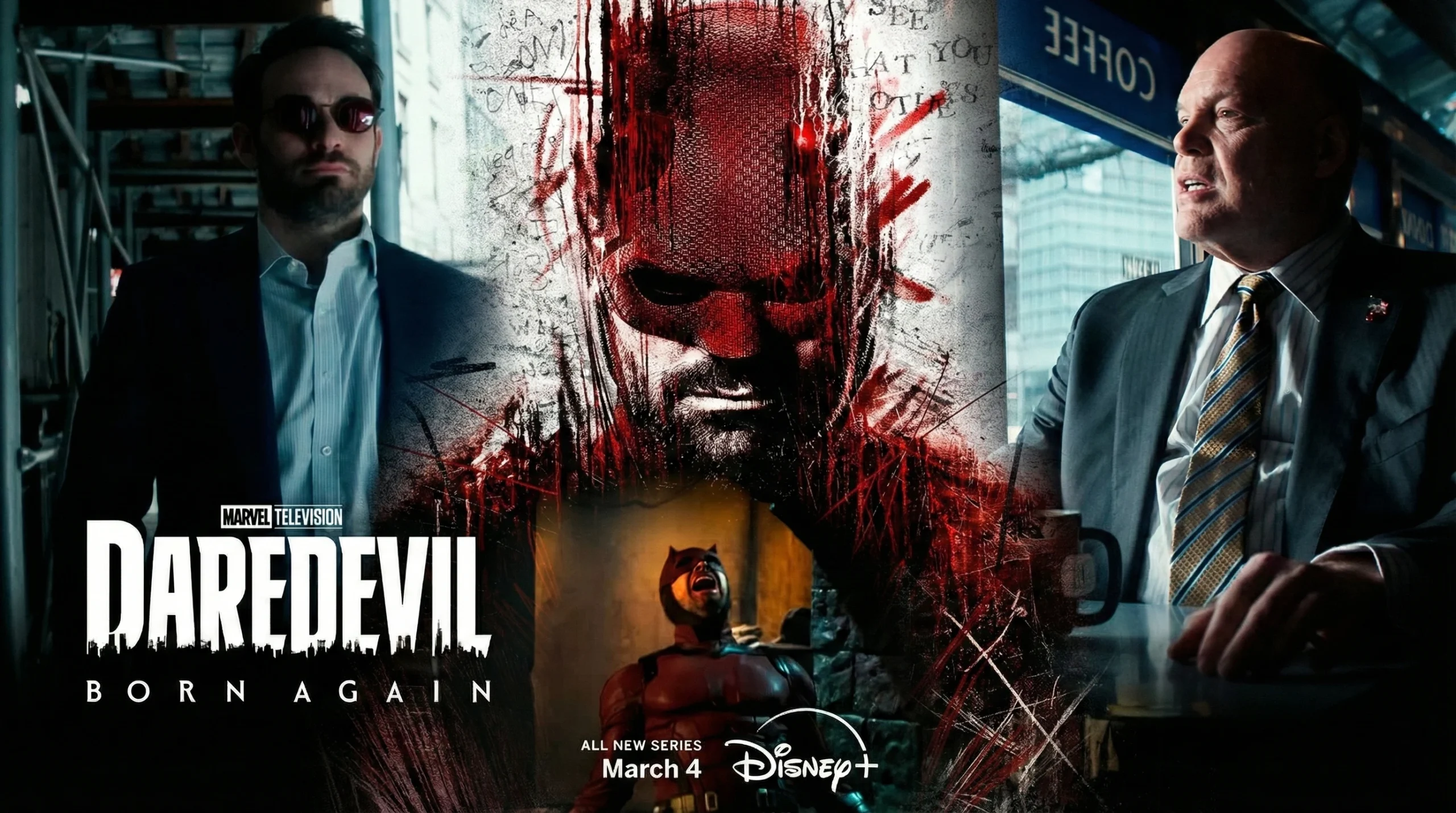
To understand the importance of Daredevil: Born Again, we need to rewind to 2015, a time when the Marvel Cinematic Universe was ascending at rocket speed. Avengers, Avengers: Age of Ultron, Captain America, Iron Man, Thor, Hulk – every hero was a global sensation. But Marvel’s presence lived only in big-screen releases; it had not yet infiltrated the streaming world.
Enter the partnership with Netflix.
In a move that would change Marvel’s legacy forever, they handed Netflix a roster of street-level New York superheroes and allowed them to create character-driven web series – gritty, grounded, and completely unlike Marvel Studios’ glossy film universe. What emerged was something remarkable: a universe within a universe. Three seasons of Daredevil, three of Jessica Jones, two of Punisher, two of Luke Cage, two of Iron Fist, and eventually The Defenders, Marvel’s mini-Avengers of the streaming world.
But among them, Daredevil stood out as a masterpiece.
Charlie Cox as Matt Murdock and Vincent D’Onofrio as the monstrous yet strangely magnetic Wilson Fisk created an iconic hero-villain duo. Their chemistry, their tension, their moral conflict – everything blended into a cinematic experience unmatched by most superhero shows even today. I still remember the excitement in October 2018, when discussions, promotions, and character analyses flooded social media. Season 3 – which dropped on 19th October – became one of the finest superhero seasons ever made. A brutal, emotional, sharply written conclusion that left fans in awe. It felt like a definitive ending but also the beginning of something greater.
And then… it ended. Suddenly. Unfairly.
- A Decade-Long Journey Back to Hell’s Kitchen
- The Collapse of the Netflix Era and Marvel’s Streaming Ambitions
- The Chaotic Production Journey of Born Again
- A Hero and a Villain at Their Lowest
- The Supporting Characters: Hits and Misses
- The Bank Robbery Filler: Fun Yet Unnecessary
- The Slow Rise of a Monster: Kingpin’s Takeover
- The Finale: A Bloody, Balanced Showdown
- Charlie Cox and Vincent D’Onofrio: Irreplaceable Titans
- A Major Improvement in Marvel’s Courtroom Writing
- Do You Need to Watch the Older Shows First?
- The Visuals: Mixed But Imaginative
- Final Verdict – A Strong, Promising Rebirth
The Collapse of the Netflix Era and Marvel’s Streaming Ambitions
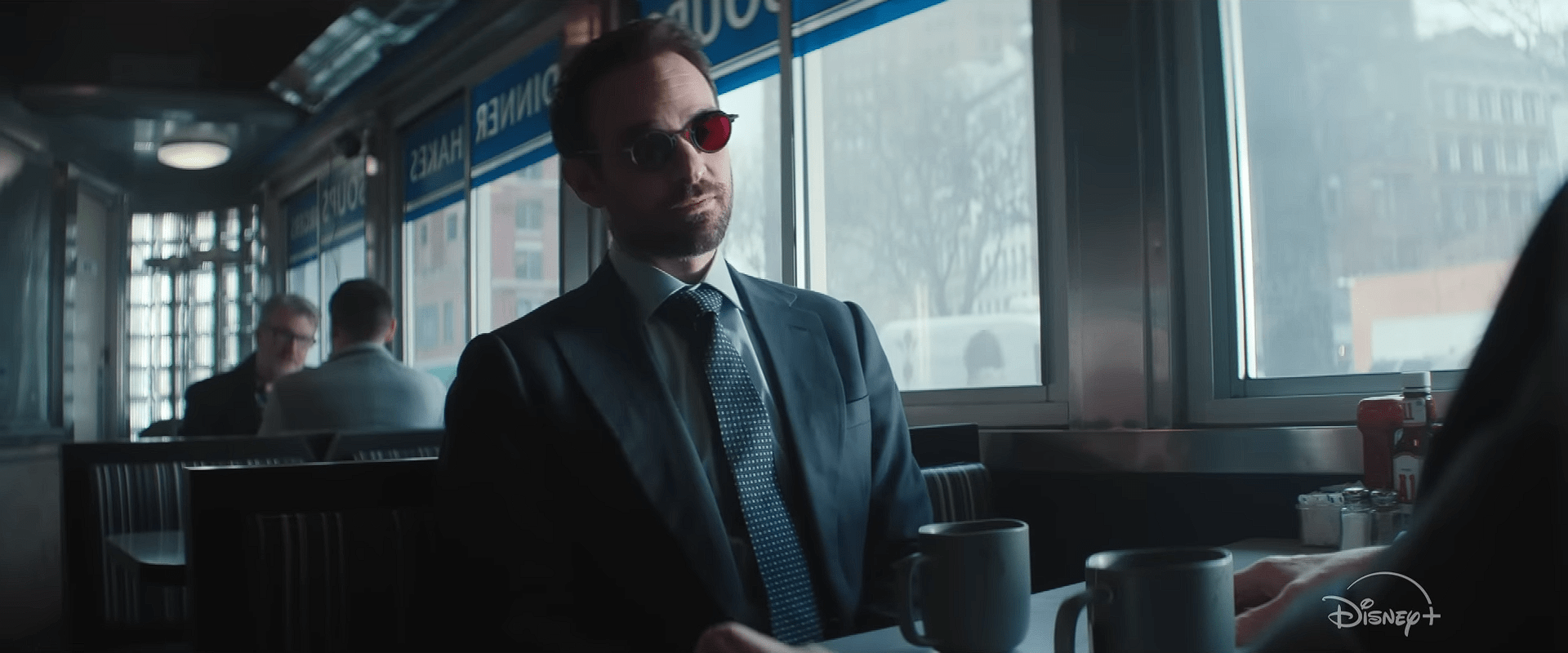
By 2018–19, Disney had decided that it wanted to stop lending its heroes to Netflix. Why should Netflix enjoy the glory of Marvel’s street-level heroes when Disney could launch its own streaming service? With Disney+ entering the market in November 2019, the Netflix-Marvel partnership dissolved. Characters were pulled back. Projects were canceled. The universe as fans knew it simply disappeared.
Daredevil’s third season thus became a final chapter – a beautifully brutal conclusion that felt both complete and incomplete. Fans hoped, prayed, demanded more, but all they got was silence for a long time.
Meanwhile, Marvel Studios began creating their own original series for Disney+. And let’s be honest – the results were inconsistent. Some were decent, some were forgettable, and some… well, we don’t talk about those. But the longing for Daredevil remained. People never stopped imagining what a revival could look like, especially with the same cast. Marvel knew this. Which is why, in Spider-Man: No Way Home, they dropped the cameo that sent theaters into chaos.
Matt Murdock catching that brick – that one-second moment – confirmed everything. Charlie Cox was back. Vincent D’Onofrio was back. Daredevil and Kingpin were alive again.
The Chaotic Production Journey of Born Again
In July 2022, Marvel announced Daredevil: Born Again – a massive 18-episode revival. Fans went wild. Eighteen episodes suggested ambition, scale, and a return to long-form storytelling. But soon, troubling rumors spread. Yes, Charlie Cox and Vincent D’Onofrio were returning – but the two most important supporting characters in Daredevil’s life would not. Worse, early reports hinted the show was going to be more of a courtroom comedy-drama rather than a gritty street-level series.
Then came the production issues.
Writers were fired. Directors were replaced. Significant portions were scrapped. Disney paused everything and reassessed the situation. Thankfully, Marvel executives seemed to realize their mistake: people didn’t want a comedy-drama version of Daredevil. They wanted the intensity, the groundedness, the emotional weight of Netflix’s version.
So the entire project was restructured.
The result? A tighter, more focused, nine-episode season titled Daredevil: Born Again. They even added a completely new first episode that wasn’t part of the original 18-episode concept.
What we got was far from perfect, but undeniably good – a solid, confident first step in rebuilding Daredevil for the MCU era. No, it doesn’t match Netflix’s legendary tone, but expecting that would’ve been unfair. That show had time, pacing, depth, and no corporate pressure to tie into larger universes. Born Again is different – but still compelling.
A Hero and a Villain at Their Lowest
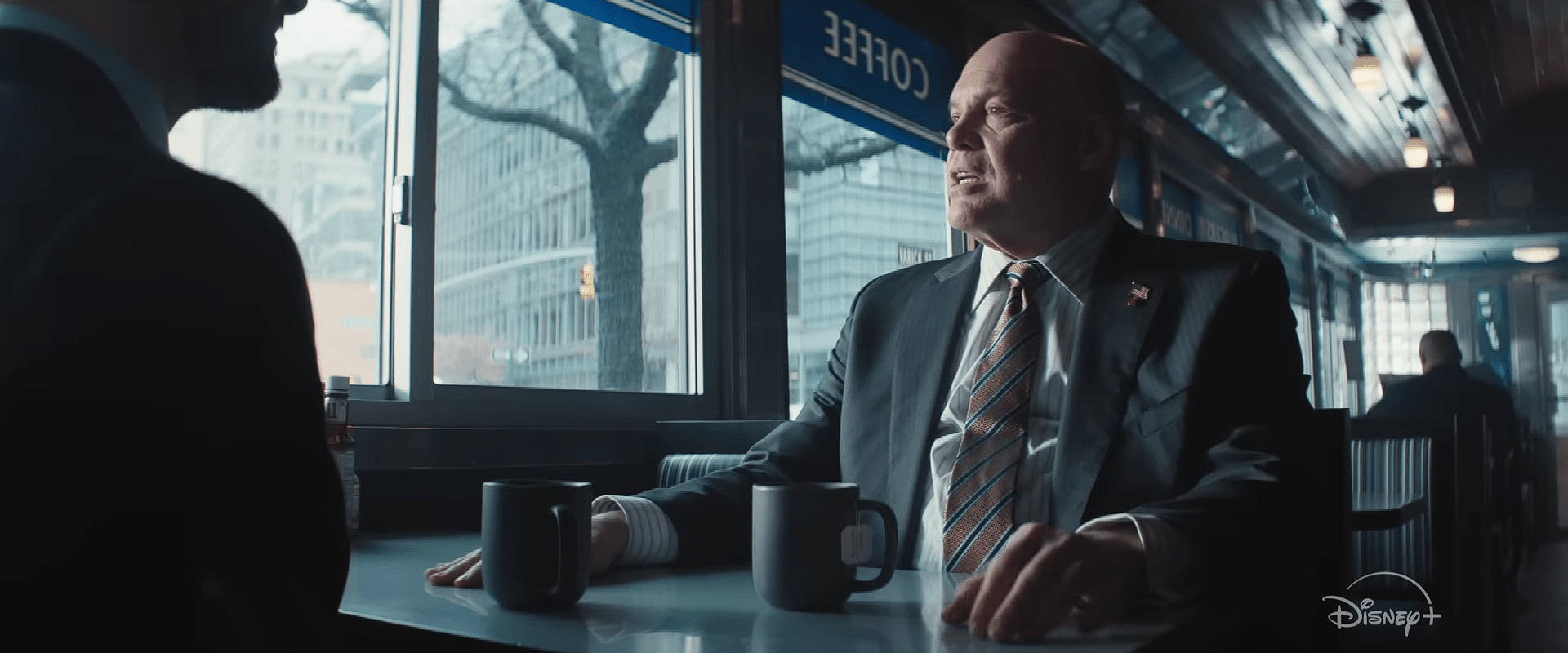
The heart of Daredevil: Born Again lies in its dual journey – Daredevil and Kingpin, both broken, both lost, both trying to rebuild themselves from the rubble of their pasts.
Matt Murdock has given up being Daredevil. His life as a masked vigilante has drained him. Emotionally devastated and physically weary, he chooses to live only as a lawyer – fighting society’s problems through legal battles instead of punches. Crime continues to rise around him, but he’s trapped between the fear of returning to the mask and the guilt of abandoning it.
On the other side, Wilson Fisk – after being beaten by Kate Bishop in Hawkeye and shot in the face in Echo – returns to New York more humiliated than ever. And that humiliation shapes his new ambition: he wants to become the mayor.
The beautiful irony? Daredevil stops being Daredevil, and Kingpin stops being Kingpin. One chooses the legal path voluntarily, the other chooses it out of strategy. Both hide their true selves from the world. Both are shadows of who they once were.
The season begins at these fragile points, and across nine episodes, we watch both men slowly gravitate back to their core identities – one through righteous fury, the other through unstoppable obsession.
One line sums up their dynamic beautifully: They cannot stand each other, but without the other, they don’t feel complete.
There’s even a hilarious scene where Kingpin’s men tell him, “Sir, Daredevil has returned.” Fisk panics like someone hearing about an ex-lover resurfacing. The way Vincent D’Onofrio plays that moment – the mix of fear, excitement, anxiety – is priceless.
Their relationship remains the most compelling hero-villain connection in modern superhero television.
The Supporting Characters: Hits and Misses
To help Matt’s journey back to the mask, the show introduces several smaller heroes and villains – each designed to be a stepping stone in his rediscovery.
White Tiger stands out nicely. The character fits tonally and thematically, serving as a mirror to Matt’s inner conflict. The energy, the chemistry, and the action in these arcs feel well-balanced.
But Muse, on the other hand, feels severely undercooked. A villain with fascinating potential is given too little screen time and too little depth. Every time Muse appears, I found myself wishing the show had invested more in expanding his presence. The opportunity for a psychologically gripping adversary was wasted.
And then there is the infamous filler episode – the bank robbery chapter.
The Bank Robbery Filler: Fun Yet Unnecessary
Every show has one. In Born Again, it’s the episode centered around a bank robbery involving a diamond.
On its own, the episode isn’t bad. Watching Matt use his intelligence and heightened senses is always a treat. There’s even a moment where he climbs straight onto a guy’s leg – a surprising, entertaining little sequence. But turning this side-mission into a full episode? It doesn’t contribute much to the overall narrative.
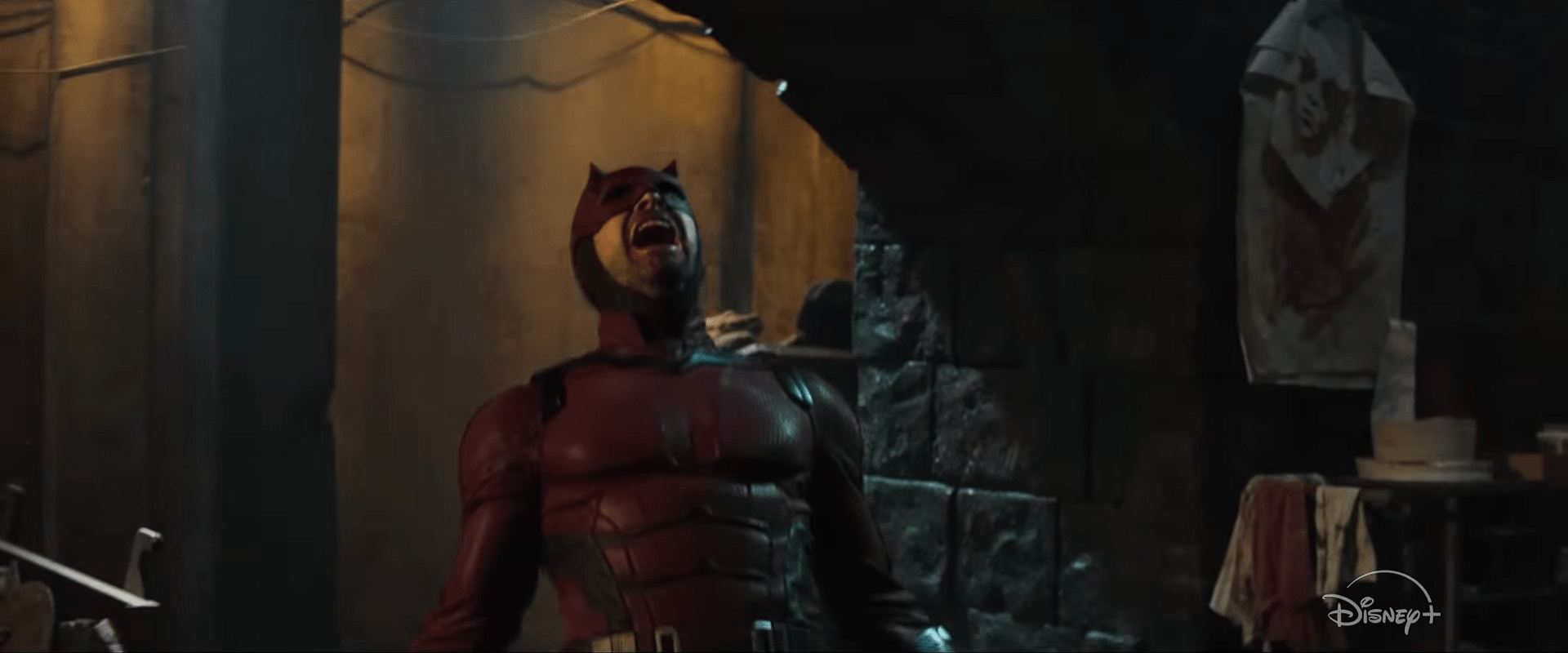
Initially, it feels like the diamond might have some deeper significance in Kingpin’s plan. But no – it ends up being pure filler. And the cameo appearance of Ms. Marvel’s dad, who seems to be playing Marvel’s new Nick Fury-lite connective role, feels oddly forced.
There was a time when fans screamed in theaters when Nick Fury showed up. Today, Ms. Marvel’s dad drops by to maintain the so-called “connected universe.” It’s a strange shift and not always a welcome one. The constant plugging of Ms. Marvel feels excessive and unnecessary.
The Slow Rise of a Monster: Kingpin’s Takeover
Despite the occasional detour, the main narrative remains engaging. Kingpin’s political strategy unfolds with chilling precision. The public sees a reformed, legal leader. But those who know him – including Matt – sense the monster lurking beneath the polished exterior.
Watching Fisk manipulate the system, influence the media, and expand his operation legally is equal parts terrifying and fascinating. It’s a different kind of menace – one that feels frighteningly realistic.
The Finale: A Bloody, Balanced Showdown
Without spoiling anything, I can say the finale delivers one of the strongest Marvel TV episodes since Loki Season 1 and WandaVision. It’s a bloodbath – intense, gritty, and emotionally charged. Could it have been even more violent? Absolutely. Could they have delivered more raw, jaw-breaking choreography? Yes. Could Fisk’s brutality have gone further? Definitely.
But what we got is still very satisfying.
Considering the behind-the-scenes chaos, the rewrites, the reshoots, and the structural overhaul, achieving this level of quality is genuinely commendable. Daredevil: Born Again ends not like the end of a season but like an interval – the halfway point of an 18-episode larger story. Season 2 is already filming. Season 3 is greenlit. The future looks promising.
Charlie Cox and Vincent D’Onofrio: Irreplaceable Titans
There are some castings in Hollywood that become immortal. Robert Downey Jr. as Iron Man. Hugh Jackman as Wolverine. And now, more than ever, Charlie Cox as Daredevil and Vincent D’Onofrio as Kingpin.
Their performances anchor this series with emotional depth and authenticity. The way Cox balances Matt’s internal torment with his fierce moral compass, and the way D’Onofrio balances love, rage, fear, and authority – it’s masterful. Both portrayals feel carved into the DNA of the characters.
A Major Improvement in Marvel’s Courtroom Writing
One of the most refreshing elements of Born Again is the quality of courtroom scenes. Compared to She-Hulk, which often simplified or trivialized legal drama, Born Again offers strong, believable legal writing.
There’s a moment where Matt Murdock shakes the entire courtroom with a single line. The judge literally stands up and calls him into chambers. The writing feels sharp, confident, and rooted in real tension – something Marvel has desperately needed.
Do You Need to Watch the Older Shows First?
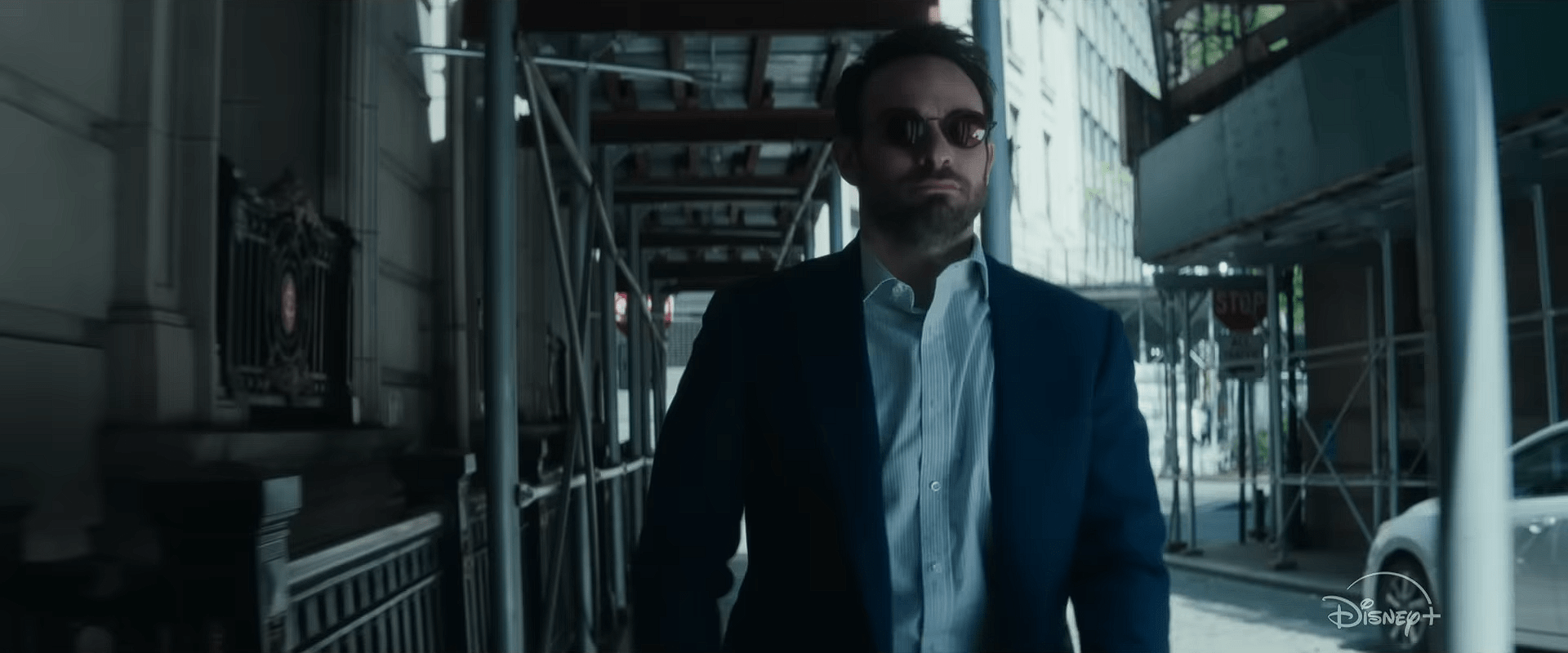
Here’s the question everyone asks: “What should I watch before Daredevil: Born Again?”
My honest answer: You don’t need to watch Hawkeye, Echo, or especially She-Hulk (bro, please avoid that).
But if you have the time – and the patience – watch Netflix’s Daredevil. All three seasons. Twenty-four episodes of one-hour each. Yes, it’s long. Yes, it starts slow. But trust me, the rewards are immense.
If you watch the Netflix series first, Born Again will feel slightly downgraded – because you’ve already experienced the peak. But watching it gives you invaluable context: who Karen is, who Foggy is, who Punisher is, and how their relationships with Matt developed over years.
If you choose not to watch the old series, that’s fine too. As long as you understand that in the first two episodes, the two people standing beside Matt – one woman and one man – are his closest friends, and Punisher is a brutal killer whose presence is limited this time.
The Visuals: Mixed But Imaginative
On the technical side, the swing sequences look mediocre. You can clearly see the CGI limitations. But in contrast, Daredevil’s heightened-senses sequences are beautifully executed. The sound design is impeccable – crisp, layered, immersive. And the use of anamorphic lenses and the clever de-squeeze technique? Genius. Absolute genius. These stylistic choices give the show a distinctive visual identity.
Final Verdict – A Strong, Promising Rebirth
Daredevil: Born Again is not perfect. It’s not Netflix’s Daredevil – and it never tries to be. But it’s a strong, confident, emotionally grounded revival that respects the character’s legacy while building something new. With powerful performances, compelling character arcs, strong legal writing, and a memorable finale, this season is easily one of the best MCU projects on Disney+.
It lays the foundation for something bigger – something darker, more ambitious, and more emotionally intense in future seasons.
Rating: 4/5
A very good start – and with the next two seasons already moving, the best might still be ahead.