Captain America: Brave New World, finally arrived in theatres, I walked in with a strange combination of hope and caution. This is, after all, the 35th film in the Marvel Cinematic Universe – a universe so large now that watching a new entry almost feels like revising a syllabus before an exam. Technically, to understand this film in full context, you “should” have watched The Incredible Hulk, Captain America: The Winter Soldier and Civil War, Avengers: Infinity War and Endgame, the Falcon and the Winter Soldier web series, and even Eternals. That’s a long list, the kind of list you can follow only if have hours of free time.
But here’s the surprising thing: even if you skip all of that, you’ll still understand 90–95% of this movie. Brave New World spoon-feeds its information so clearly and so frequently that you never feel lost. Marvel seems painfully aware of how much homework their universe expects – and here, they simply hand you the answers.
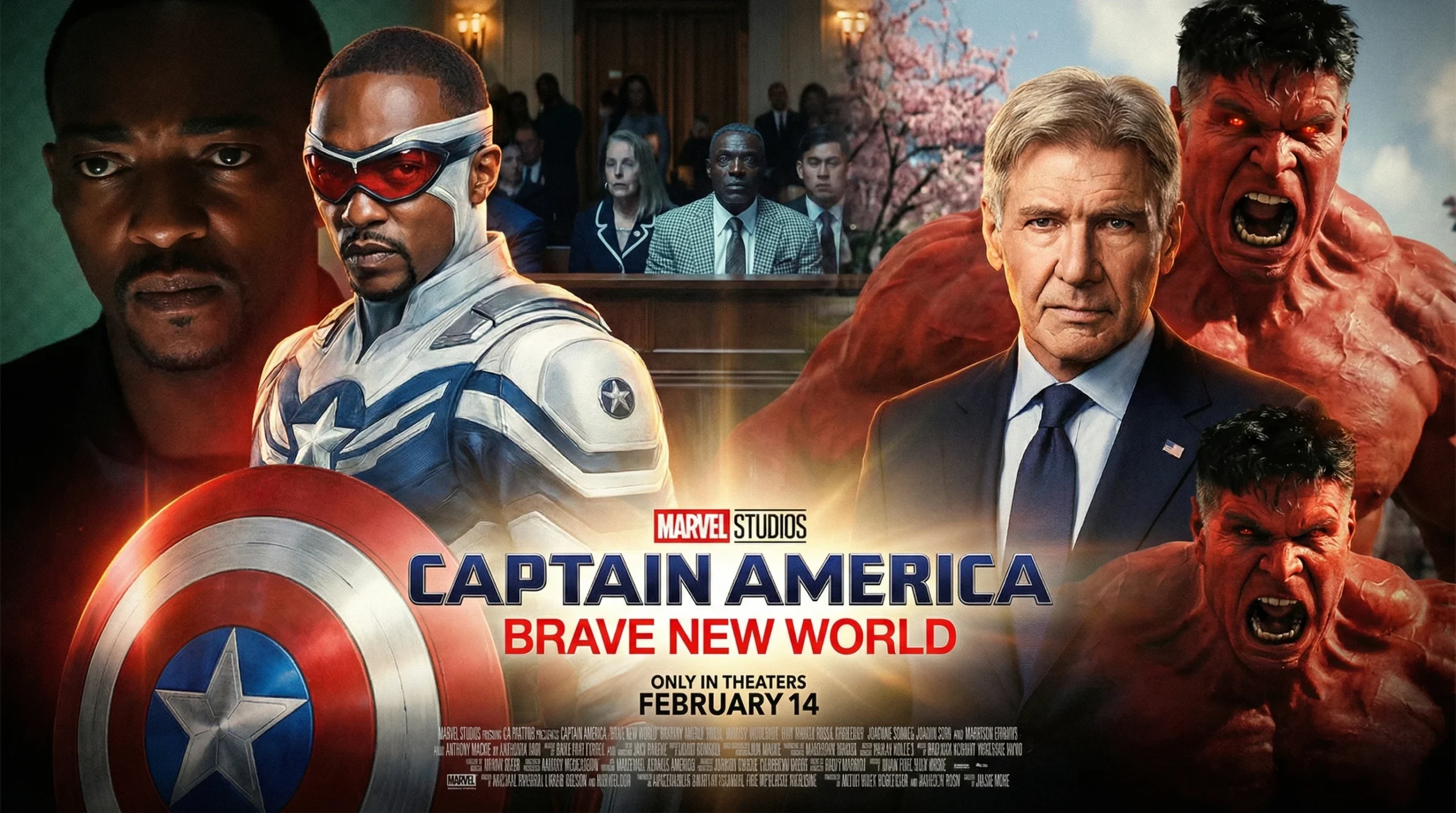
A Promise to Return to the Golden Spy-Thriller Days
Before its release, the film’s marketing played a very specific tune: We’re going back to the grounded spy-thriller brilliance of The Winter Soldier. Now, as someone whose expectations immediately rise when Winter Soldier is mentioned, I walked in hoping for a political-action thriller with grit, tension, and intelligence.
And for a while, I thought the film had a real shot at delivering that. There are glimpses – brief but exciting – where the spy-thriller energy sparks to life. Moments where the choreography is tight, the stakes feel personal, and the camera focuses on grounded action rather than cosmic chaos.
But as the movie progressed, I found myself realizing something: Marvel made big promises – but somewhere during production, editing, post-production, or maybe the unpredictable chaos of test screenings – the film lost the courage to commit to its original vision.
The result? A movie that could have been genuinely good, if only the makers had trusted themselves – and more importantly, trusted the audience.
- A Promise to Return to the Golden Spy-Thriller Days
- A World Racing for Adamantium
- Red Hulk Is Here… But Barely
- Action That Pops – With a Side of Video-Game CGI
- A Spy Thriller Without the Thrill
- Production Troubles You Can Feel
- The Pain of a Captain America Fan
- The Final Verdict: A Popcorn Movie and Nothing More
A World Racing for Adamantium
One thing I will say: the setup is strong. The film picks up a major thread from Eternals – when part of a gigantic Celestial emerges from the Earth, leaving behind new material. That material, we learn here, can be processed into adamantium, the legendary metal tied to Wolverine’s claws. It’s even said to be better than vibranium, which is a huge statement in the MCU.

Suddenly, a global race begins: Japan, America, France, and India – all trying to secure this newly discovered resource.
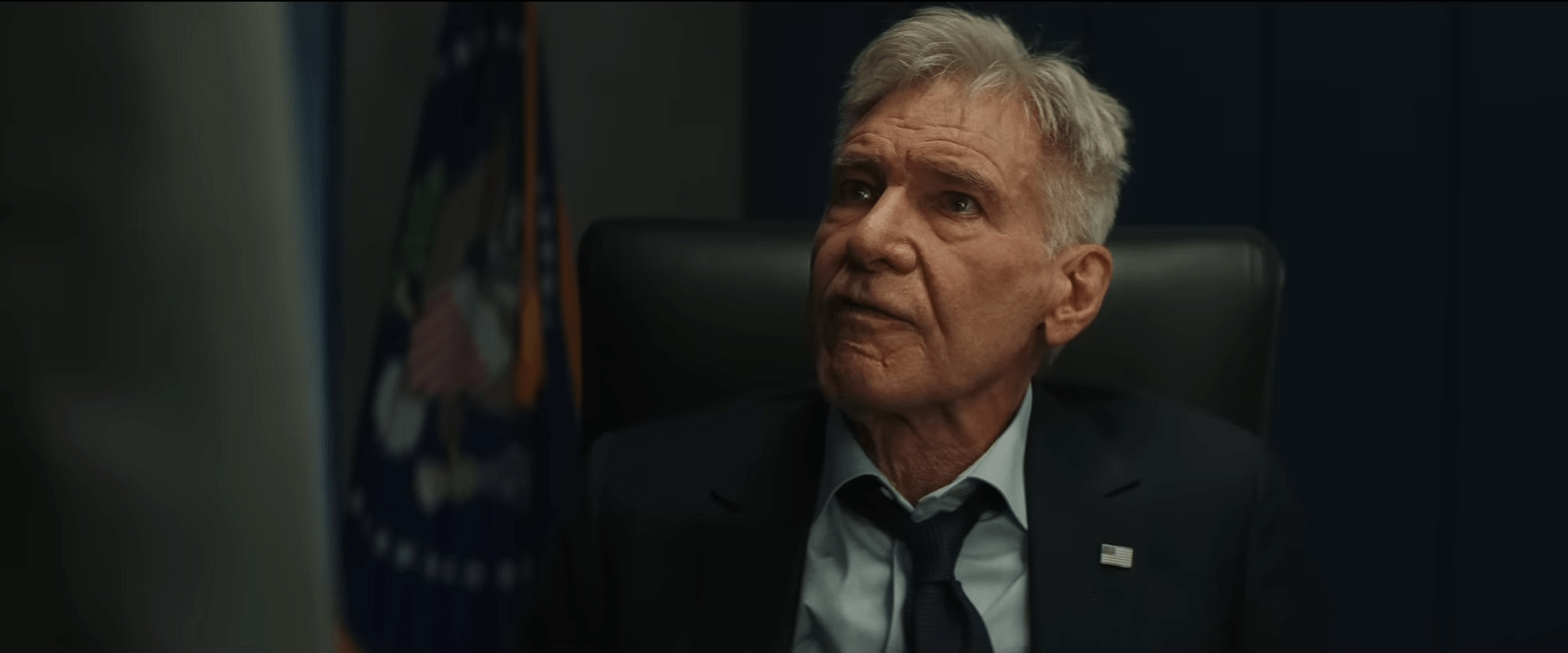
At the center of this political chaos stands Thaddeus “Thunderbolt” Ross, now upgraded to the President of the United States. His long-running presence in the MCU gives this plotline added weight, and viewing him from a position of ultimate authority creates interesting possibilities.
Then there’s the villain – someone intent on creating conflict between America and Japan – and caught between all of this is Sam Wilson, our new Captain America.
Sam is still struggling with a question that has followed him since Endgame: Why him? Why was he chosen to be Captain America? Even after an entire web series dedicated to this identity conflict, the film continues exploring it, and you can feel Sam’s internal hesitation.
But one thing remains consistent: the man can give brilliant long speeches. If superheroing ever stops working out, I truly think a political career is waiting for him.
Red Hulk Is Here… But Barely
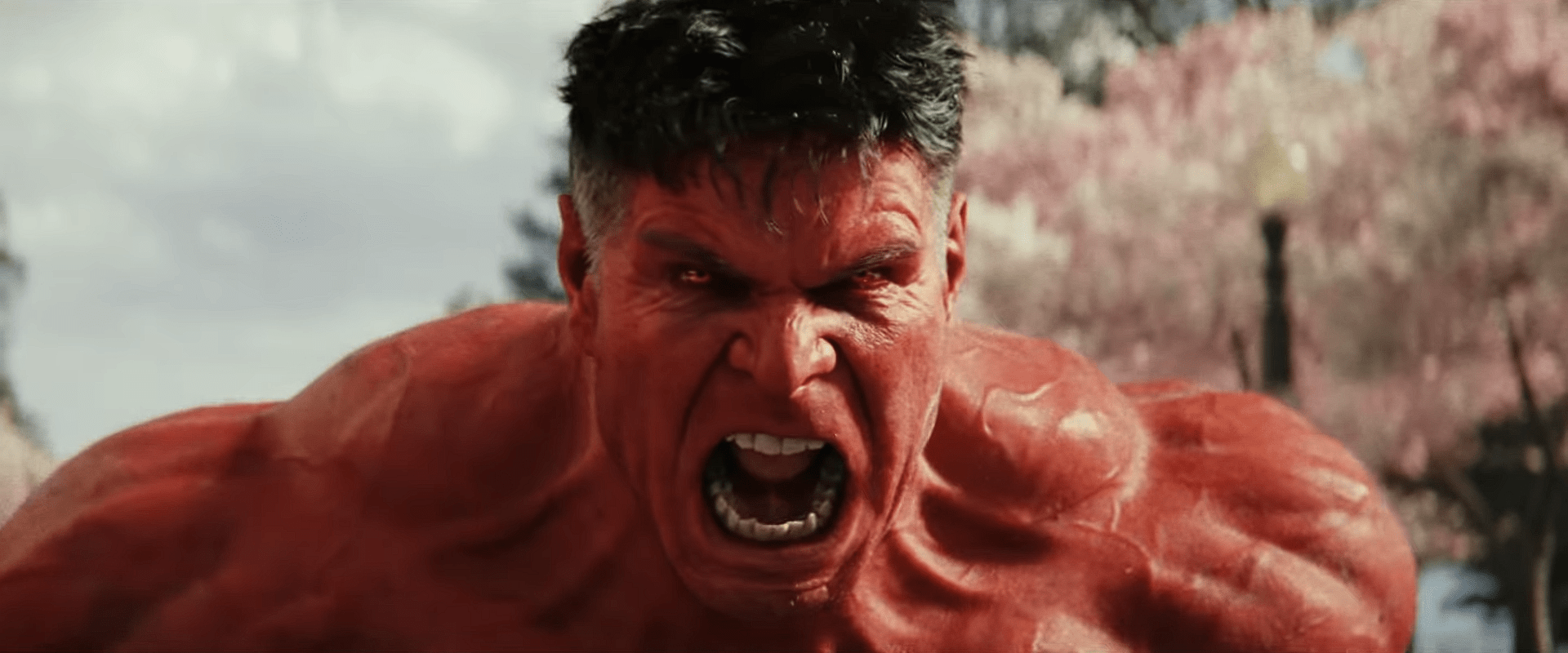
Marvel heavily teased Red Hulk in the marketing. And honestly, they positioned it as one of the big highlights of the film.
But let me be blunt: Red Hulk appears for barely 10–15 minutes.
If you’re entering the theatre just for him, you might want to lower expectations.
That said – when the Red Hulk scenes finally arrive – they are genuinely exciting. The CGI on him is solid, the scale feels intense, and the moment of Captain America going up against a hulking superpowered monster despite being just a regular human with tech… that clash is undeniably fun.
Action That Pops – With a Side of Video-Game CGI
The action is, without question, one of the film’s strongest elements.
There are moments that simply click:
- Sam Wilson landing with supersonic force, sending a shockwave through the ground.
- Captain America flying through a maze of fighter-jet missiles, weaving between them with breathless precision.
- And of course, Captain America vs. Red Hulk, which genuinely brought back that cinematic thrill Marvel is capable of.
However, not all the effects hold up. There are several places where Sam’s body movements look like a video game avatar, breaking immersion. And while the film borrows choreography styles from Winter Soldier, the execution doesn’t quite reach that standard.
A Spy Thriller Without the Thrill
One of the film’s biggest weaknesses is the handling of suspense and mystery.
Simply put: There is none.
The film never lets the audience think, interpret, or participate. Instead, it spoon-feeds every piece of information with the urgency of a parent feeding cereal to a toddler. As a result, moments that should feel layered or clever come across as flat and predictable.
I literally predicted an attack scene two seconds before it happened – and not because I’m a genius, but because the film uses the exact cues Winter Soldier used a decade ago, without any reinvention.
Production Troubles You Can Feel
Throughout the movie, I felt the weight of behind-the-scenes chaos. We all heard the reports:
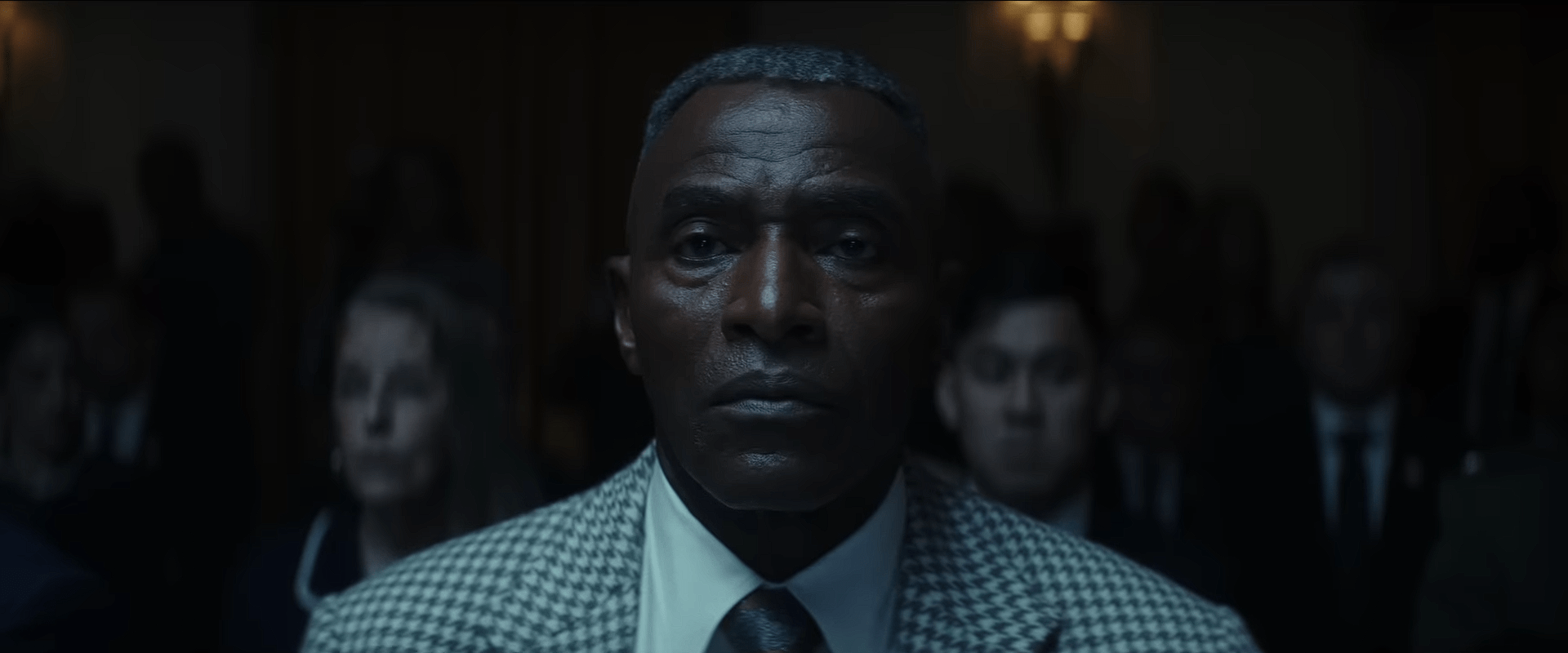
reshoots, delays, script additions, and even Giancarlo Esposito being added late into production.
And when you watch his role, you can tell. If you’ve seen him deliver chilling performances in Breaking Bad or The Boys, you’ll instantly notice the difference. Here, the writing gives him almost nothing. He’s present, but never impactful.
This inconsistency affects the overall flow. Important storylines appear, fade, and reappear without rhythm. Characters feel underdeveloped. Emotional beats don’t land. It’s a film patched together rather than confidently told.
The Pain of a Captain America Fan
As someone who genuinely loves Captain America – he’s my favorite superhero, and I’ve loved every previous entry – this one hurts.
Not because it’s terrible, but because I could see the potential shining beneath the surface.
The premise was solid. The themes were meaningful. The political angle could have been sharp. Sam Wilson’s emotional journey could have been deeply inspiring.
But the film never dives beneath surface level. It simply doesn’t trust its own depth – or its audience.
Worse, some scenes linger unnecessarily. There are entire sequences where characters enter facilities, talk to guards, walk down corridors… and none of it adds suspense. It’s just filler. Scenes that could vanish without affecting the story at all.
The Final Verdict: A Popcorn Movie and Nothing More
By the time I reached the end, I found myself saying something I never thought I’d say about a Captain America film:

“This is fine… but it should have been so much more.”
If you watch Brave New World as a time-pass entertainer, it works. You’ll enjoy the world politics, the action, the Red Hulk fight, the big speeches, and the popcorn-worthy spectacle. Some ideas are fun, some moments shine, and nothing feels offensively bad.
But if you walk in expecting the emotional power of Winter Soldier, or hoping for a bold reinvention of Sam Wilson’s Captain America arc – this film will disappoint you.
The ending, especially, felt mishandled – almost like the filmmakers themselves weren’t sure what statement they wanted to make.
In the end, Brave New World becomes another forgettable MCU installment, the kind that entertains you for two hours and leaves your mind the moment you step outside.
Rating: 2.5/5
A scattered yet enjoyable popcorn entertainer that never realizes its full potential.