Before I watch Blackmail, directed by Mu Maran, I expected a tight, nerve-wracking thriller that would grip me from start to finish. The film opens with the kind of tension that immediately suggests a storm beneath the surface – an affluent family, a sudden accident, a heated quarrel, and then, like a blow to the gut, a missing child. It’s a setup that naturally pulls the viewer into the chaos, and I admit, I leaned forward, curious to see how the film would use this emotional anchor.
But soon, the narrative cuts sharply to a flashback with the now unavoidable disclaimer – “It happened a few days earlier.” That is when the film confidently shifts into its nonlinear rhythm, signalling that this isn’t going to be a straightforward abduction thriller. While I always appreciate nontraditional storytelling, Blackmail uses this structure so aggressively that the emotional core occasionally slips away.

A Multi-Layered Plot with High Stakes Everywhere
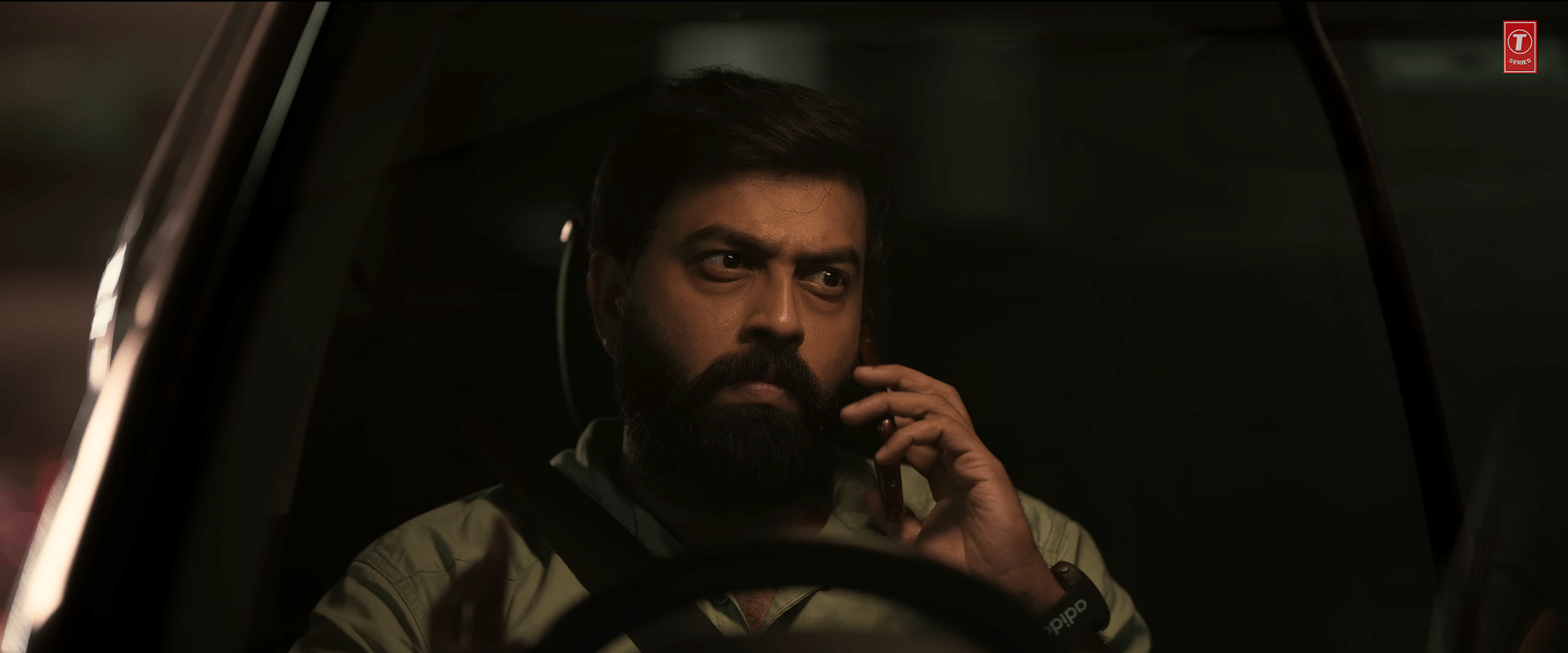
At the heart of the film is G. V. Prakash Kumar, playing a medical delivery boy whose life is already hanging by a thin thread. He drives a van loaded with pharmaceutical goods, but one day the van mysteriously disappears. His boss reacts with cold ruthlessness: the goods cost 50 lakh rupees, and he demands one simple solution – either return the items or pay the price. To make matters worse, he kidnaps the protagonist’s girlfriend, turning the situation into a desperate race to gather an impossible amount of money.
On another side of this web sits Bindu Madhavi, whose seemingly settled marital life is disrupted when her ex-lover resurfaces with a threat. He demands 2 crores, threatening to expose their past relationship to her husband. When she refuses, he resorts to planning a kidnapping of her daughter, hoping to use the child as leverage. It is in this hazardous intersection of desperation, threats, and emotional breakdowns that the child goes missing.
And this is where the film’s hook is placed: Who kidnapped the child? What happened to her? How are these disparate threads connected?

The concept is strong, and on paper, the multi-angled tension could have shaped a gripping thriller. The first half genuinely benefits from this structure – the twists feel unexpected, the stakes feel real, and the pacing is energetic. I enjoyed watching how the film jumped between characters, layering small incidents that slowly built towards something bigger.
When Too Many Twists Ruin the Game
Unfortunately, the second half starts behaving like a magician who wants to prove that he can pull out endless rabbits from a single hat. Every few minutes, another twist appears. Then another. And another. Instead of heightening the suspense, they dilute it. I found myself gradually disconnecting from the story not because the twists were poorly imagined, but because they arrived without emotional weight.
A kidnapping – whether of a woman or a child – works only when the audience constantly fears the consequences. Here, the film focuses more on who abducted than what might happen to the victim. The fear factor dissolves. The emotional stakes blur. The tension that should have held the narrative together simply loosens.
By the time the film tried to tie all its threads together, I felt like a viewer being pulled from one revelation to another without any meaningful engagement. Even the clever moments of the first half lose their charm because the second half doesn’t match their depth.

A Story Trapped Within Its Own Limited World
Another noticeable flaw lies in the film’s strangely restricted universe. For a story involving missing people, crime, extortion and multiple players, the narrative oddly revolves around just ten characters. No matter where the missing child goes, no matter how far the plot seems to move geographically, the child or a clue ends up with one among the same limited individuals. It feels as if the script bends reality simply to maintain convenience, and that compromises the believability of several moments.
Even character introductions feel misplaced. Some are presented early with the promise of significance, only to vanish completely until the climax, where they suddenly reappear as if the writers remembered them at the last minute. It results in narrative whiplash rather than narrative satisfaction.
A Strong First Half That Sets Up a Better Movie Than What Follows
There is no denying that Blackmail had the potential to be a tightly woven thriller. The first half proves that the director knows how to create intrigue. The pacing works, the twists land, and there is genuine curiosity about how the threads will intersect.
But the second half steadily erodes that foundation. The screenplay loses its cohesion, the emotional stakes never deepen, and the sheer volume of twists eventually feels like noise. Instead of rising to a crescendo, the film collapses into mediocrity precisely when it should have elevated itself.
Final Verdict
Blackmail begins like a confident thriller and builds momentum with an engaging first half. But its insistence on stacking twists without emotional grounding causes the film to unravel in its second half. With a bit more restraint, consistency, and depth, this could have been a far more compelling experience. As it stands, it remains an average thriller that delivers sparks but never a full flame.
Rating: 2.5/5