When a filmmaker like Mari Selvaraj announces a sports drama rooted in the real struggles of a kabaddi legend, expectations naturally begin to soar. And mine did too. Bison Kaalamaadan arrives with the promise of emotional density, caste-political commentary, and the triumphant arc of a man who rose from an unnoticed life in a southern village to becoming an Arjuna Award–winning athlete. On paper, this is a film that should have delivered a knockout. But on screen, the experience becomes a long tug-of-war between a deeply compelling life story and a frustrating narrative structure that constantly dilutes its emotional potential.
A Life Worth Telling: The Remarkable Real Story
The film is inspired by the real-life journey of kabaddi player Manathi Ganesan, whose story is nothing short of cinematic gold. Born into an ordinary family in a southern district, he endured hardships that would have crushed most people. He slowly rose from being a local kabaddi player to a state-level sensation, then earned a place in the Indian team, and eventually received the prestigious Arjuna Award.
This is the kind of story that fits beautifully into the evergreen sports-drama formula – hardship, resilience, triumph. And when a filmmaker like Mari Selvaraj takes on a story intertwined with caste dynamics, the possibilities for a gripping, meaningful narrative are enormous. That combination alone made me walk into the theatre with genuine anticipation.

- A Life Worth Telling: The Remarkable Real Story
- A Promising Setup Undone by a Structural Misfire
- Suspense Without Suspense: The Unintended Consequence
- Repetition, Repetition… and More Repetition
- Characters That Shine – and Characters That Shouldn’t Have Existed
- Caste Politics: Powerful Themes, Weak Execution
- Where the Film Should Have Soared but Stumbles Instead
- Final Verdict: A Potentially Powerful Film Undone by Its Narrative Choices
A Promising Setup Undone by a Structural Misfire
Unfortunately, the very foundation of the storytelling is where Bison Kaalamaadan begins to fall apart.
The film opens with what is essentially the pre-climax sequence: the Indian team is preparing for their high-stakes match against Pakistan in Japan, and our protagonist is already standing there as a key player. The moment this was revealed, a significant portion of the narrative tension dissolved instantly.
Because when the film then jumps into an extended flashback, almost everything that follows feels predictable – even unnecessary – since we already know exactly where the character ends up.
All the obstacles, all the threats, all the setbacks in the flashback portions lose their bite. A character might be shown dangerously injured, and for a moment I found myself thinking, “Oh no, will this stop him from playing?” But in the very next second, the rational mind chimes in: Of course not – he’s already in Japan in the first scene, perfectly fine, playing for India.
That accidental self-spoiler kills the film’s emotional momentum over and over.
Suspense Without Suspense: The Unintended Consequence
There are several points where the film clearly wants me to feel anxious for the protagonist:
- Will caste-based discrimination halt his progression?
- Will political hostility derail his career?
- Will a violent clash injure him?
- Will he get dragged into a legal trap that destroys his opportunity?
But none of these questions work, because the film itself has already answered them in the opening scene.
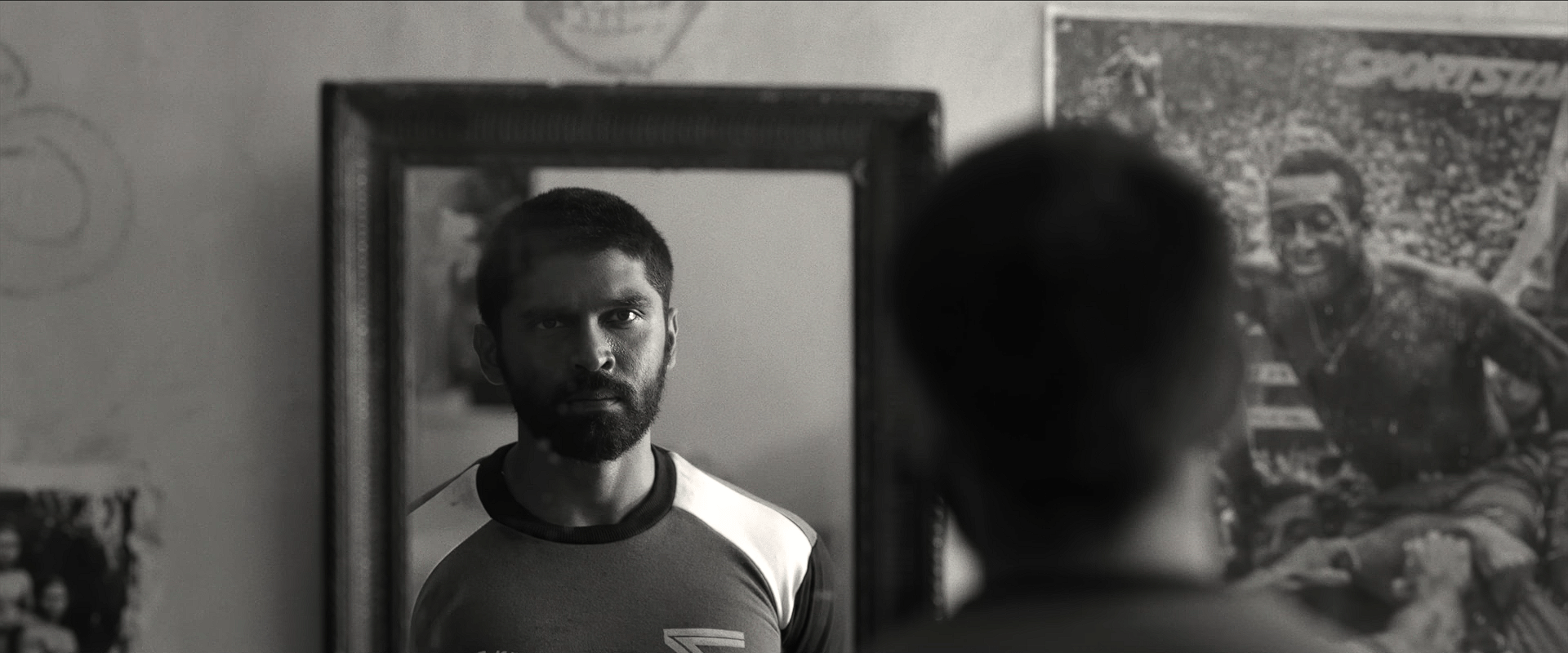
Even emotional subplots – like the well-being of his father or the safety of his family – are robbed of impact. We see the entire family alive and comfortably watching his match on television in the Japan sequence. So anytime the flashback tries to create danger around them, the tension simply doesn’t stick.
It’s a classic example of how a single structural choice can undermine an otherwise powerful story.
Repetition, Repetition… and More Repetition
If the structural misfire weakens the emotional stakes, the repetitive scenes further stretch the film’s runtime into an endurance test.
One recurring pattern absolutely dominates the film:
- Pasupathi refuses to let the boy play.
- The PT master arrives and pleads with him.
- The boy eventually plays.
- Another conflict.
- Pasupathi refuses again.
- Someone convinces him again.
And this cycle just goes on and on.
At one point the hero himself declares, “I won’t play anymore, father,” and walks away – and even that moment feels like another variation of the same loop, not a turning point.
The repetitiveness doesn’t stop there. Whenever the hero is pushed down, he conveniently falls into a gutter – four separate times. Whether it is intended as symbolism or dark humor or artistic metaphor, it ends up looking more like an oddly specific running gag than a meaningful visual cue.
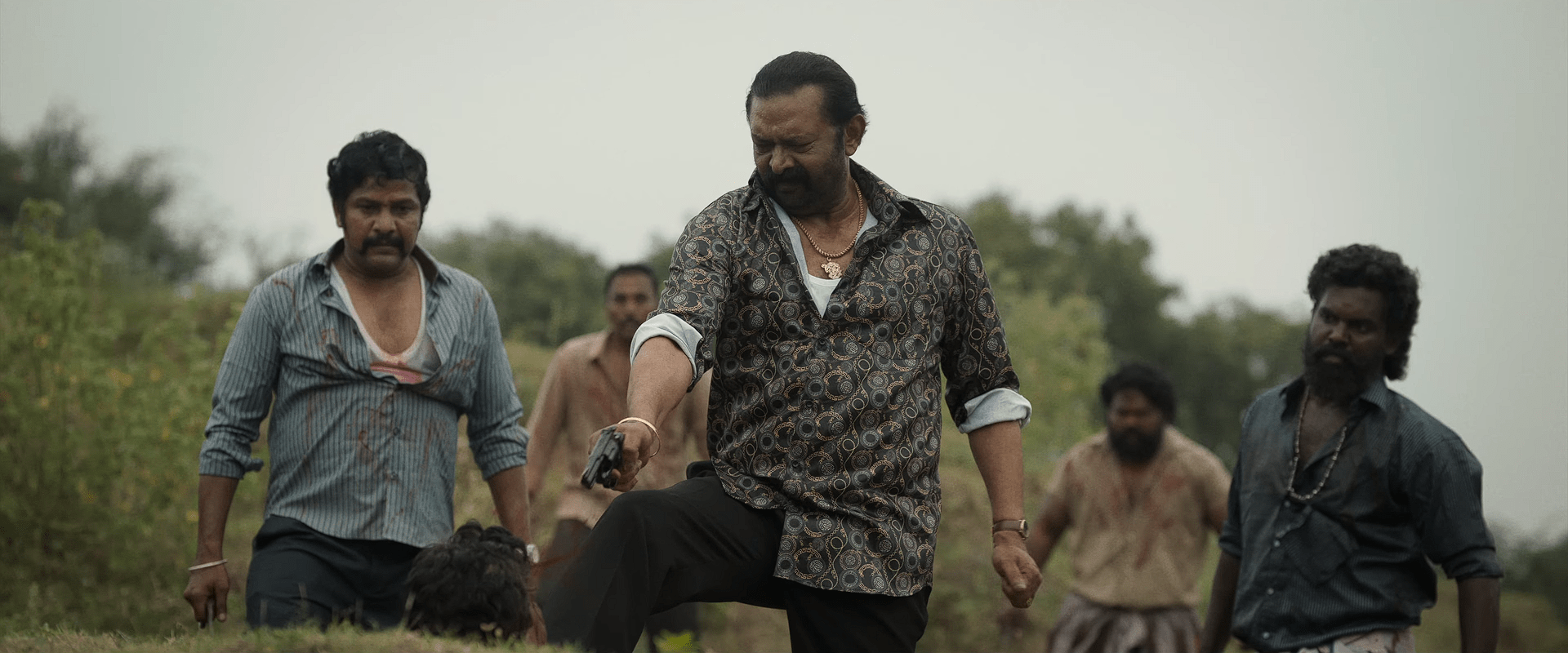
I found myself wondering why such scenes were left untouched during editing, because they drag an already lengthy film into unnecessarily slow territory.
Characters That Shine – and Characters That Shouldn’t Have Existed
Not everything suffers, though – a few characters are genuinely well-written.
Pasupathi, in particular, delivers a strong performance. His character’s moral dilemmas, emotional anxieties, and rigid decisions are layered well. Similarly, Madhan, the PT master, carries both sincerity and weight, grounding the film whenever he appears.
But then comes the unnecessary baggage.
The heroine contributes almost nothing to the central arc. Her brother fares even worse – his sole purpose appears to be getting beaten up every time he enters the frame. Neither of these characters add narrative value, emotional depth, or structural importance. Instead, they occupy space that could have been used to tighten the story.
The same goes for two abruptly inserted melodramatic characters – Azhagam Perumal’s dying character with a rope around his neck and a girl unable to walk. Their scenes feel completely detached from the central story, almost as if they were pulled in from an entirely different script.
Caste Politics: Powerful Themes, Weak Execution
One of the film’s strongest selling points is its commitment to engage with the caste tensions prevalent in many southern districts. At the beginning, the film boldly declares its setting: a land soaked in bloodshed and dominated by caste riots.
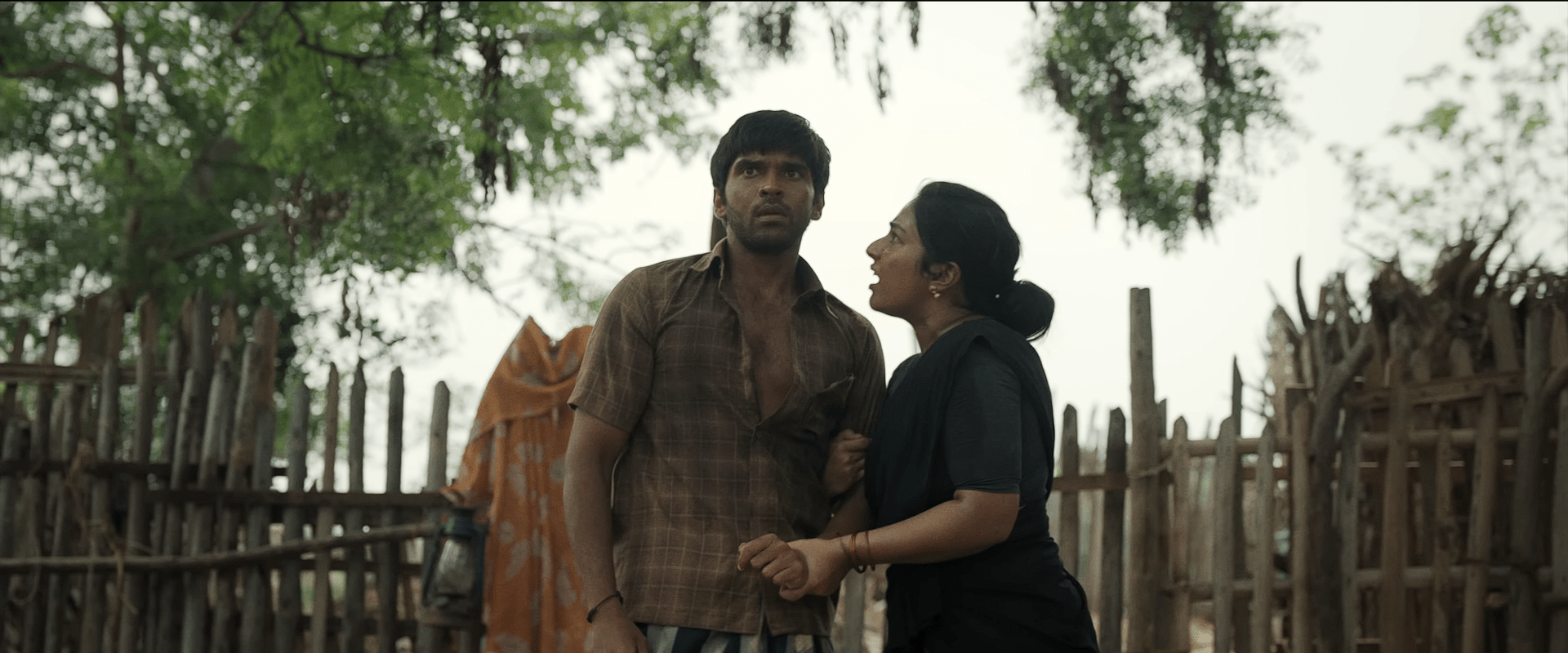
This is potent material, but the execution is surprisingly inconsistent.
Both caste leaders – who initially appear severe and ideological – are later shown in somewhat positive shades. Their self-criticizing moments are actually refreshing, but they don’t serve any real purpose for the story’s central conflict. Neither side becomes a genuine threat to the hero’s journey. If anything, they explicitly reassure him that no harm will come from their communities.
As a result, the film repeatedly hints at caste-driven conflict without ever fully committing to it.
And then there’s a scene that unintentionally slips into dark comedy: a leader attempts to kill someone, and while the victim lies half-dead, one man casually says, “Leave him, let’s go.” Another insists they should finish him off. The leader returns and announces, “We will cut and kill again.”
This entire section feels absurdly cartoonish, even though it was meant to be intense.
Moments like this disrupt the tone and weaken the larger message Mari Selvaraj intended to deliver.
Where the Film Should Have Soared but Stumbles Instead
A sports drama usually has a built-in emotional arc. Even a moderately executed one tends to work because the genre itself creates natural tension – training montages, internal struggles, external obstacles, and that final glorious match.
But Bison Kaalamaadan struggles to tap into that reliable formula because it keeps working against itself.
- The story begins at the wrong point.
- The flashback fails to build suspense.
- Repetitive scenes drain the narrative energy.
- The editing lacks precision.
- Unnecessary subplots dilute the emotional focus.
This is especially disappointing because the ingredients for a strong film are all present: a real hero, a village-to-national glory arc, powerful caste-political undertones, thematic depth, and a proven director.
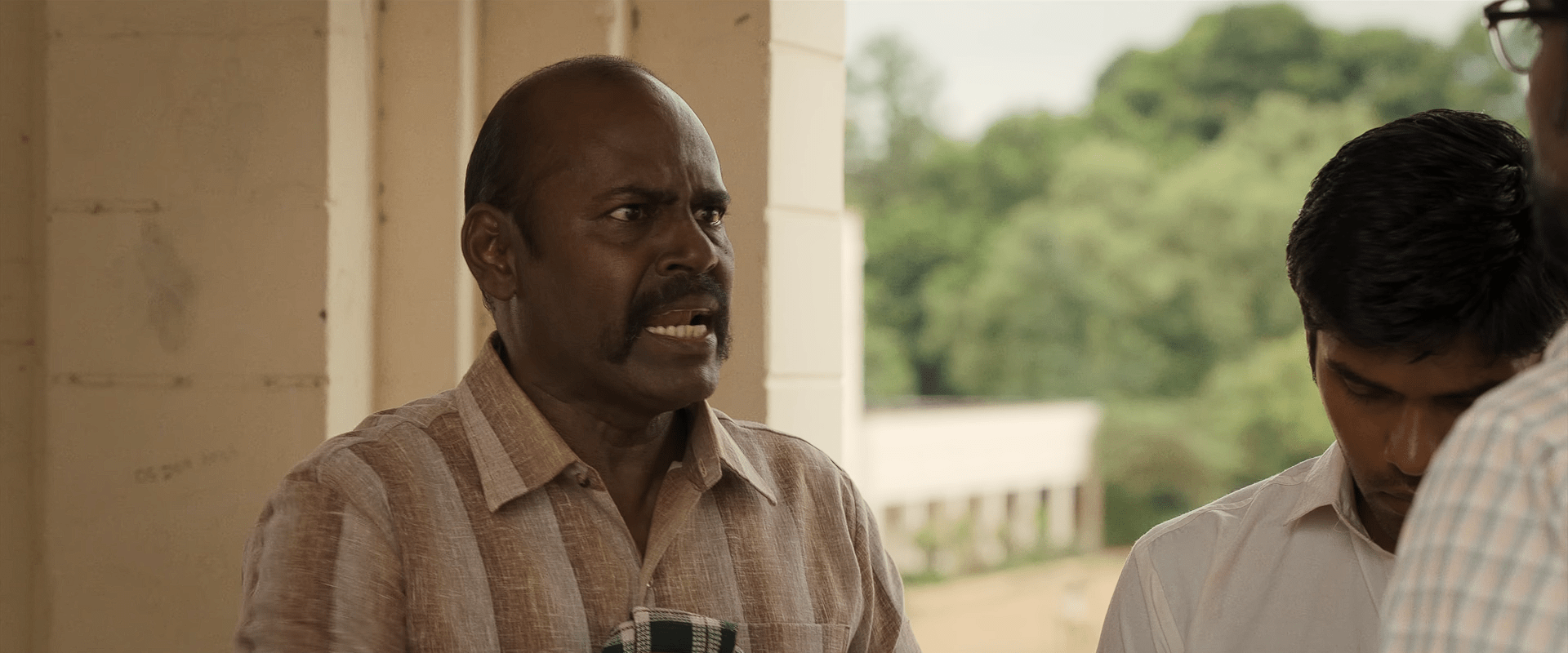
What the film ultimately suffers from is an inability to translate its rich material into gripping storytelling.
Final Verdict: A Potentially Powerful Film Undone by Its Narrative Choices
By the time the end credits rolled, my overwhelming feeling was simple: this should have been a far better film. The subject matter is extraordinary, and the filmmaker is talented enough to elevate it. But Bison Kaalamaadan becomes a case study in how structural choices, repetitions, and misplaced emotional beats can flatten a story that deserved more.
It’s not a bad film – but it is undeniably an average one, especially considering what it could have been.
Rating: 2.5/5