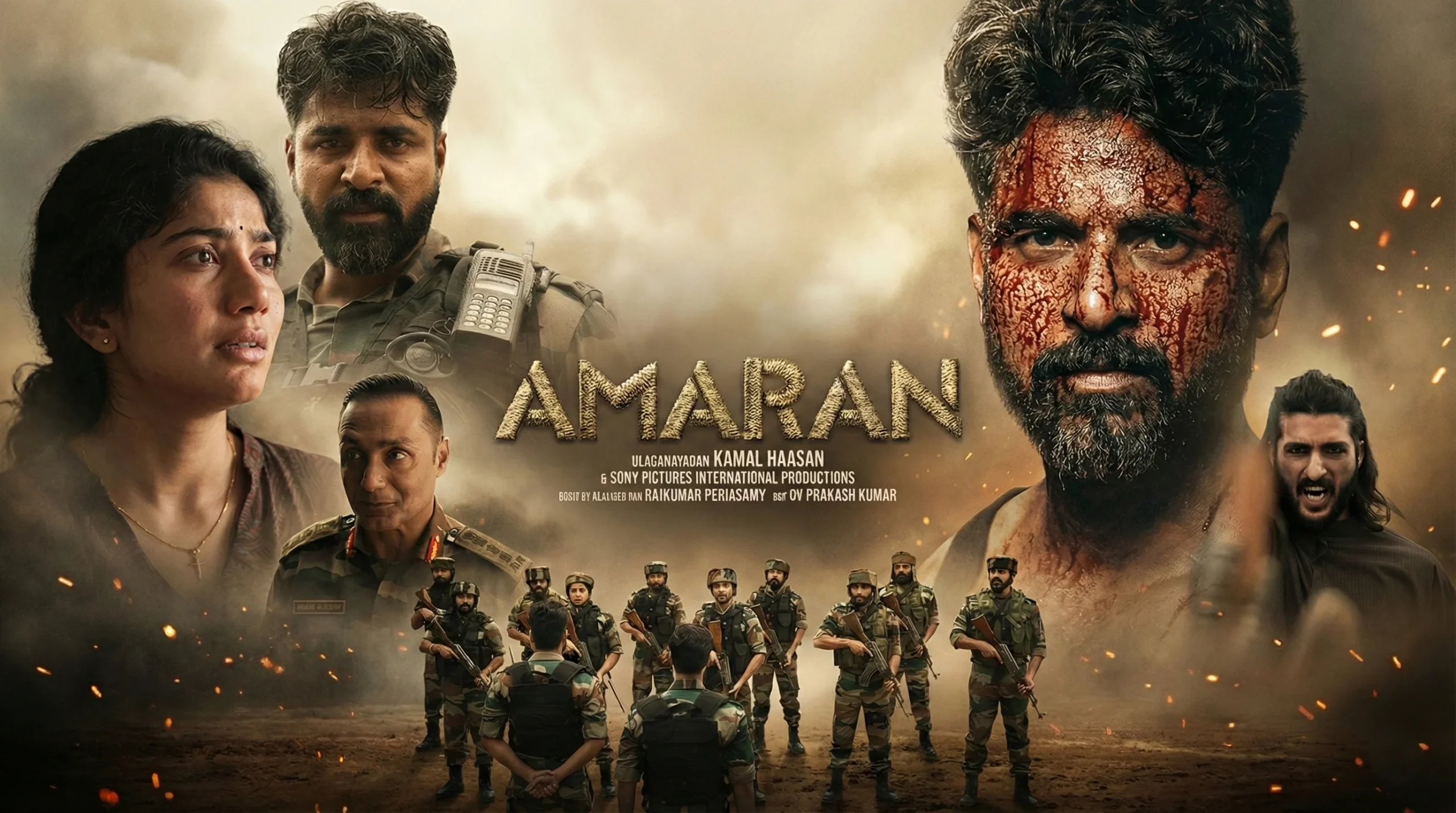
Some films attempt spectacle. Others chase sentiment. But Amaran positions itself in a space where reality, memory, and cinematic reimagination meet – an intersection that can easily become uneven, yet when approached with sincerity, results in something deeply affecting. As I experienced the world that director Rajkumar Periasamy created, I realised that Amaran is not just another military drama; it is also a personal account of love, longing, and loss as seen through the eyes of a woman who witnessed a hero evolve before her.
The film takes inspiration from the life of Major Mukund Varadarajan, a real officer who sacrificed himself for the country. The director does not recreate his life verbatim; instead, he reimagines portions, infuses cinematic masala, and modifies personal details to craft a dramatic narrative. Because the story unfolds from the perspective of Hindu Rebecca Varghese – played with remarkable grace by Sai Pallavi – the emotional lens always remains intimate, personal, and grounded.
A Love That Shapes a Hero
At the heart of Amaran is a young man, Sivakarthikeyan as Major Mukund Varadarajan, who enters the film as a college student with a single-minded dream: he wants to join the Indian Army as an officer and serve the nation. I found this early portion surprisingly soft-toned, especially because the film later transitions into rugged terrain. His ambition leads him into rigorous exam preparations, and at this time, he meets the woman who becomes central to his life.
Their romance is narrated with simplicity. Both families learn about the relationship, and while the hero’s side accepts it to some degree, the heroine’s family refuses. This emotional setback is handled with maturity in the film, and it sets the stage for Mukund’s transformation into a soldier. Soon after this domestic conflict, he gets selected, undergoes training, and earns a posting in Kashmir – marking the beginning of the film’s central military arc.
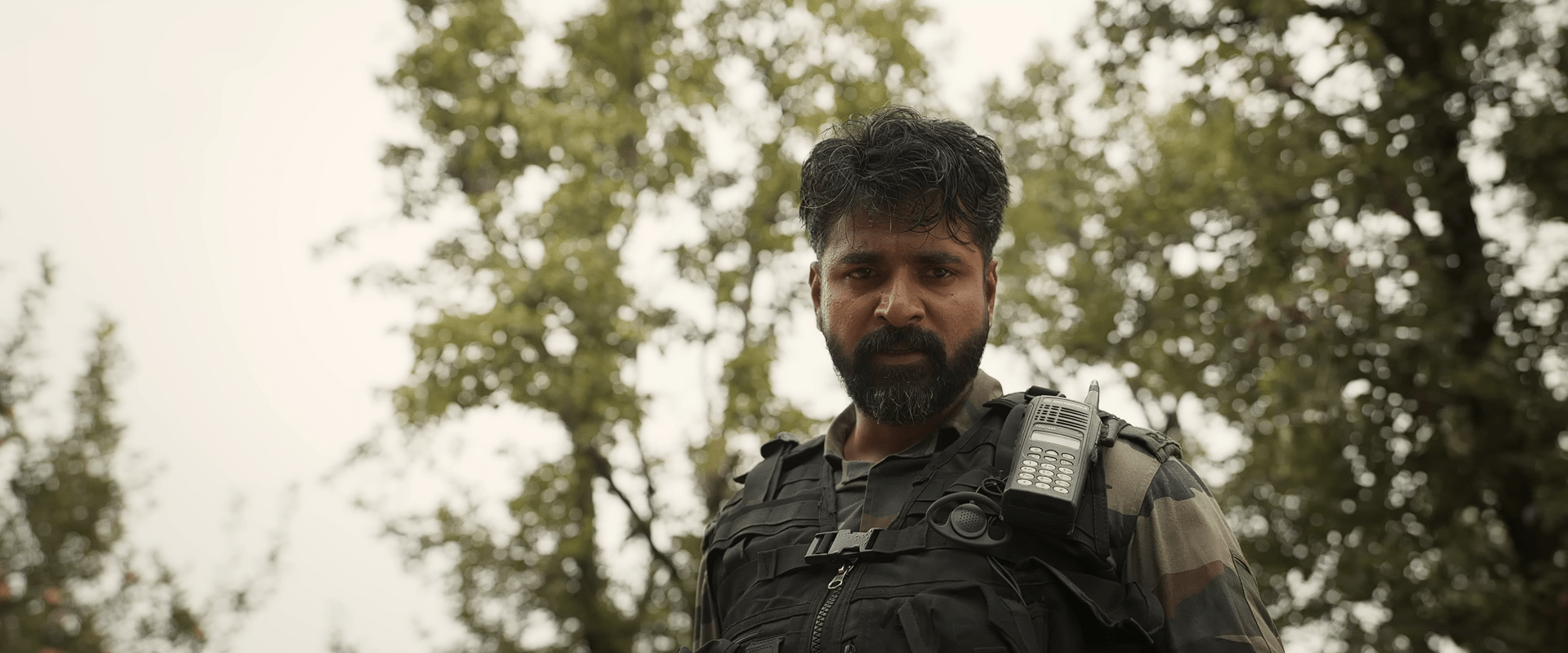
From this point, the story shifts gears as he enters a world where duty surpasses desire, and survival depends on instinct, strategy, and courage.
- A Love That Shapes a Hero
- The Limits of Real-Life Stories and the Challenge of Climax Familiarity
- Where the Film Falters: Excess Length and Inconsistent Execution
- Intelligence Work and Tactical Gaps
- The Uniform Conundrum: An Unintentional Quirk
- Sai Pallavi’s Extraordinary Performance
- A Decent Film That Could Have Been Exceptional
The Limits of Real-Life Stories and the Challenge of Climax Familiarity
One persistent challenge that I felt while watching Amaran was the sense of inevitability surrounding the climax. Because the film is based on a real-life martyr, I already knew how the story would end. This reduces suspense, but it also elevates the responsibility placed on the film’s emotional and cinematic execution.
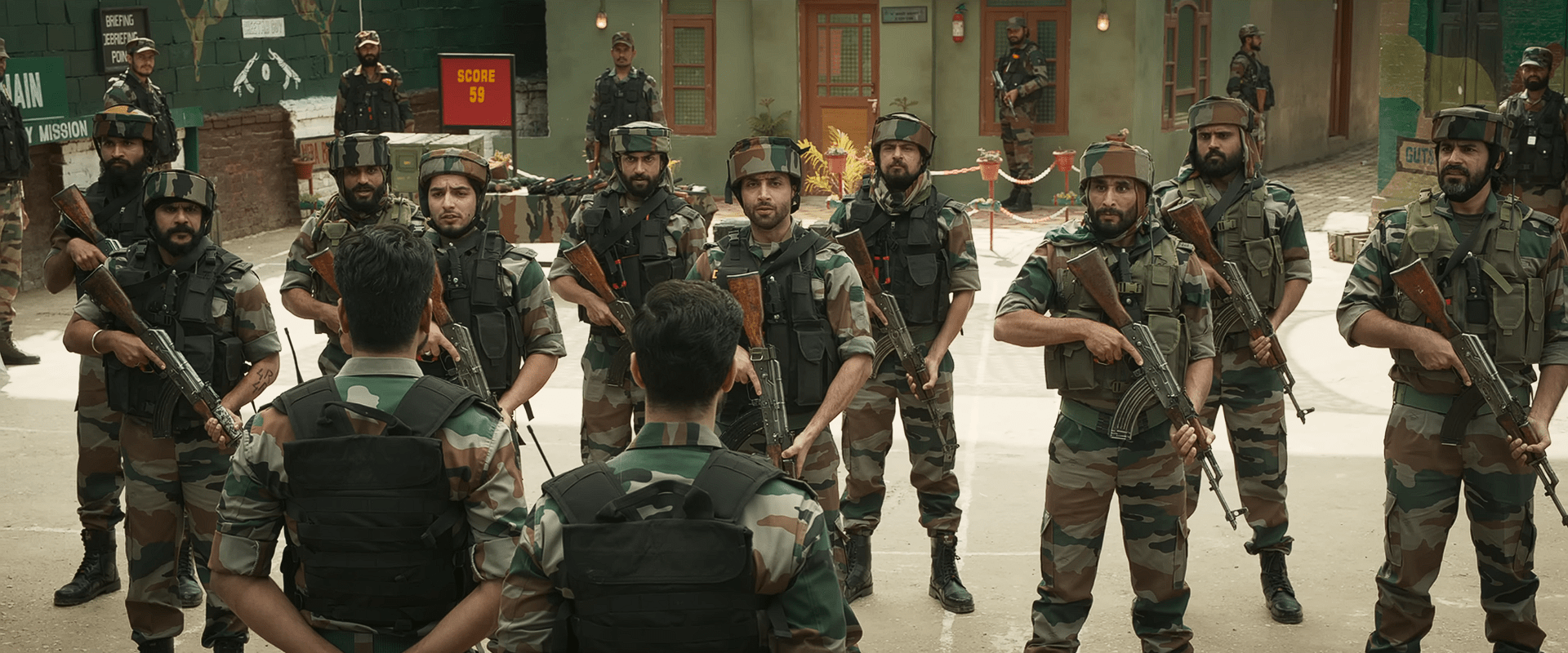
To my surprise, the director manages to retain substantial engagement despite these constraints. Military films inherently operate within boundaries: one dress code, one music palette, specific duties such as counter-terrorist operations and rescue missions. Within these confines, Amaran still creates dramatic tension and several gripping moments. I genuinely appreciated the director’s effort here, because maintaining interest when the audience knows the conclusion is no easy feat.
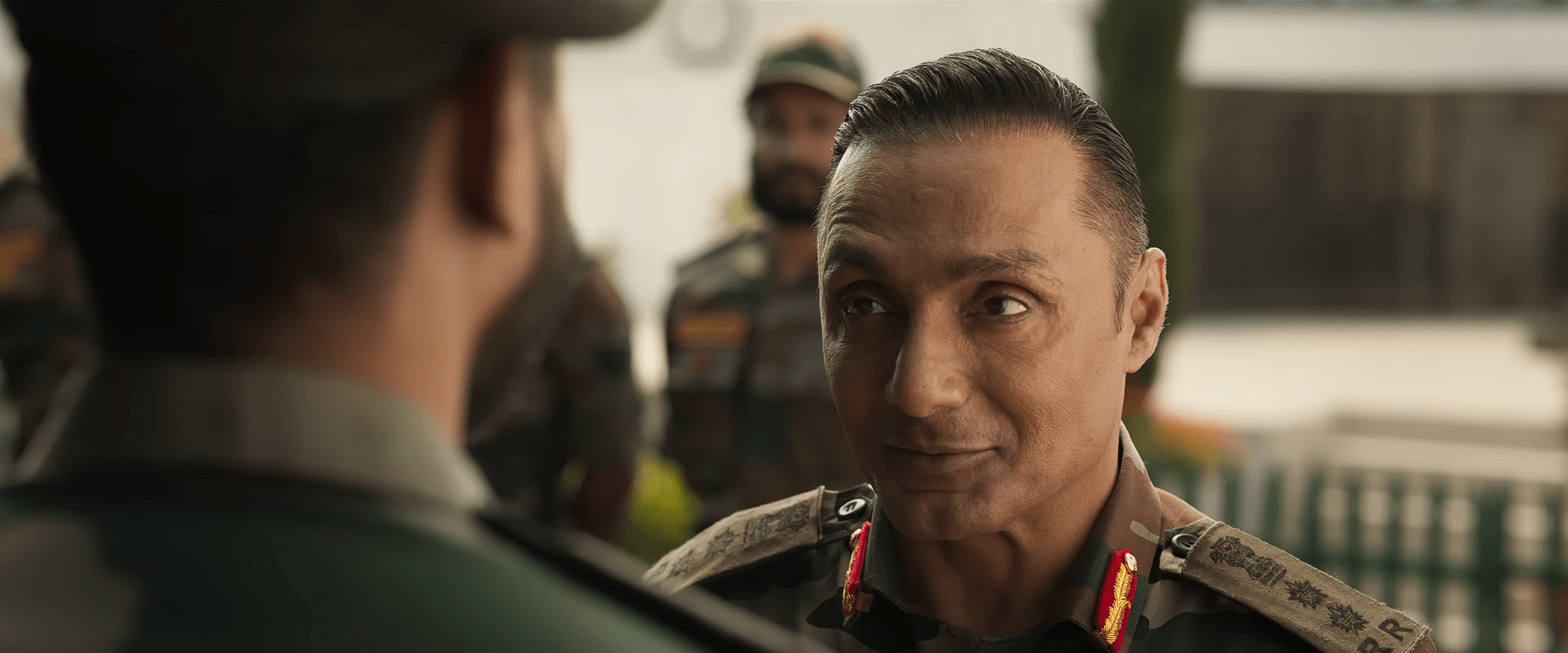
Where the Film Falters: Excess Length and Inconsistent Execution
While the film has strong intentions, I couldn’t ignore certain issues that dilute its impact.
One major drawback is the length of scenes. Many sequences – especially the fight scenes – stretch far beyond what is necessary. I found myself thinking that if the film had trimmed at least fifteen minutes, the pacing would have tightened and the emotional intensity would have strengthened. Sometimes combat scenes felt like they would never end, weakening their urgency.
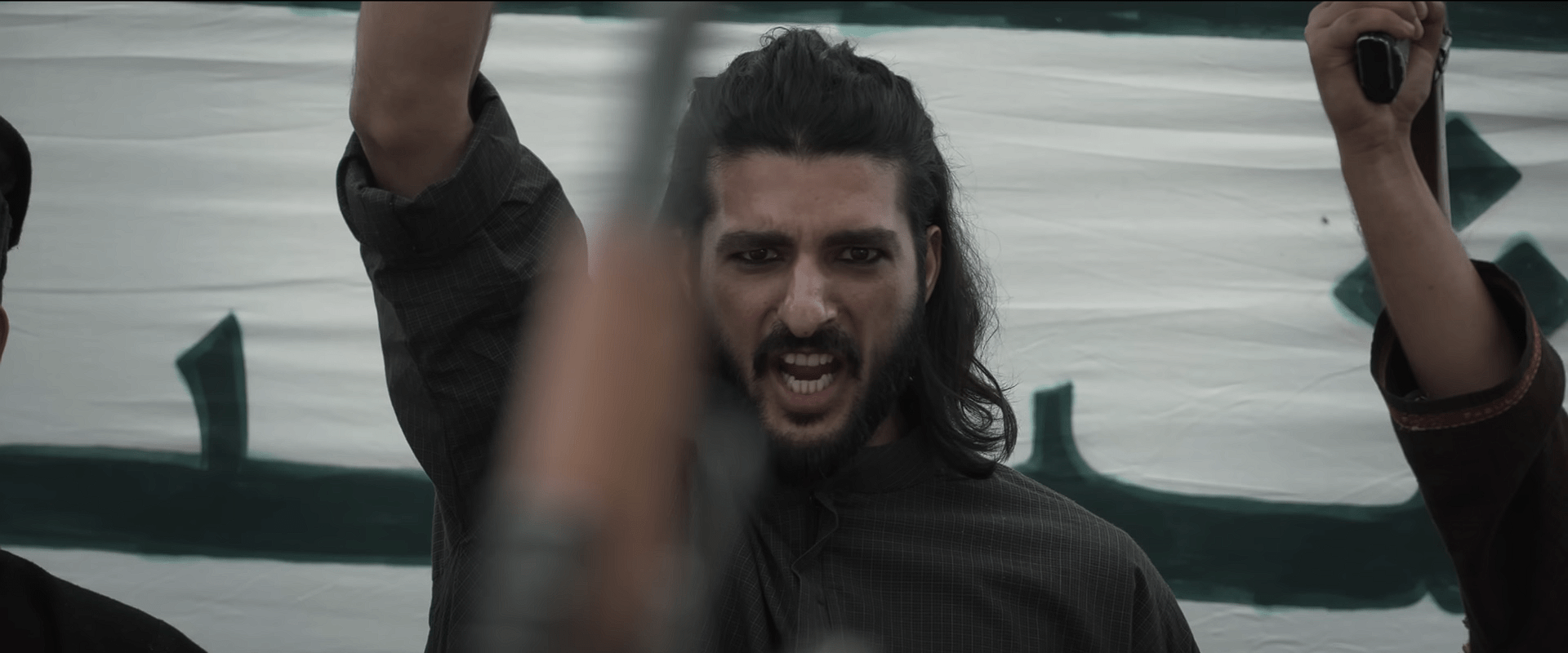
I also felt the film missed an opportunity to build a strong villainous presence. In a film like Thuppakki, the moment the antagonist appears, the audience instinctively wants the hero to defeat him. That sharp edge is missing here. If the film had crafted such a compelling adversary, the payoff would have been much more satisfying.
Intelligence Work and Tactical Gaps
The film attempts to showcase intelligence operations but only scratches the surface. In real counter-insurgency work, soldiers mingle with civilians, gather information, insert spies, and strategically identify enemies before engaging. The film includes just one scene where they send a spy inside, and that too feels brief. I was hoping for more detailed representation of these behind-the-scenes operations, as these elements often make military dramas more layered and insightful.
Another confusing moment arrives during a night-long raid. The team fights an extended battle in darkness. Suddenly, as the terrorist escapes and runs, the film cuts to daylight. I couldn’t decipher whether he ran the entire night until morning or if the timeline simply jumps. Such transitions take away from the otherwise serious tone of the narrative.
Even more puzzling is a moment when a major terrorist ends up unarmed and cornered. Instead of arresting and interrogating him – which could have yielded critical intelligence – they eliminate him in an encounter-style finish. I found myself questioning the narrative logic, because this felt inconsistent with the film’s earlier portrayal of methodical intelligence work.
The Uniform Conundrum: An Unintentional Quirk

While the film tries to represent military culture respectfully, a small detail unintentionally slips into humorous territory. Traditionally, older Tamil films dramatized returning soldiers arriving in full uniform even during casual visits to their hometowns. Amaran replicates this styling; every time Sivakarthikeyan’s character returns to his village, he appears in full uniform. Curiously, when he goes back to duty, he travels in casual clothes. This reversal felt funny and slightly distracting.
Sai Pallavi’s Extraordinary Performance
If there is one unquestionable triumph in Amaran, it is Sai Pallavi’s casting. I truly believe that if the script gave her 50%, she returned 100%. Her smallest expressions – subtle reactions, quiet moments, restrained emotions – carry immense weight. She elevates the film’s emotional quotient with effortlessness. Because the story unfolds from her viewpoint, her performance becomes the backbone of the narrative, and she handles that responsibility with impressive depth.
Sivakarthikeyan too delivers a committed performance. His physique suits that of an army man, and he brings sincerity to the role. Yet I felt that he remains weighed down by factors outside his control. The script limits how much he can stretch, and the film sometimes mirrors the sentiment: “even if you go to Kashi your karma won’t disappear” – a line that metaphorically reflects the actor’s struggle to escape familiar on-screen patterns.
A Decent Film That Could Have Been Exceptional
By the time the credits rolled, I found myself reflecting on the potential the film held. If the screenplay had given more weight to the terrorist zone, expanded the intelligence work sequences, and delivered a sharper, crisper climax, this film could easily have reached a higher level of cinematic excellence.
That said, Amaran remains a decent and respectable watch, especially for families. It balances emotion, action, and patriotism, even if some aspects feel stretched or simplified. Despite its imperfections, the sincerity at its core keeps the film afloat.
Rating: 3/5