When I walked into the theatre to watch Aan Paavam Pollathathu, directed by Kalaiarasan Thangavel, I already expected the murmurs. A film that openly declares it is told from “the perspective of men” is bound to provoke reactions in today’s hyper-aware cinematic climate. But what I didn’t expect was how carefully, and sometimes cleverly, the film navigates a subject that could have gone off the rails at any moment. It becomes a social drama that wants to comment on freedom, responsibility, and the blurred lines between the two – while also functioning as a relationship story that attempts to stay grounded even when the messaging becomes a bit heavy-handed.

A Marriage Between Ideals and Reality
The story follows a familiar setup. The hero is an ordinary IT employee, the kind of man who seems straightforward and hopeful about marriage. The heroine, on the other hand, comes from a deeply conservative household – raised under strict control, told what a “proper girl” should be, and shaped into the quintessential obedient daughter. Ironically, she grows up worshipping Periyar, Ambedkar, and Karl Marx, adopting strong progressive values and feminist ideas that directly clash with the environment she grew up in.
When these two marry, the first thing she asks her husband is simple and honest: “I was raised with so much restriction. Now I want my freedom.” And the man, eager to be supportive, immediately says, “Live however you want.”
But what begins as a gesture of goodwill slowly fractures. Freedom becomes conflict. Boundaries evaporate. And what starts as mutual understanding spirals into divorce proceedings. The film focuses on the aftermath of that fallout – how mistakes are made, how ideals are misunderstood, and how both individuals struggle to locate where responsibility ends and ego begins.
A Rare Male Perspective in Tamil Cinema
One of the boldest moves the film makes is its clear intention to narrate from a male point of view. Usually, Tamil cinema explores themes of women’s oppression or female innocence, but here the directors attempt the opposite – portraying a woman who speaks the language of progressiveness but misses the spirit of it.
This is where the film becomes interesting.

The heroine constantly references Periyar and Marx, yet the film subtly shows how her interpretation is superficial. A clever example appears when she replaces a certain portrait with another – an understated but powerful narrative detail that exposes the gap between ideology and personal behavior. This single nuance could have destroyed the film on social media if done wrong, but the directors handle it with remarkable precision.
Indeed, the message is not “feminism is the problem,” but rather: misunderstanding freedom creates chaos.
Freedom Without Boundaries – A Strong Thematic Core
A recurring idea throughout the film is simple yet significant: true freedom involves setting boundaries for oneself. The script uses a striking analogy – the man who crosses at a red signal because nobody is watching. The film uses this to echo Periyar’s philosophy: discipline is not enforced; it must be internalized.
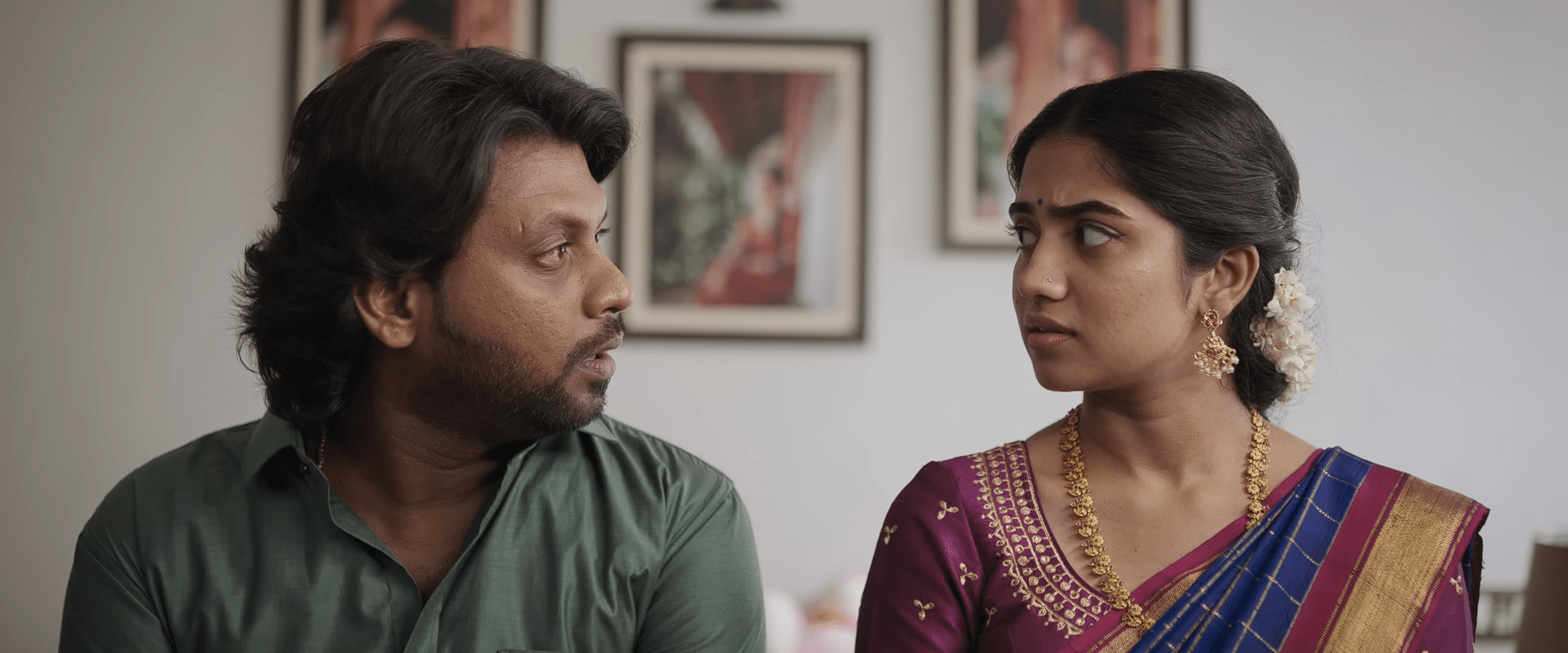
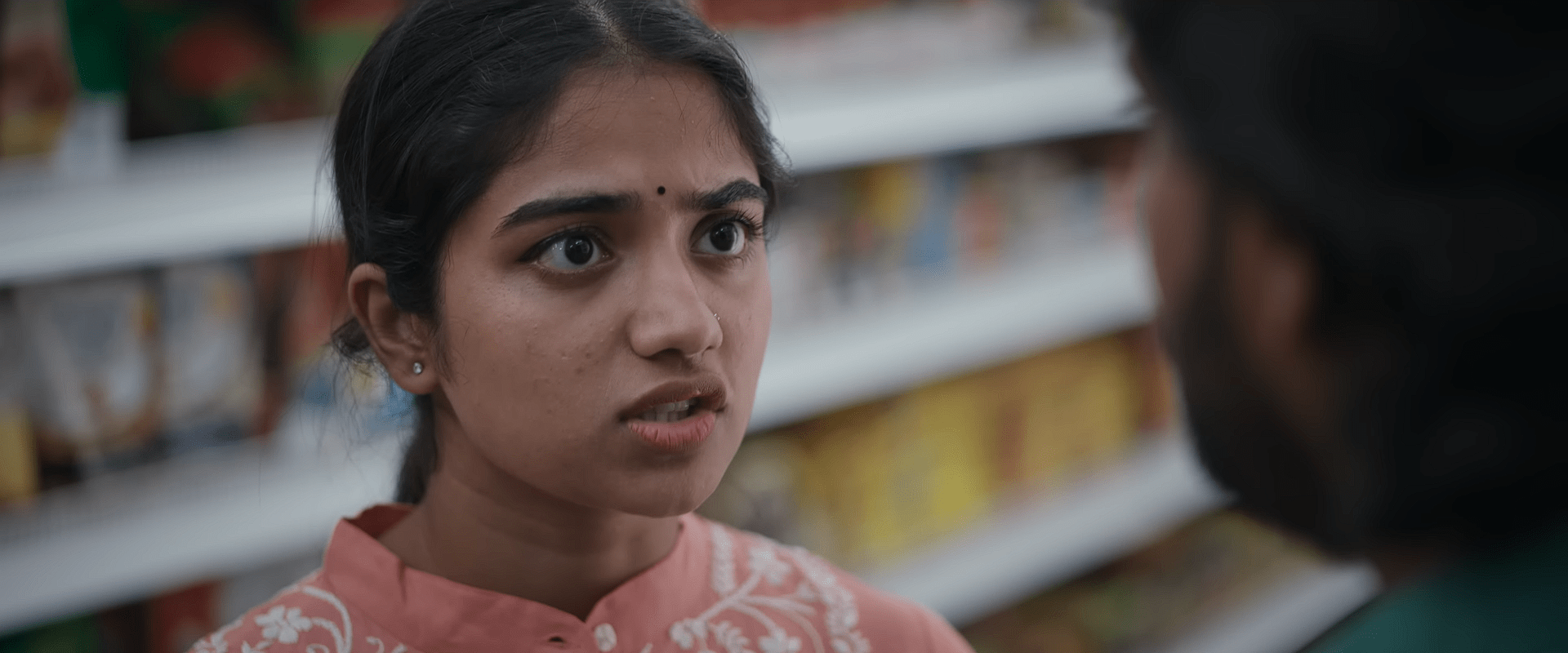
The heroine believes freedom means limitless expression. She wants her life, her choices, her unfiltered independence. But every time she crosses a line and the hero pushes back, the theatre around me actually erupted in applause. Not because she was wrong, but because the film articulates a relatable frustration – freedom without responsibility collapses into entitlement.
The dialogues here are sharp and unusually grounded. One standout occurs when she says she wants to start a business. The hero calmly asks, “You have ambition, yes. But have you worked as hard as someone preparing to become an IAS officer like Devayani?” The crowd reacted instantly. The writing clearly resonates with the lived experiences of many working-class couples navigating modern aspirations.
Strong Moments and Memorable Scenes
The first half is easily the film’s strength. The narrative flows naturally, humor blends well with tension, and several scenes stand out:
- The police station confrontation
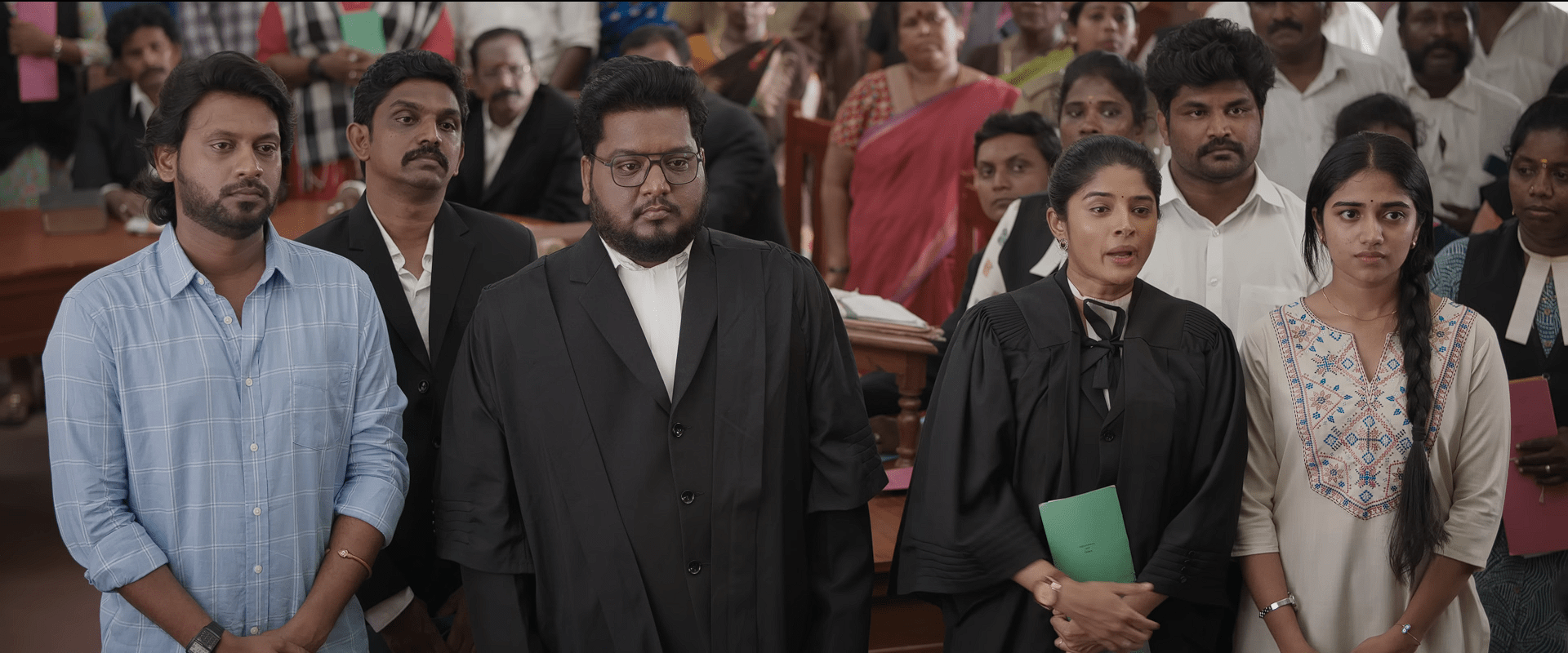
- The courtroom exchanges
- The scenes involving the detective boy
- The simmering conflict with Jenson Dhivakar, which adds an unexpected layer
These sequences feel authentic and energetic. They keep the pace brisk and maintain audience engagement.
A Second Half That Loses Its Grip
Unfortunately, the momentum doesn’t sustain.
The second half is where the film stumbles. The climax becomes painfully predictable – so predictable that the story walks into it exactly as I thought it would. Instead of tightening the emotional arc, the screenplay shifts toward moral commentary, slowing the narrative and draining its earlier energy.
Worse yet, the film dilutes its own thematic consistency. For most of the runtime, the conflict convincingly emerges from the heroine’s misunderstanding of freedom. But suddenly, the narrative swerves to blame the hero as well, not through solid argument but through a forced attempt to maintain neutrality. This softening weakens the story’s conviction and leaves the message muddied.
A Film That Knows What It Wants (Mostly)
Despite these flaws, I appreciate that the film doesn’t attack women or feminism. Instead, it targets people – men or women – who do not fully comprehend what freedom actually entails. This is an important distinction, and it is stated with refreshing clarity.
Had the filmmakers maintained this angle consistently, and had they deepened the emotional resonance in the second half, Aan Paavam Pollathathu could have been a genuinely powerful film. Even so, the movie remains engaging for much of its runtime, and its humor never loses charm. It stays committed to its narrative line, rarely wanders, and ends on a note that, while expected, does not feel dishonest.
Final Verdict
Aan Paavam Pollathathu is a brave attempt – messy in places, insightful in others, but undeniably unique in its perspective. It raises questions about personal responsibility, feminism, and freedom, even if it cannot always answer them convincingly. The first half is lively and immersive, the dialogues are sharp, and several scenes hit hard. The later portions drag the film down, but not enough to make it a disappointment.
Rating: 3/5